The Halo-Halo of Sunsets

Location: Boracay, Western Visayas Region, The Philippines

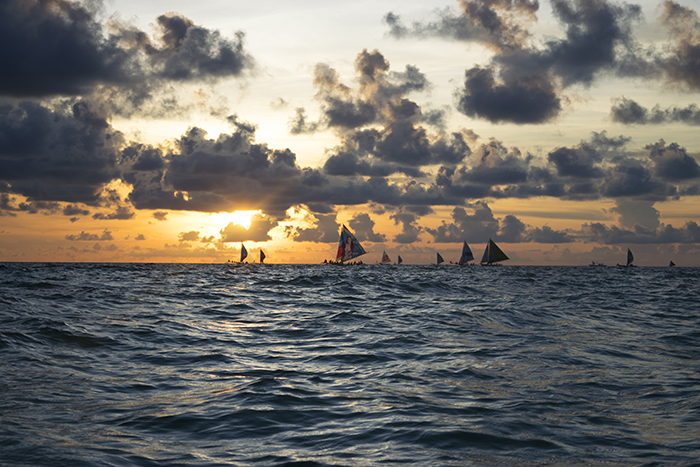
Halo-halo is the everything-but-the-kitchen-sink of Filipino desserts and one of my favorite treats. The bottom layers are a mix of macapuno (slivers of coconut), langka (a sweet, soft, tangy yellow fruit), munggo (burgundy mung beans), mango chunks, kaong (sweet palm fruit), saba (plantain), nata de coco (coconut jellies), pinipig (crispy rice, like the stuff Rice Krispie treats are made of), and sago (jelly bubbles). This is topped by shaved ice, leche flan (a creamy dish similar to creme brulee) and lastly (the best part) a fat scoop of ube (purple yam) ice cream.

On my second day in Boracay, I treated myself to one of these colorful desserts and plopped down on the sand to watch one of the island's famous sunsets. It was pretty much perfect; the sky glowed a hundred shades of the rainbow, mirroring the bright flavors of my snack.  

Boracay: the Beach Bum's Paradise

Location: Boracay, Western Visayas Region, The Philippines

The Path Less Traveled Part III

Location: Boracay, Western Visayas Region, The Philippines

This morning, I woke up to the sound of pans clinking and a familiar smell: pan-fried corn beef hash, onions, eggs, and honey-drizzled pan de sal (slightly sweet bread rolls). It’s a dish I grew up on and hadn’t had since I’d moved out from my parents’. When I came out of my room, I met the chef, Butch, a friend of Mama Annie. He was staying in the spa’s other extra room and was excited to have company for breakfast. He grabbed another plate and piled it high with meat and eggs.  

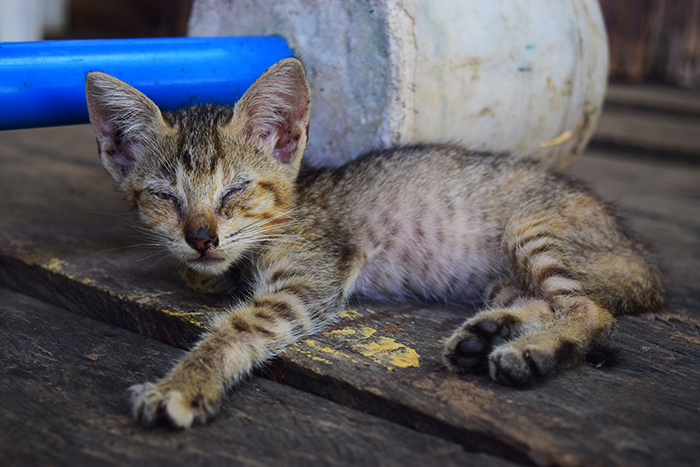
I sat down with him at a little bamboo table beside the spa’s garden, which was carved into three sections: a vegetable garden, a bright flower-filled area, and a zen-esque rock path that led back to the spa area. The table overlooked the vegetables. A cockfighting rooster stood on a post a few feet from me, staring as I ate. Two kittens crawled around in the tall grass. A man with a ponytail stood on a ladder, nailing a fallen shingle back onto a shed roof.

Butch is a real estate agent and a professional cockfighter breeder. As we chatted, I learned that he’s originally from Baguio, which is only an hour’s bus ride away from my mom’s hometown. Even though he’s 60, he still has a full head of thick, black hair. I told him I was going to hang out with Annifer and the kids and asked if he’d like to join us, but he only shook his head. He told me that he visits Boracay often, but never leaves the tranquility of the spa garden.  

“Too many people. I’ll be here reading when you come back.” Butch said.

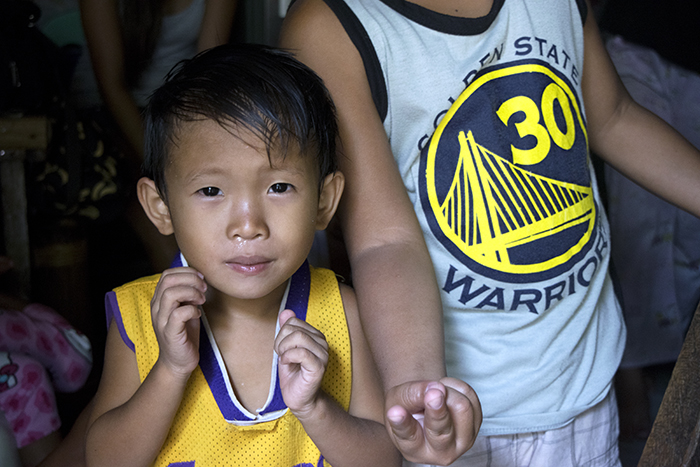
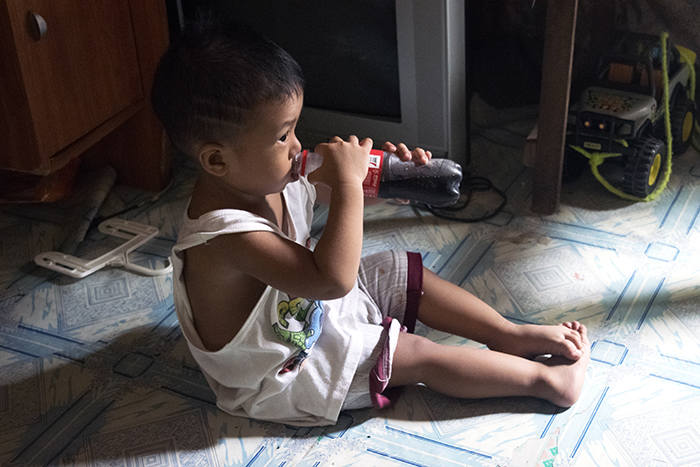
After breakfast, I back to the village via trike to meet my adopted Filipino family, carrying with me a whole raw chicken in a leaking plastic bag. When I arrived, the kids were already soaked and chasing each other around on the street in wet clothes. I dropped the chicken off with Mama Annie, who laughed when she saw it; I dont think she believed that Id actually pick one up. Annifer told me Rafi was upstairs, but shed come down to the beach with us for a swim. As we waited, the troupe of dark-haired, shouting youngsters took turns using my camera to photograph each other. Theyd put on funny faces and squeal with joy when the images came up on the LCD screen. I laughed with them.

As I watched the kids play, I was taken back to my childhood summers in Indiana, where my cousins and I would run around barefoot in our aunts backyard, chasing fireflies and rough-housing. Wed spend full evenings holding Mortal Combat tournaments or telling ghost stories and daring each other to stand inside my aunts spooky shed. There was no end to the amusement, from five-hour long, intense hide and seek tournaments to popsicle-eating-brainfreeze contests. At dinner, our parents would call us inside and wed take a break to eat fried rice and adobo.

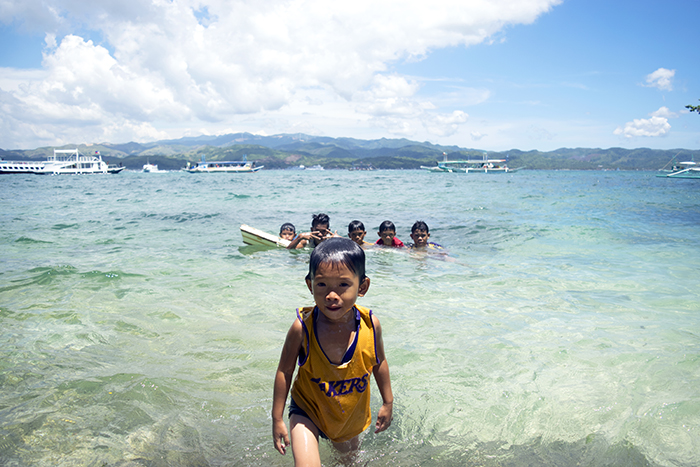
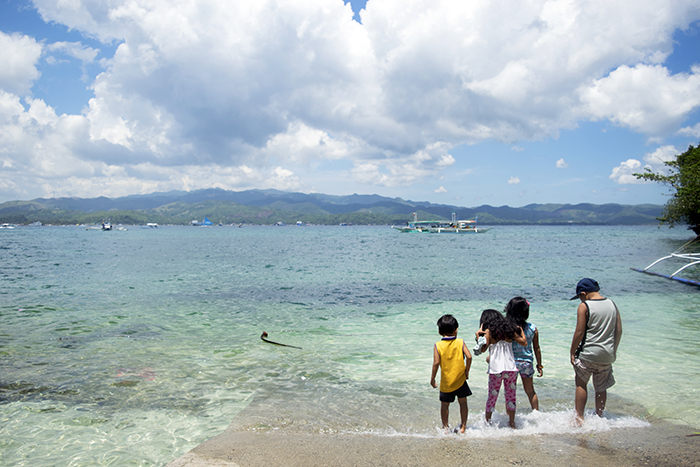
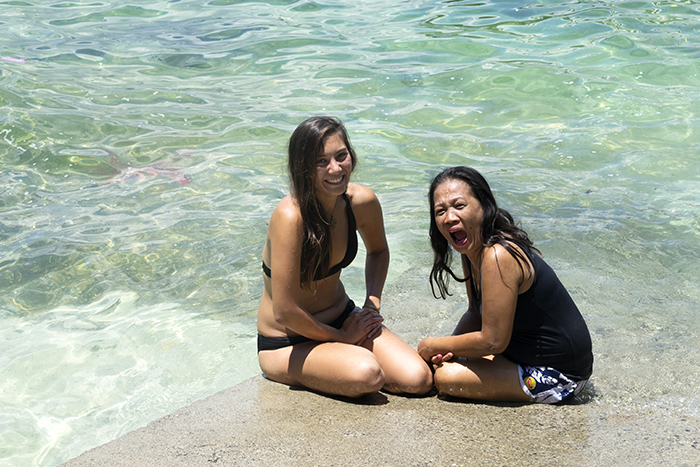
I felt right at home here, hanging out in the kitchen with Annifer, watching the kids run around. When Rafi finally came down and greeted me with a big hug, we went to the beach, which was actually just a cement dock behind a Korean restaurant. We climbed through a hole in the fence and down a skinny dirt alley to the waterfront. As non-traditional as the setting was, the water itself was clear and gorgeous. Rafi, two of the older boys, and I saw up to one of the docked outriggers and climbed all over the balance beams, doing flips off the sides. The waiters knew the family and snuck us paper cups of Korean stir-fry, which we picked at with our fingers between swimming excursions.

As I watched Rafi splashing around, doggy paddling through the water and laughing at her own jokes, I couldn’t help but smile at her joy for life. I could tell why she was trouble; she kept asking the staff at the restaurant to sneak her some liquor. But her family had been so determined that I not stay with her, calling her “crazy” and “dangerous.” I felt for her. I didn’t know what she’d done in the past, why everyone was so disappointed in her, but she just seemed like she needed a friend.  

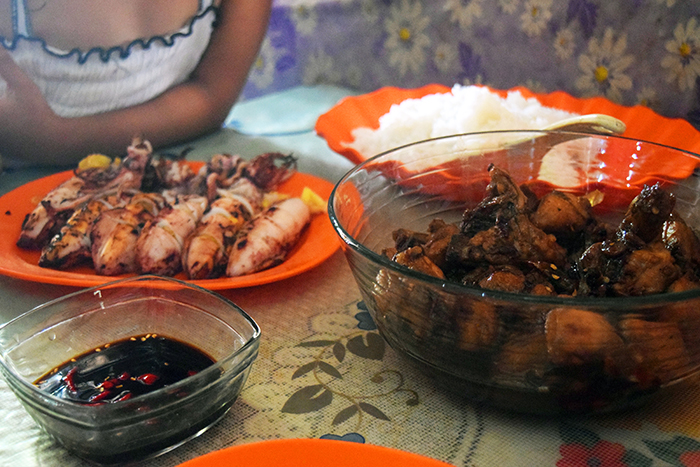
When we came back to the house, Mama Annie had cooked chicken adobo, squid stuffed with chopped mangoes and onions, and rice. It was awesome. Everyone insisted I eat and take second helpings before they dug in, though, which was a little awkward. I was still full from breakfast and wasn’t sure if it was rude for me to not finish my plate.  

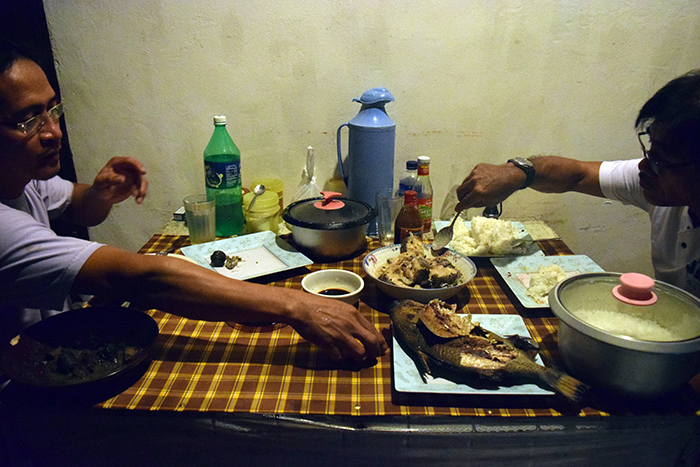
After lunch, I spent some time me-time on the beach, reading The Godfather, digesting another stuffing meal, and enjoying the sun. And when I arrived back at the spa late in the evening, Butch had cooked yet another feast and was determined that I share it with him. This time, the table was set with all kinds of seafood: grilled eel in a creamy garlic sauce, smoked stonefish, snails simmered in a muddy brown sauce, and rice. I ate until my stomach hurt, spooning soft chunks of eel and flaky stonefish bits into my mouth with rice. I loved that everyone only used a spoon and a fork to eat (the same as how I was raised). As we feasted, we drank beers that I’d picked up at the market. Then, Annifer and her sister arrived and the three of us hit the beachfront bars, drinking their favorite apple-flavored beers. Filipinos eat while they drink, and so yet again I found myself snacking, this time on sisig (chopped, stir-fried pig face).

At the end of the night, Annifer gave me a little booklet about Boracay to remember the island by and made me promise I’d come back within the year, next time with a boyfriend. 

The Path Less Traveled Part II

Location: Boracay Island, Western Visayas Region, The Philippines 

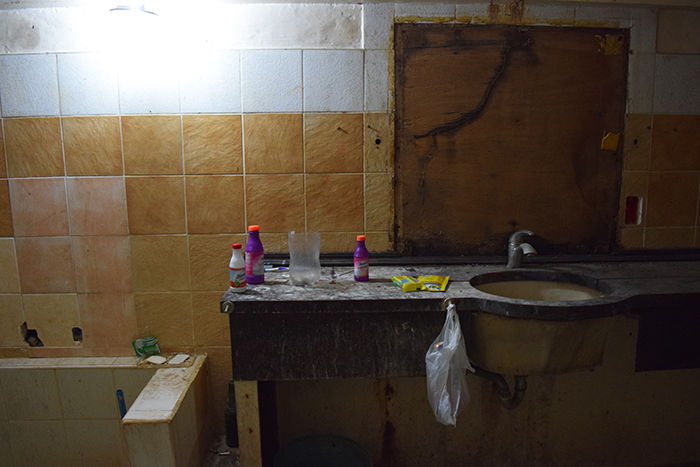
After I told Rafi I’d stay the night, she said she wanted to show me the island and (after giving me a bit of a sassy up-and-down) asked if I needed to shower before we went out. I did. So I grabbed my shampoo and body wash and followed her down the road, through a hole in a fence, and into a half-abandoned apartment complex. A man and a woman sat on wicker chairs on the front porch of one shoddy building. Rafi waved and asked if I could use their shower. The two smiled and led me through a bare room and into the bathroom, which was covered in cobwebs and whose faucets didn’t function. There, I poured water over myself from a bucket, hurrying so I could replace the mosquito repellent I’d just rinsed off; as the day grew later, the number of pesky bugs seemed to triple.

When I was acceptably washed up, Rafi and Elise told me the plan was to go to the beach to see the sunset. I knew that’s one of the things Boracay is famous for, so I agreed. Rafi told me to keep any valuables on my person (not that I was going to leave them in her completely open house, anyway). I stored my backpack in her dresser and she, Elise, and I, began our trek. At first, we stayed on the main road, and everyone said ‘hi’ to Rafi as we passed. I received a fair share of inquisitive glances. Apparently Rafi was quite well-known in town, for better or worse. One policeman, holding his shotgun casually to the side, laughed at us as we passed and told me that Rafi was crazy. 

“Be careful!” He shouted. 

I couldn’t tell if he was joking. Rafi glared at him.

We stopped at Rafi’s oldest daughter’s house, which sat on top of a hill slightly above the main road, and had a thick tin roof and a small garden lined with rocks. The girl, who was 21-years-old but looked sixteen, greeted us with a soft smile that warmed her brown eyes and showed off her big teeth. While she asked her mother why I was with her, I took a turn cradling her 1-year-old baby boy who just stared at me and tangled his fingers in my hair.

“Don’t stay with Rafi,” she said to me quickly, so Rafi couldn’t understand. “You can go to a hotel or stay with me here. She doesn’t have a mosquito net. That’s no good. It’s not safe.”  

I hadn’t thought about that. I nodded in understanding and told her that my stuff was at her mother’s, but that after we went to the beach I’d go back and get it, then catch a ride to a hotel. As we left, she rocked her baby and waved us ‘goodbye.’

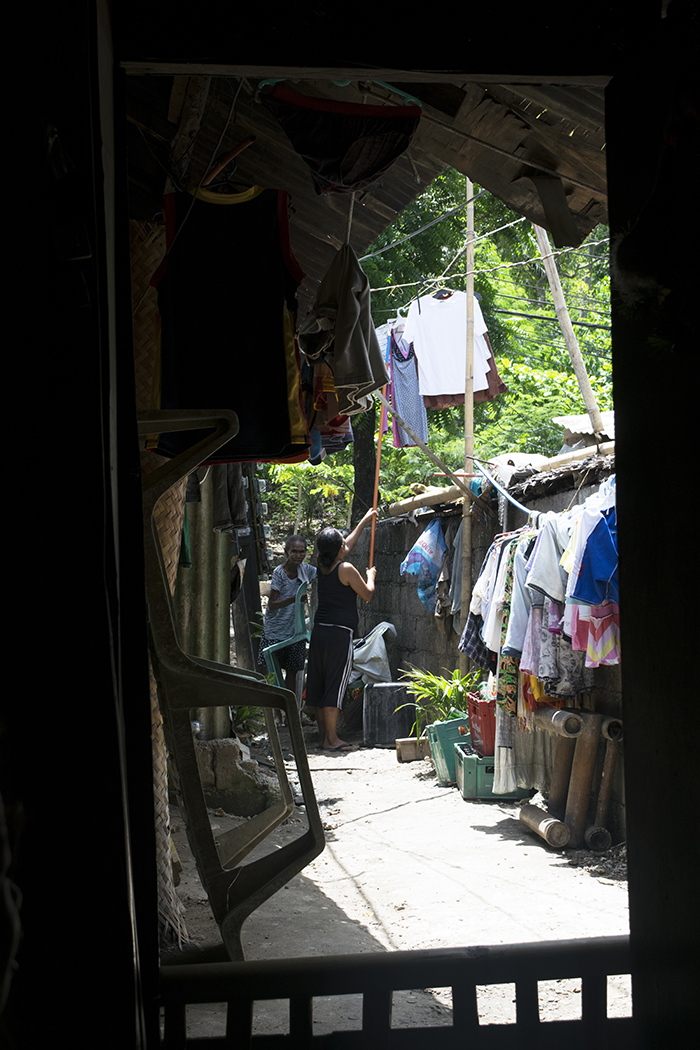
We walked through the village, which was a curved, hilly pathway lined with tin-roofed houses. Kids ran through yards, chasing each other and laughing. Men and women waved at us from porches and gardens. We passed a cockfight breeding area which was filled with tall, thin bamboo poles. At the top of each stand, tied down by a thick string, was a rooster.

Sunset was just beginning as we reached the beach, dying the sky a deep lavender and the sea a swirling teal. The buildings met the shorefront and as Rafi, Elise, and I made our way along the soft sand pathway, we mingled with locals and guests of Boracay. Lanterns lit the way a warm yellow and every few feet we were greeted by the enticing smell of meat cooking on tiny blackened grills. My stomach growled. We stopped so I could pick up a pink-skinned hot dog dipped in barbecue sauce and a crinkly plastic baggie of rice. Elise shared some of the meat with me, but Rafi just shook her head and told me she wasn’t hungry.

As we watched colors change in the sky, Elise and Rafi asked me questions about my life. They were both surprised that I was single and traveling alone; both had had children by the time they were 23. Rafi pointed out different men on the beach, locals and tourists, and would grab my arm and giggle if she thought they were hot. If I agreed, she would shout out to them “hello” and point to me. Elise and I just laughed as the men glanced at us, confused, and we shook our heads.  

It was interesting seeing Boracay through local eyes. Rafi and Elise would point and laugh at drunk tourists and girls in skimpy tropical outfits. Other locals chatted with us about the day, whether anyone interesting had come by their souvenir stands. I received more than a few confused looks. It was beginning to become obvious that Rafi didn’t usually pick up random travelers and take them around. But I just smiled and tried not to feel uncomfortable.

As the sky fell to darkness, we cut inland, to the spa that Rafi’s sister worked at. We made our way through the busy maze of sarong shops, tiki bars, and Filipino fast food joints, down a dark pathway to the back door of a kitchen area, where a woman was squatting on the ground, a plastic tub of dirty plates and soapy water between her thighs. Her shirt was soaked through, her arms elbow deep in the suds, her fingers pruny.  

Rafi greeted her with a shout of ‘hello,’ but the woman only frowned at her. She looked from Elise to me in a way that said what the hell is Rafi up to this time? 

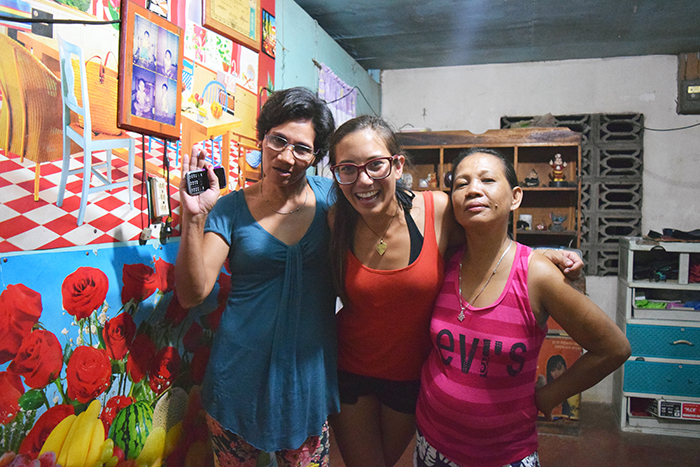
Rafi waved off the look, rolling her eyes.  She and her sister exchanged a few words in Tagalog. Rafi crossed her arms over her chest and huffed. Her sister stood up, wiping her arms on a towel, and turned to me.

“I’m Mama Annie. You shouldn’t stay with Rafi. She’s trouble. But you can stay with me.”

I thanked her for the kindness. It turned out that Mama Annie lived in the house below Rafi’s upper-deck area. She said that her daughter and grandchildren were in town, but they’d be happy to make room. I told her not to worry, I planned on getting a hotel room.

“How much for a room? I know some hotels.” 

“I can pay maybe $5 a night?” I said. Mama Annie shook her head. That was too low here in Boracay during high season. I’d have to settle on paying more. I told her that’d be fine and that I’d check it out after I grabbed my things. 

“We’re having a barbecue, tonight. You should come.” Mama Annie said. I nodded, agreeing to come say ‘hi’ since I’d be picking up my stuff there anyway.

Rafi, Elise, and I wandered for a bit longer, people watching on the beach. Finally, I decided it was time to go back and pick up my stuff, before the hotel receptions closed for the evening. We walked back past a marketplace and to the main road. Rafi flagged down a man on a motorbike and negotiated with him in Tagalog. I wondered if she and Elise were ditching me.

But then Elise hopped onto the bike and scooted forward so the front of her body completely pressed into the driver’s back. She and Rafi waved for me to get on behind. Rafi motioned for me to give her my backpack. After I sat on the bike, Rafi slung my backpack over her shoulders, looking like some sort of strange, wrinkly child, and climbed up over the back, pulling herself into my body. I was squished between her and Elise. I’d done 3 people on a motorbike a few times in Vietnam, but never 4. I’d seen it, sure, but usually only with children and adults. This seemed dangerous to the extreme; how would the driver even keep the bike steady on this hilly roads with this much weight on it?

Rafi got on last, climbing up from the back and pulling herself into my waist. She and Elise didn’t seem perturbed about the amount of people on the bike in the least. As we drove, Rafi playfully tugged at Elise’s shirt or poked her boobs or stomach, giggling manically when Elise squirmed and complained.

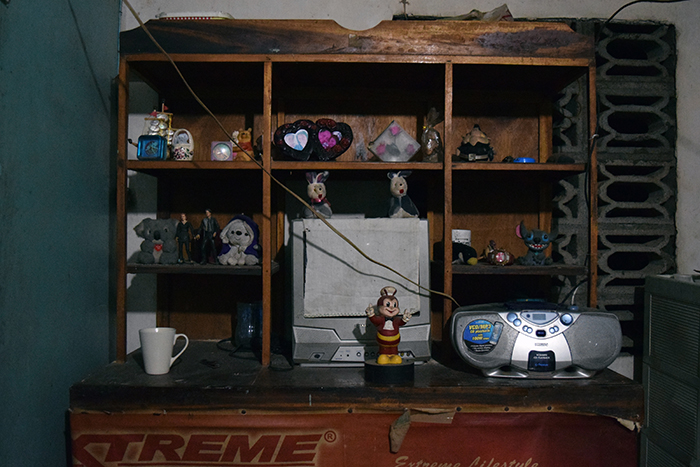
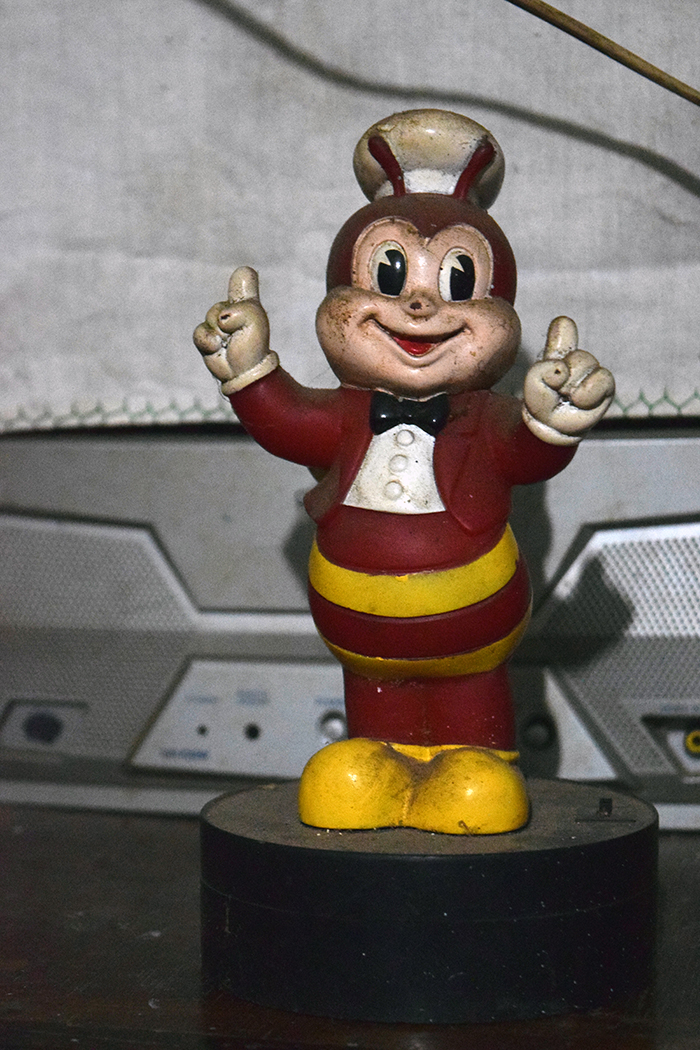
Our first stop wasn’t Rafi’s. It was Elise’s. She lived in a little house a village over from Rafi, in a small concrete house with a teal door that was adorned with a white, wooden cross. The insides of the house were bare concrete. There were no doors, just sarongs tied up like curtains. In one corner sat a wooden mantle decorated with dusty picture frames holding images of Elise and her family, and knickknacks, including a mini-figure of Jollibee’s red-and-white-striped bumblebee mascot. (read: Jollibee is basically the McDonald’s of the Philippines.)

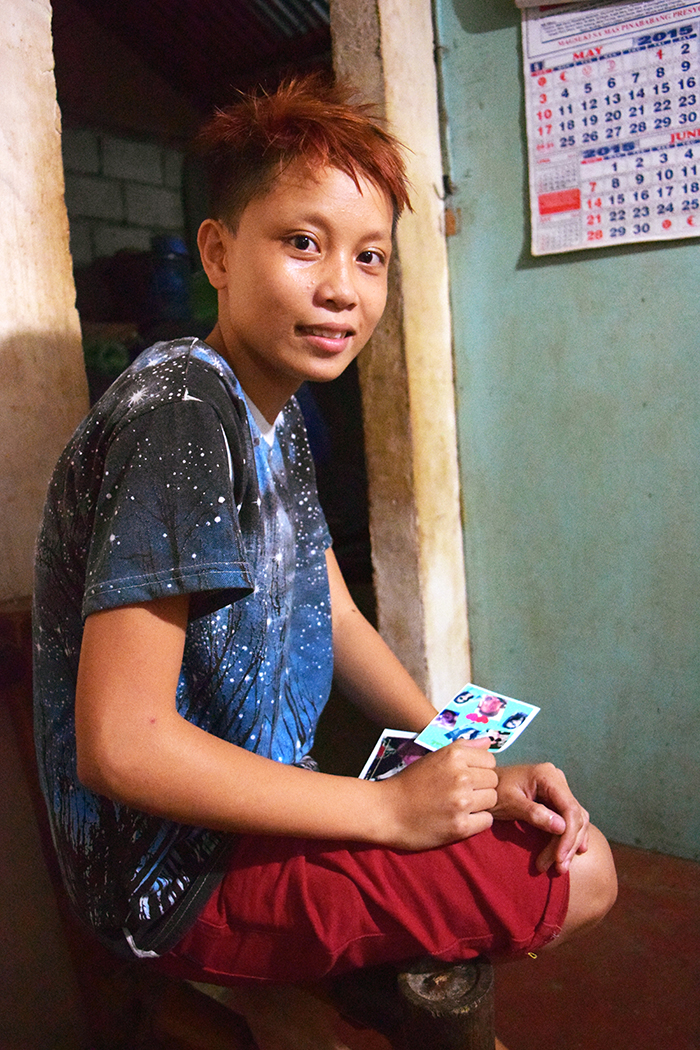
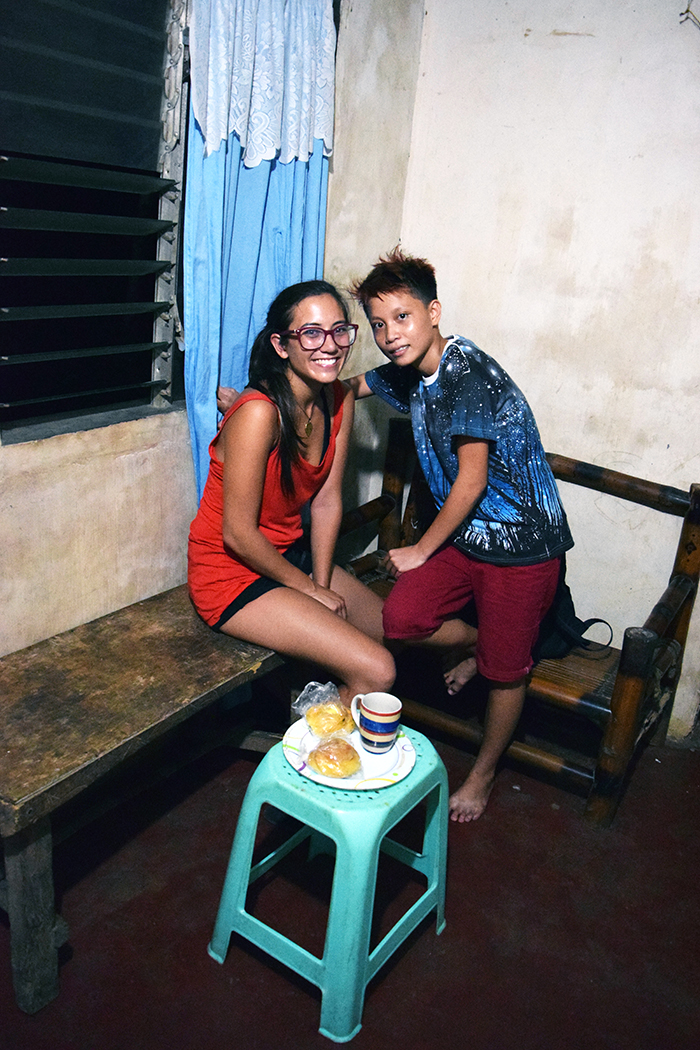
I sat in a couch in one corner and Elise disappeared into another room, calling over her shoulder that she was making coffee. A minute later, Elise’s daughter, who had short-cropped, dyed-red hair, and was wearing a baggy t-shirt and basketball shorts, appeared in the room. I told her that a strip of my hair had once been dyed the same color, and I showed her where the dye had faded off, leaving it blonde. She offered to redo it for $1. Rafi chuckled, telling me that the girl and I would make a cute couple. 

“Rafi, you have to stop trying to set me up with every single person on this island.” I told her.

When we arrived at Mama Annie’s the whole yard was filled with Filipinos of all ages. It was a huge family gathering and they had covered the whole grill out front with different meat skewers, everything from chicken intestines to hot dogs to longganisa. Mama Annie offered me a plate of barbecue chicken intestines dipped in a sweet brown sauce and wouldn’t leave me alone until I took it from her. She watched as I ate the chewy meat wound onto the skewer in a zigzag. It was super tasty. Mama Annie’s daughter, Annifer, introduced herself to me, pointing out which of the toddlers running around were her own. She turned out to be the ringleader of the family and her English was excellent. 

She offered me a cup of mixed rum and coke and as we drank, she explained that Rafi always caused trouble because she drank too much and never ate. I realized that it was true; I hadn’t seen Rafi take a bite of the barbecue yet. She just sipped on her own cup of gin.

“Rafi is crazy,” Annifer said. “Mama is scared that if you stay with her, you’ll get hurt.”  

I glanced over at Rafi, who was making faces at one of the kids and poking at Elise again. She seemed so harmless; why did everyone in the village think she was such bad news?

“Mama works at a spa in Station 1. You can stay in the extra room there. It has a window so there aren’t as many mosquitos. And a bed and private shower. Usually family stays there. Just don’t stay at Rafi’s.” Annifer told me.  

Later that night, Annifer and company chaperoned me over to the luxurious Korean spa and into the extra room, a private bedroom with a television (!) in the back above the garden. She paid for our trike ride there and took me down to the beach, where we sipped rum-and-cokes and chatted about life until late in the night.

Annifer was 28, married, with three kids. She was a strict Catholic and a stay-at-home mom. She was also shocked I was single and traveling totally alone.

“But marriage is good,” she told me. “I love my husband and he takes care of me and that’s good.”  

At the end of the night, Annifer made me promise that I’d come back to Mama Annie’s the next day and we’d go to the beach together with the kids. I promised I’d bring over a chicken so that we could make adobo (salty-sweet vinegar marinated meat) for lunch. We hugged goodnight and as I lay down that night in the spa, I couldn’t believe I’d been in the Philippines for less than twenty-four hours. 

The Path Less Traveled Part I

Location: Boracay, Western Visayas Region, The Philippines

A little background on Boracay. Travel and Leisure named it the # 1 Island Destination in the world in 2012, and #2 in 2013. It’s gorgeous: the beaches are of soft, white sand, the water is that perfect shade of tropical-sea blue that until you see it, you don’t really think exists, and the vibrant sunsets include every sorbet shade. And the infrastructure of Boracay is built to host tourists of all budgets, whether it be backpackers looking for cheap hostels or honeymooners who want a private suite, beach, and sailing tour. It’s an extremely popular vacation spot for Filipinos and Koreans, but less so Western travelers, simply because the Philippines is not as easy to reach as most of Southeast Asia. The main tourist area of the island is small and split into three sections: Station 1, Station 2, and Station 3. Outside of this area, which is all beachfront property with hotels, hostels, markets, souvenir shops, bars, clubs, and restaurants, is just village and hillsides.

I’d been in Boracay for about forty-five minutes when I was swept away on an unexpected adventure that totally transformed the way that I spent the next three days on the tourist-party-island. I was hiking through the village that occupies the otherwise undeveloped area between the ferry and Station 1. Usually, travelers hire a trike (a motorbike with an attached metal enclosure for carrying customers) that will drive them to their hotel for about $0.50-$1. But me? I was riding the first-day-in-my-mom’s-homeland high, bursting with energy, and I couldn’t bear the thought of riding past the first Filipino village I’d encountered.

So there I was, grinning like a fool, sweat seeping through my tank top, lugging my 20-pound backpack up the gravel hillside, taking in everything from the puppies chasing chickens in the grass to the decaying look of the bare-concrete-and-raw-wood huts on either side of me. Whenever a confused trike driver or a motorbike taxi stopped to ask if I needed a lift, I’d just smile even bigger, shake my head, and continue my trek.

Maybe I looked a little crazy and that’s what drew Rafi to me. Maybe she saw me: young, alone, and out-of-place, and thought she could take advantage of that. Maybe she just wanted to make a new friend. Maybe all of the above. Whatever it was, I’m glad that it happened.

“Ey! Ey you! You, girl!”

The scratchy, sing-song voice seemed to be coming from the air above my head.

“Up here!”

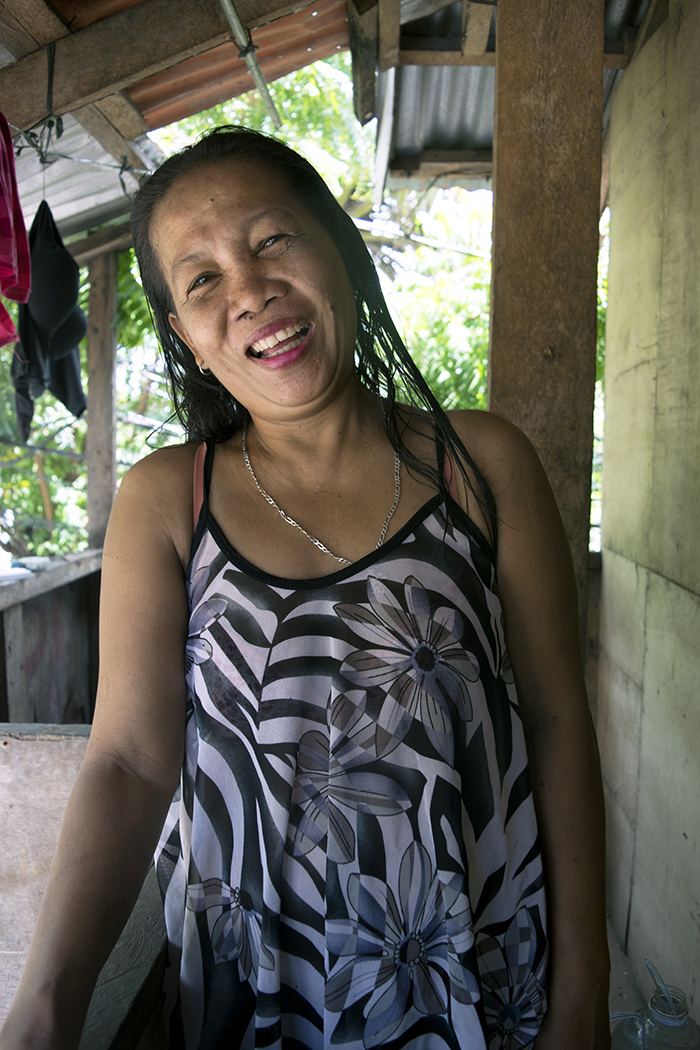
I looked up to the second floor porch of the crumbling house to my left and saw a little, round woman with long, wavy black hair and hot pink lipstick waving down at me. I waved back.

“Hi!” I called out.

“Where you go?” She asked.

“Station 1?” I shrugged, said it like a question. Was that where I was going? I didn’t even know. That thought made me happy.

“Station 1? Oh! Come here!” She opened her mouth really big when she talked, emphasizing everything she said with exaggerated facial expressions. I didn’t move.

“Come on!” She said again.

“Okay,” I said. I didn’t have anywhere else to be, anyway.

(Now, I’d like to take a moment to say that my way of traveling is probably not the smartest and it’s definitely not something I’d recommend for everybody. But my openness to most situations is what has made my time in Southeast Asia so incredibly fulfilling and also just a little bit crazy.)

Once I was up on the porch, which was just several thin sheets of unfinished wood nailed together, I found myself staring at a woman who looked not just a little but a lot like one of my aunts. Younger, tanner, and  a slightly different nose, but overall freakishly similar.

“Rafi,” she said, pointing at her chest.  

“Cassia,” I said. My eyes wandered around the porch. There was a plastic table and chair in one corner. Someone had chalked the word “FAMILY” on a wall. There was no door, just a couple sheets of wood sitting to the side of the entrance. Two teenage girls stared up at me curiously from the street below. They were surrounded by toddlers. The older girl held an infant in her arms.
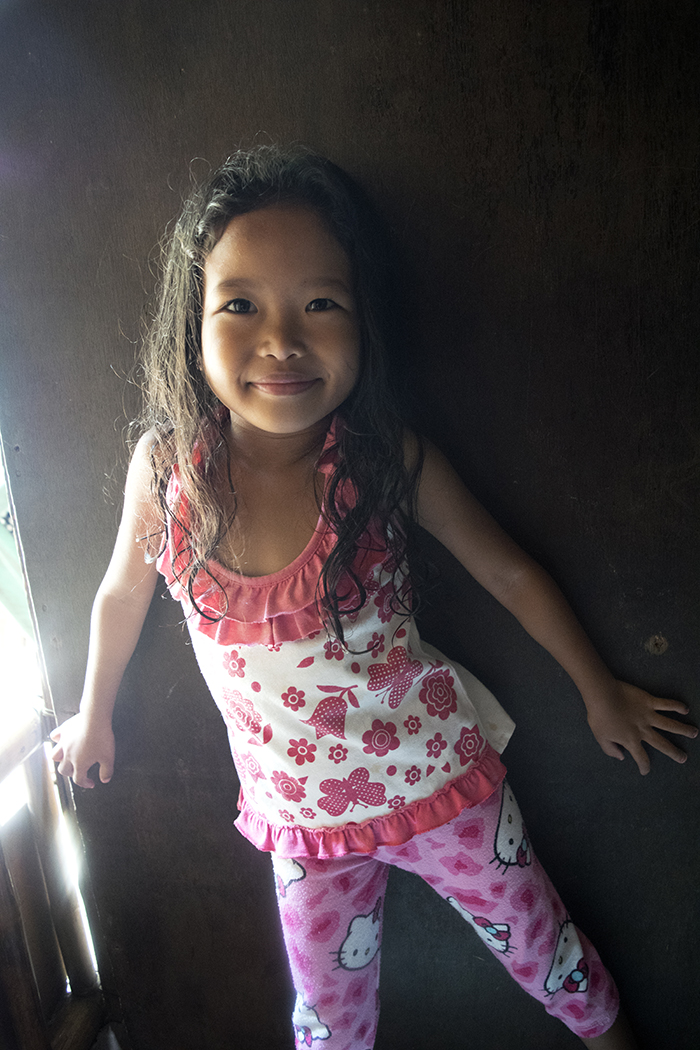
“My sons!” Rafi pointed. I guessed she meant daughters. I waved at the girls and they waved back, then one made a comment in Tagalog and they laughed, calling up ‘hello.’ They were both very pretty, their oval faces and soft smiles framed by thick, wavy black hair.
“Kuh-SEEAH!” Rafi said, throwing her hands up in the air like my very name brought her the utmost joy.

“CA-see-ah,” I said.

“Kuh-SEEAH!” Rafi repeated. I almost didn’t let it go because I mean, c’mon, I was named after my Filipino grandfather, Casiano, and for the love of God if even Filipinos aren’t going to say my name right, then what the Hell? But then again, it was better than the Vietnamese pronunciation; I’d started to just tell people my name was “Cat” to make it easier on everyone.

Now, Rafi was squinting at me, one hand wrapped around her chin, the other still on her waist. The way she studied my face, I understood how test rats in science labs felt.

“Filipina?” She finally asked.

“Half! My mom’s from near Baguio.” I nodded, exploding with happiness that Filipinos could tell I was one of them. I’d been afraid that I resembled my father’s Irish heritage a little too much and my Filipino-ness, the one I so identified with, wouldn’t be recognized. Rafi grabbed my arm excitedly with her little fingers, pulled me in for a hug.

“Tagalog?” She asked. I told her I only knew a few words and she waved that away. She asked me what hotel I was going to.

“Somewhere in Station 1 or 2...or 3.”

“No! No, here.” She put on a stern, frowning face. The way her voice changed pitches while she talked and the expression on her face were so similar to my auntie’s. It made me feel comfortable, even though she was a total stranger.

“No, no. I stay at a hostel.” I said.

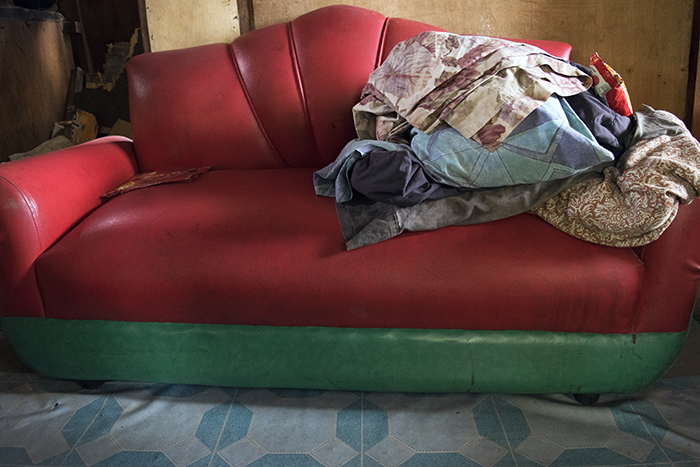
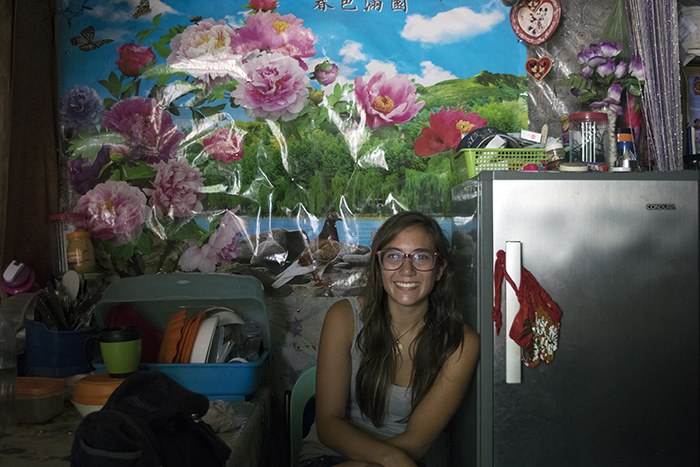
“No! Here.” She led me into her little home, which, I have to admit, was one of the barest, most shabby residences I’d ever stepped into, and gave me the grand tour. Everything was the same raw wood, barely nailed together. I had no idea how this house was standing. There were no windows, just squarish holes cut out of the walls. The main room had a thin, plastic cover over the floor designed to look like linoleum tiles. There was a dusty wooden dresser with a mirror in one corner and a bright red couch in the middle. There was also a tiny bedroom with a twin-sized foam bed covered in a Looney Tunes themed sheet, and a pink fringed curtain. You had to climb over the couch to get through its doorway. The bathroom was bare except for a lidless, dirty toilet in one corner, a tap, and a water-filled bucket. A ladle bobbed in the bucket; it was for flushing the toilet manually.

“How much?” I asked, assuming I could just say no to whatever price she gave me. Just pretend I couldn’t afford it.

She put on an insulted look. “No! Free. You Filipina. You like me. A friend. Free.”

I opened my mouth, closed it. Before I could respond, another woman came up the stairs, shouting Rafi’s name. She was taller than me, thin, and she wore rectangular glasses. She looked confused that I was standing there in the living room, my backpack on the floor beside my feet.

“Cassia,” I told her and waved.

“Elise,” she said. She looked at Rafi, who was standing there with her hands on her hips.

“Filipina!” Rafi said, pointing to me, “she’s staying with me!”

Elise raised an eyebrow, looked at me. I laughed, shook my head. Elise asked Rafi something in Tagalog, which Rafi responded to. They held a brief conversation that was too quick for me to pick up.

“It’s okay with you?” Elise asked me, smiling. Her English was much better than Rafi’s. “You can stay for free with Rafi. It’s okay.”

“I, I mean…” I didn’t have anywhere else I was planning on going, really. It was already late afternoon. I could just stay here the night. I was a little worried about how to lock up my passport, wallet, laptop, and camera, but I could just sleep with them in the bed with me. And then Rafi was holding my arm again, looking up at me. The top of her hairline reached my shoulder. And she had the same eyes as my aunt. I could always just leave if I decided I didn’t want to stay, catch a trike up to the Stations.

“Well, okay.” I said. Rafi cheered and hugged me.