Breaking the Language Barrier

Location: Cat Ba Island, Ha Long Bay, Vietnam

I’m balancing on the topside of a smooth, black boulder at the edge of the water. The waves slap softly against the stone just a few inches below the soles of my shoes and I hold my camera tight to my chest, hoping a strong burst of wind doesn’t knock me into the bay. My friend waits on the rock behind me and we look out over the water in silent anticipation. There’s an old, hunched over man that keeps rowing his creaky little boat past us, waving for us to climb in. I shake my head at him again.

“Holy shit, he’s really coming to pick us up.”

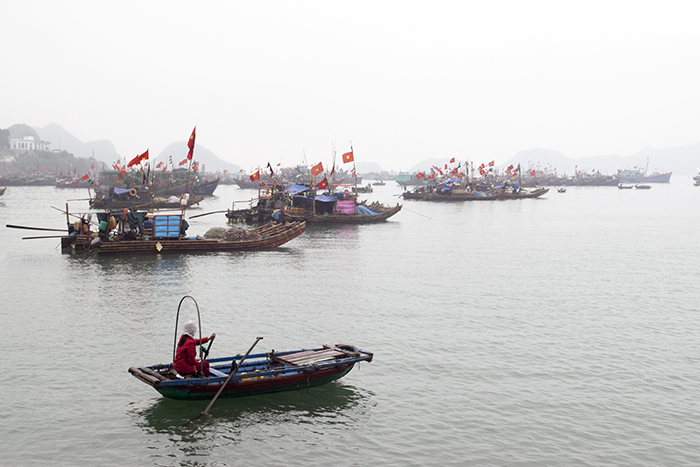
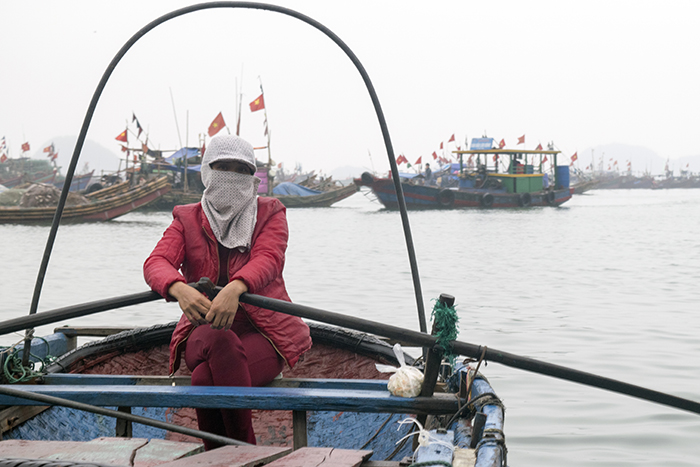
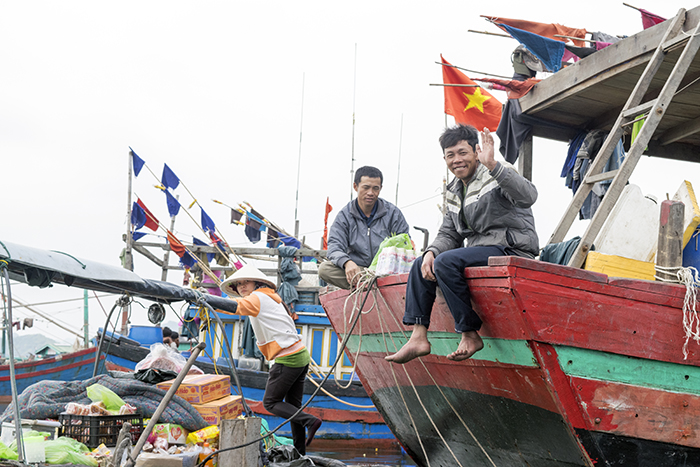
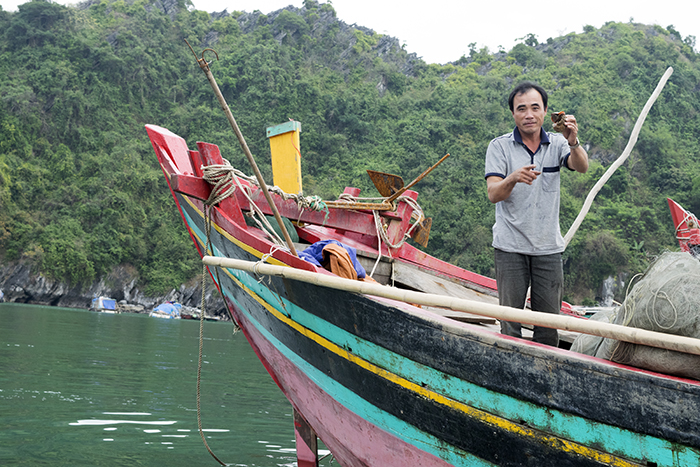
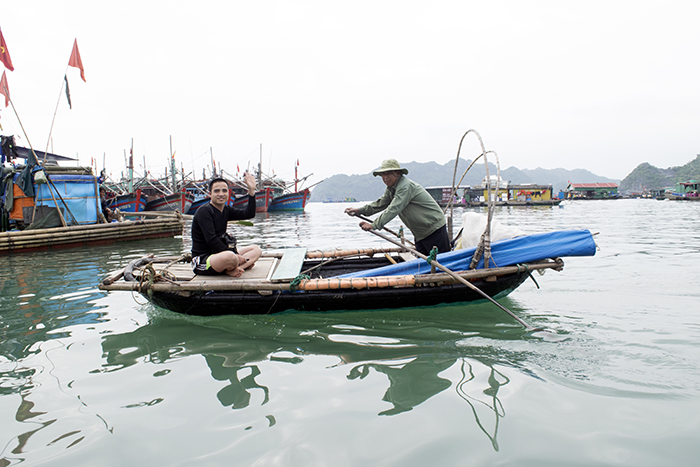
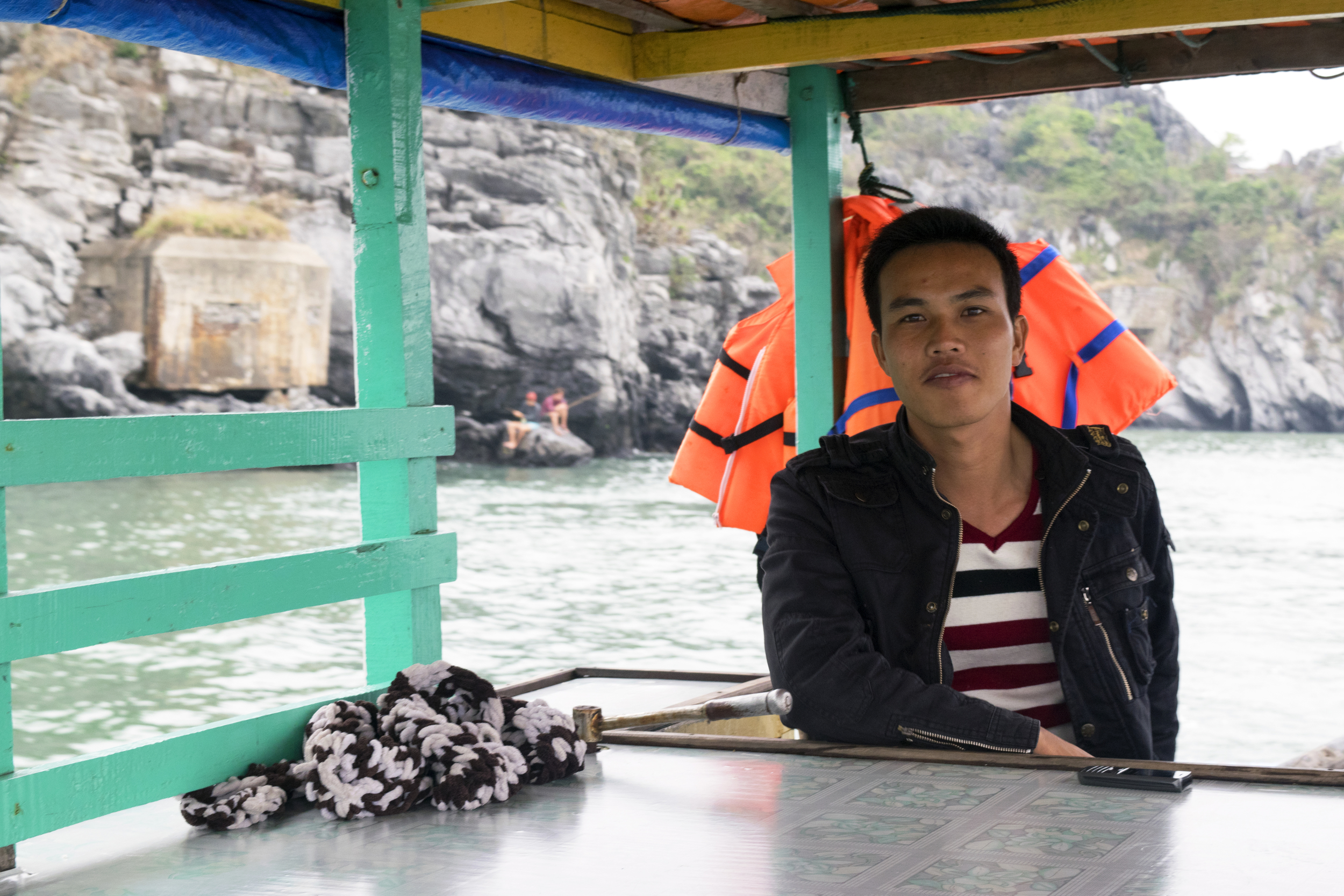
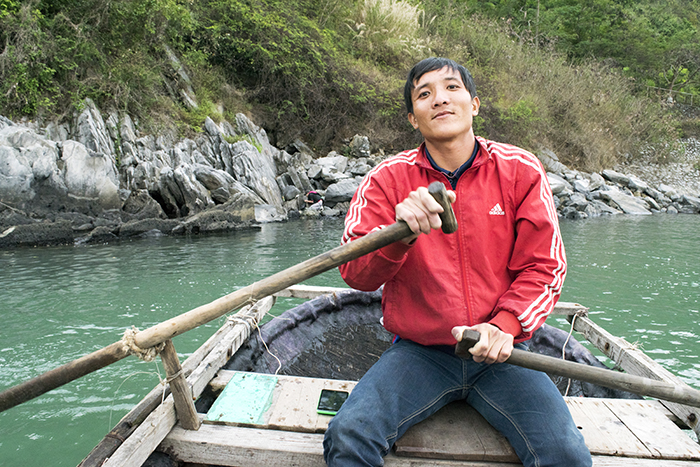
Our ride is on his way;  a slender man wearing a zipped up, bright red track jacket. As his figure grows closer, his happy-go-lucky grin becomes visible. I smile back. When he reaches the shore, I wave and clamber clumsily onto the damp floorboards of his leaking vessel, scooting over so there’s room for two. My travel companion hops in after me.  I wave at our new friend and say a ‘hello’ and ‘how are you’ to test out his English. He only nods.

“English?”

He looks puzzled.

Welp, guess we won’t be talking too much.

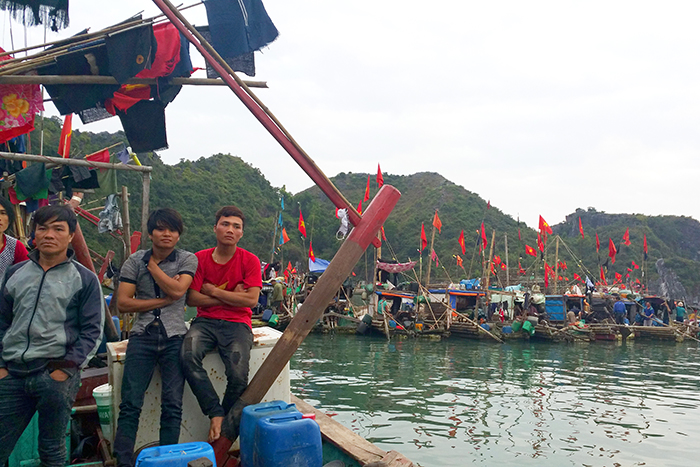
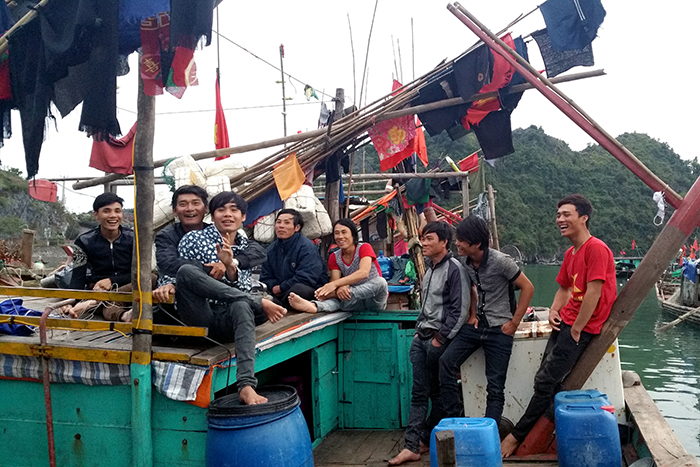
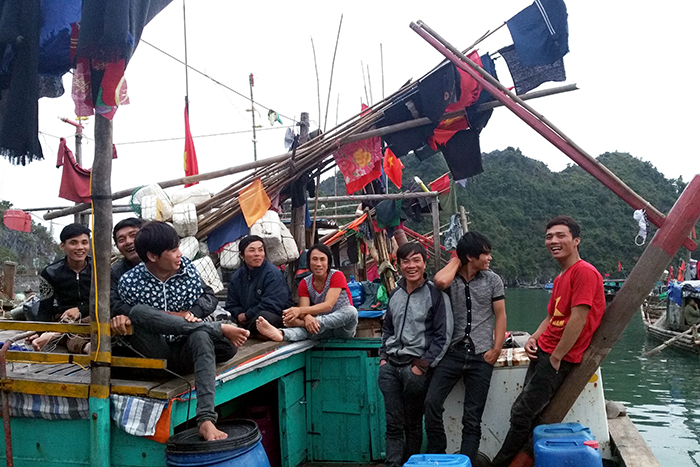
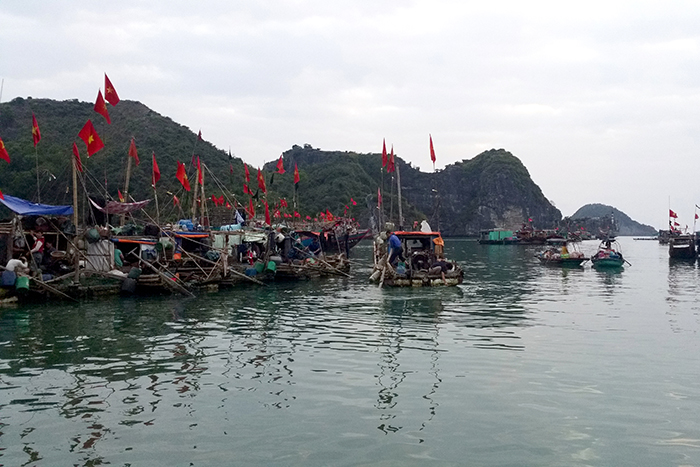
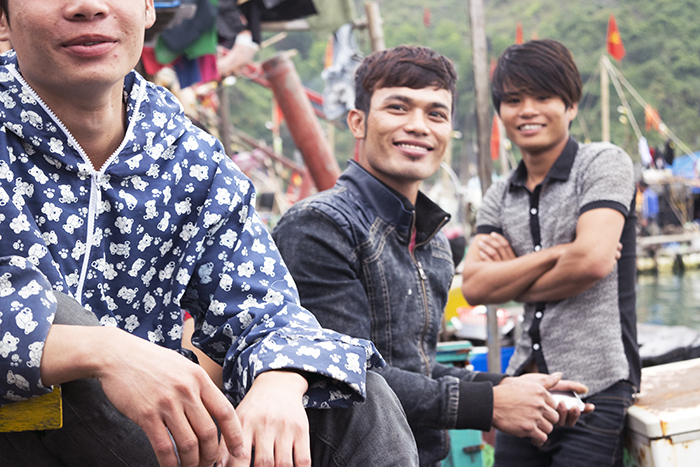
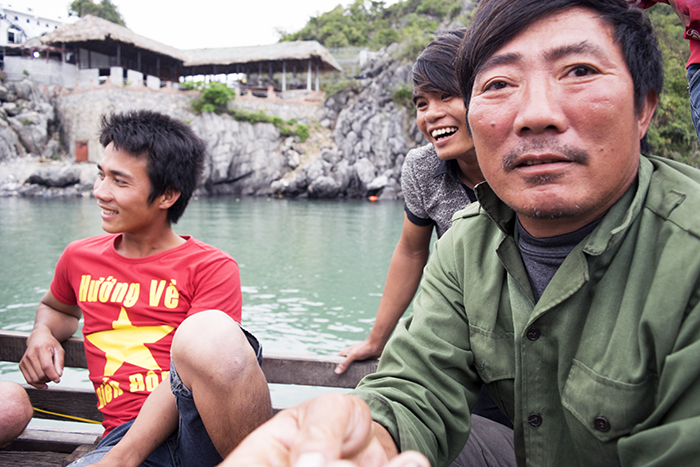
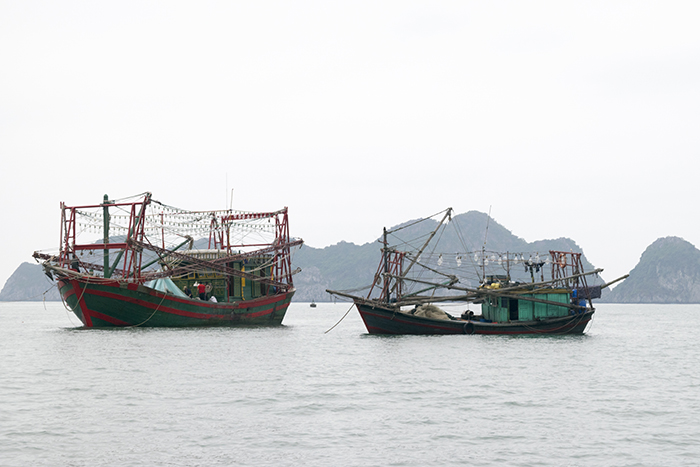
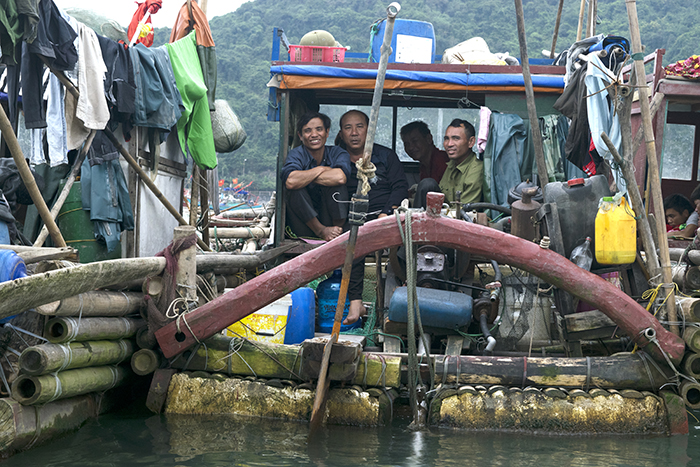
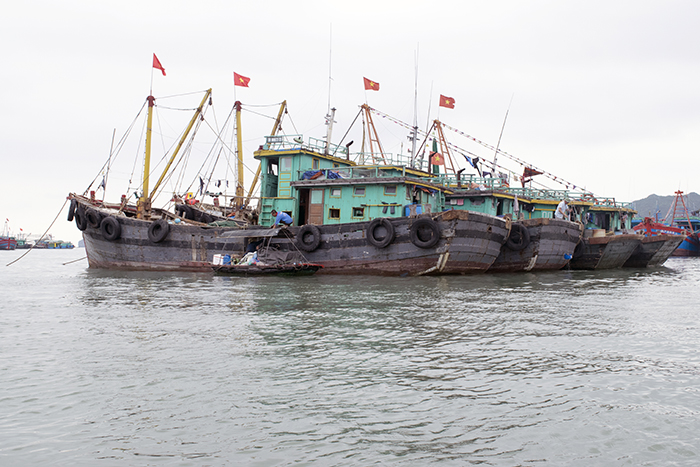
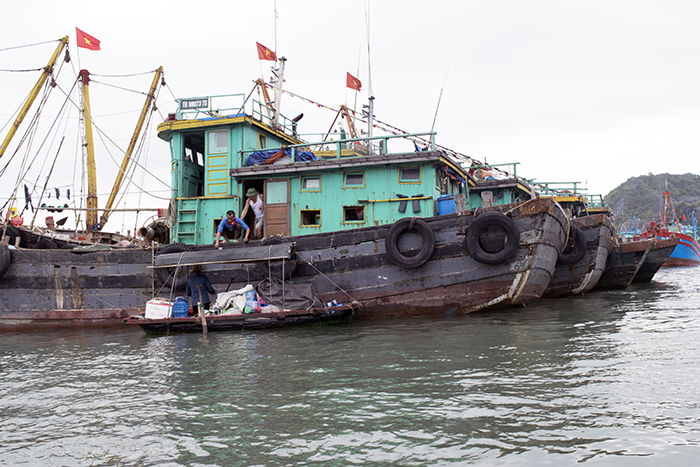
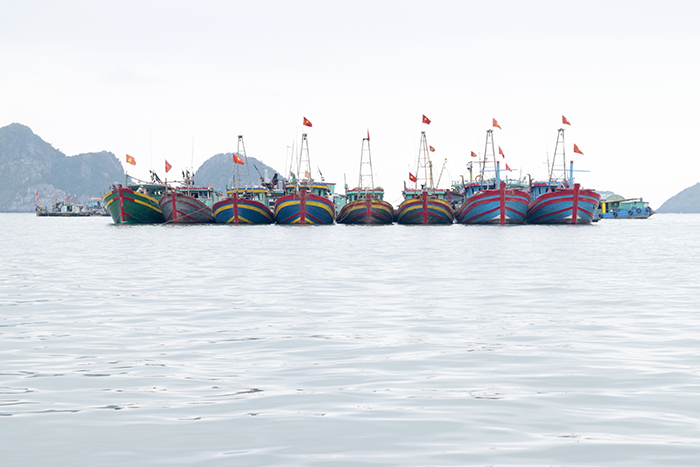
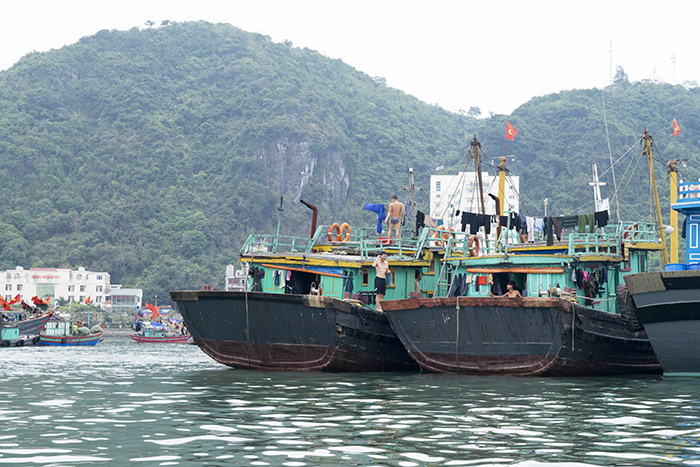
We haven’t officially met, unless you count waving at each other and cheersing shots from different boats in the bay as meeting. But now he’s paddling us, slowly but steadily, to a row of fishing boats that are tied together and the crew of rowdy fisherman that are partying on them. As we get closer, the young men on board cheer, laugh, and shout at us.

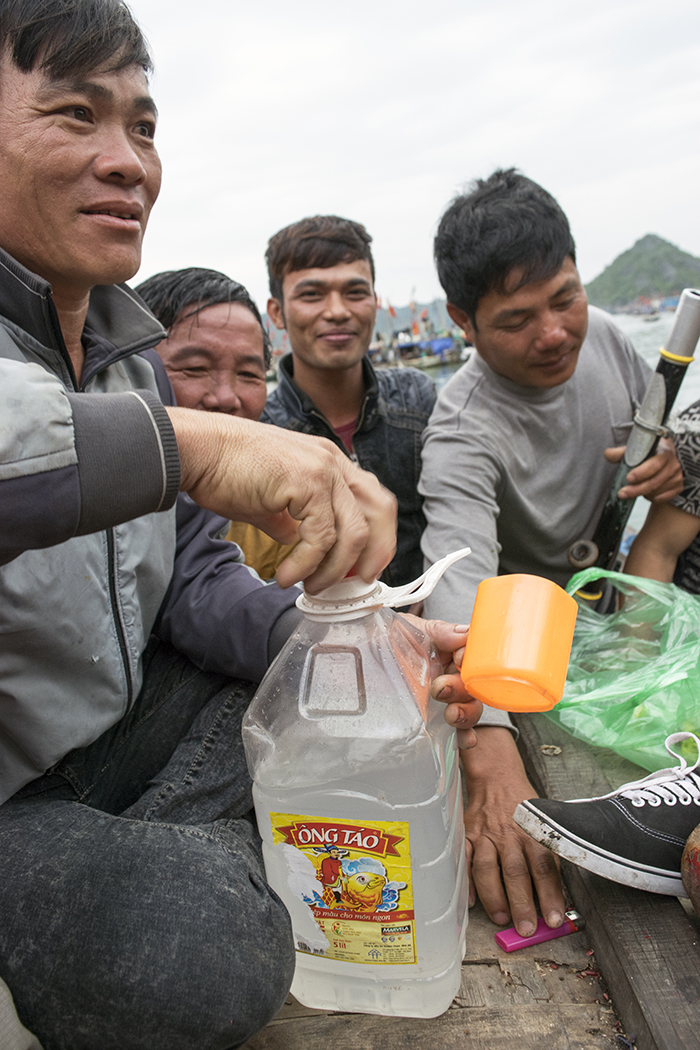
The deck is open. Everyone sits crosslegged in a circle, taking turns chugging cups of grayish moonshine from a large plastic container.  It smells like dirty water and mold. They offer the burning liquid to us and we take it in swift gulps. Afterwards they hand out water for chaser. They’re also passing around a bamboo bong that they’re packing with fat wads of tobacco. I shake my head when it’s pointed at me; the smoke they’re inhaling is thick and just watching them coughing it out through their nostrils makes my stomach queasy.

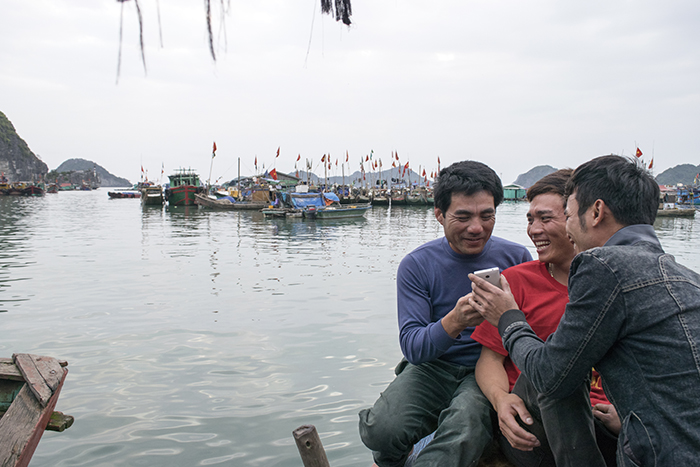
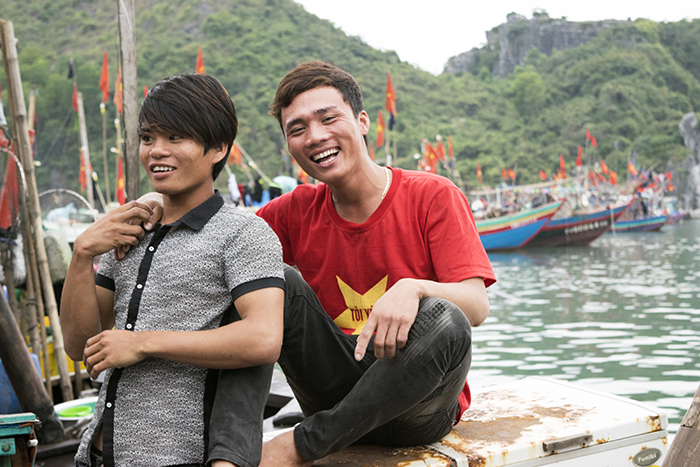
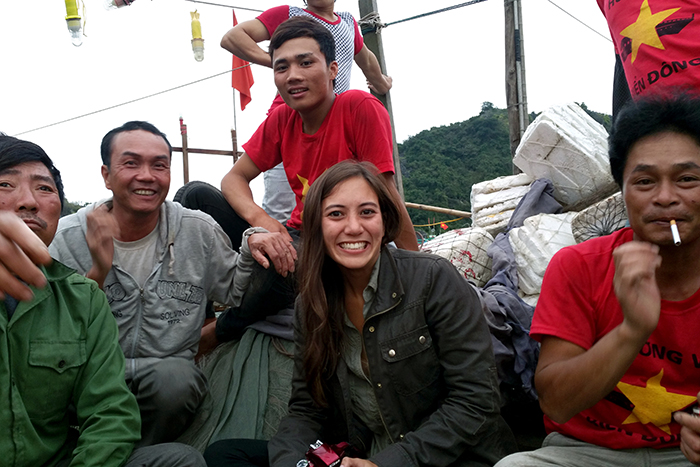
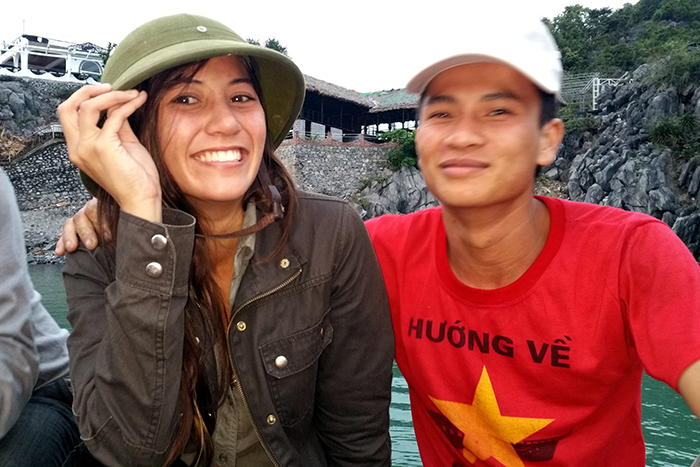
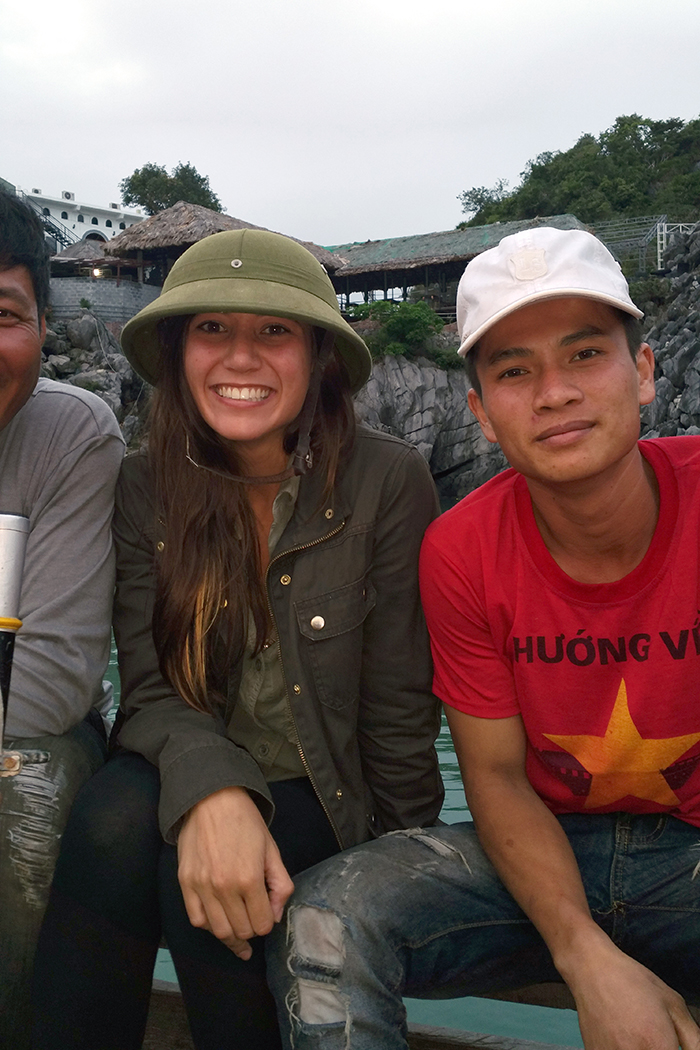
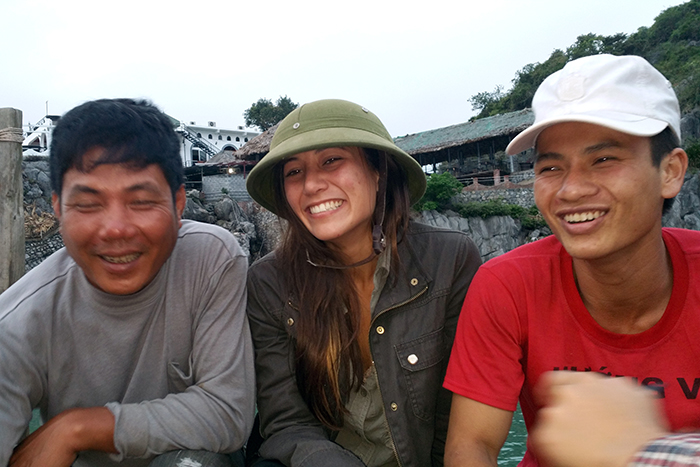
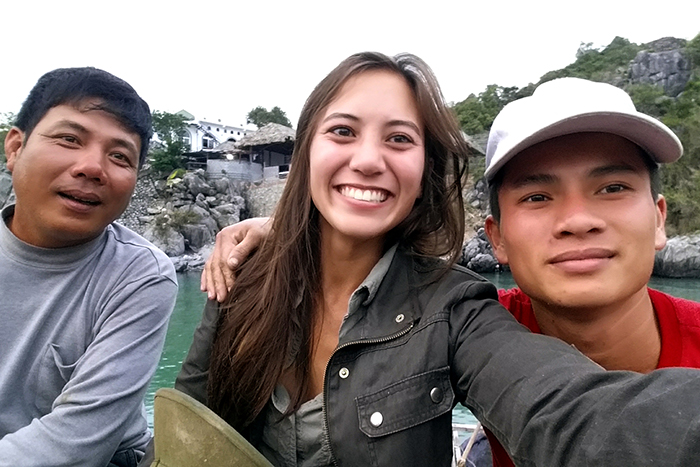
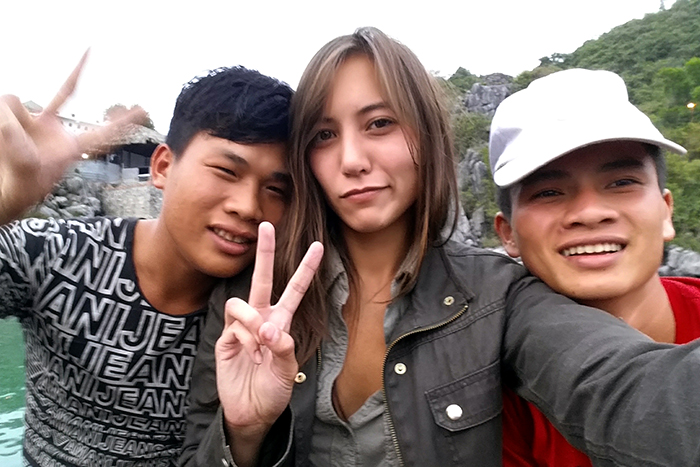
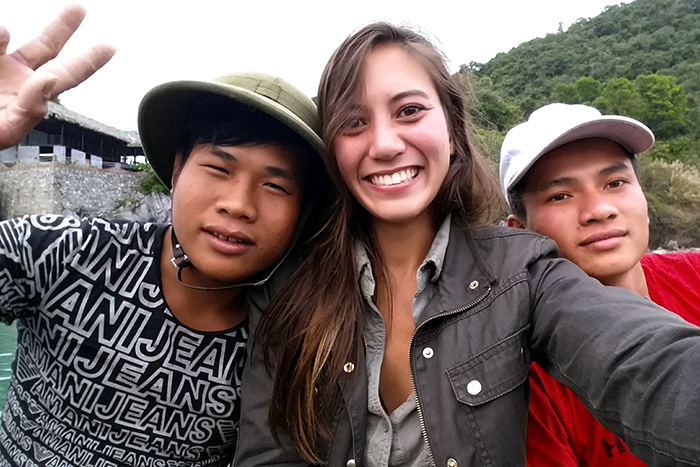
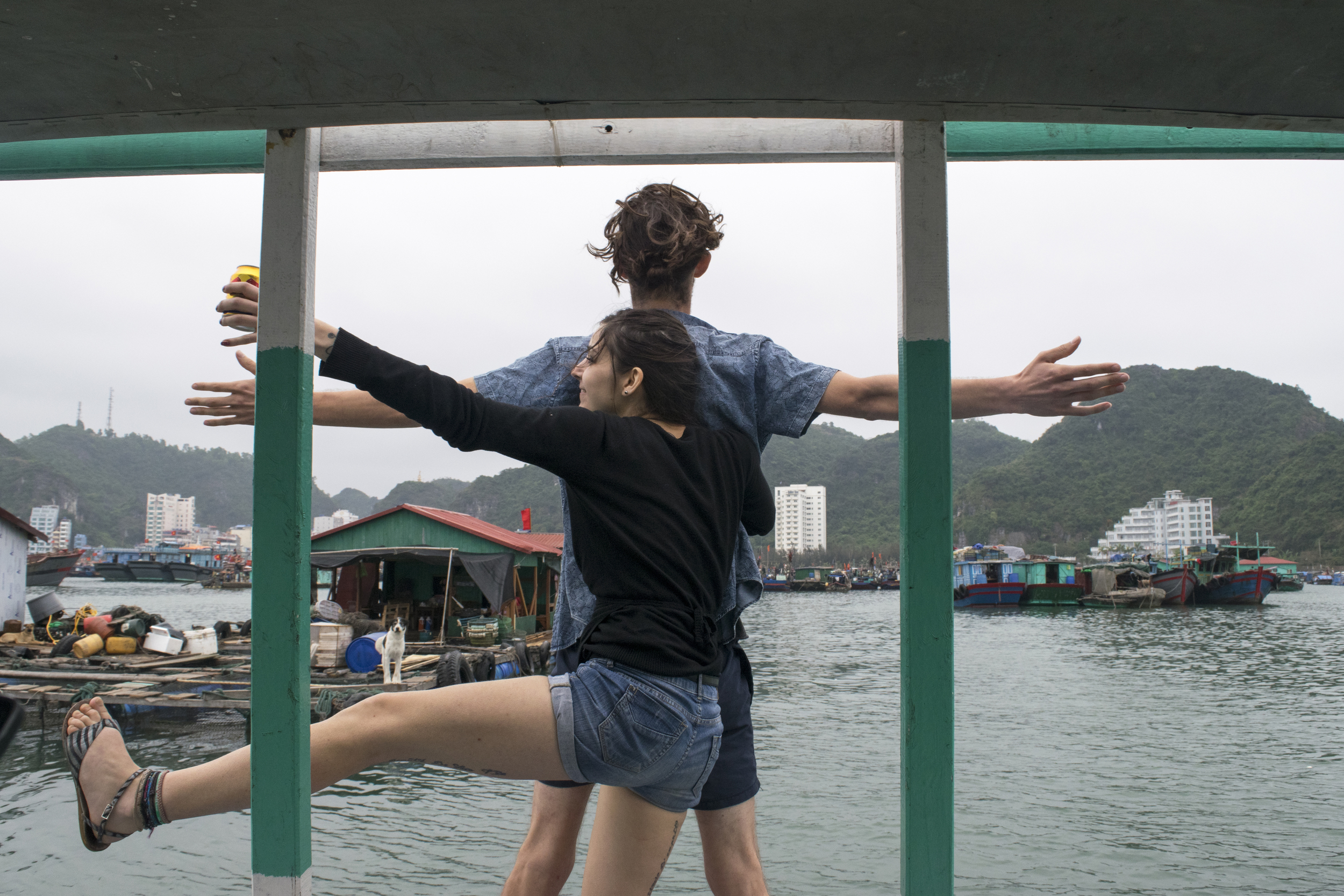
Nobody speaks English and we can only communicate with hand gestures. One man pulls out his cell phone and types out “22” on his calculator, points at himself. I nod and use his phone to type “23.”  After a few minutes, another man pulls out a smartphone. He wants to take a selfie with me.  We end up taking a slew of them, both laughing as we try on a traditional Vietnamese military hat and make funny faces at each other. It’s strangely comforting, this common love of selfies, when I’m surrounded by strangers on a boat in the middle of the bay of a foreign country. It feels so normal, so human, I almost feel at home.

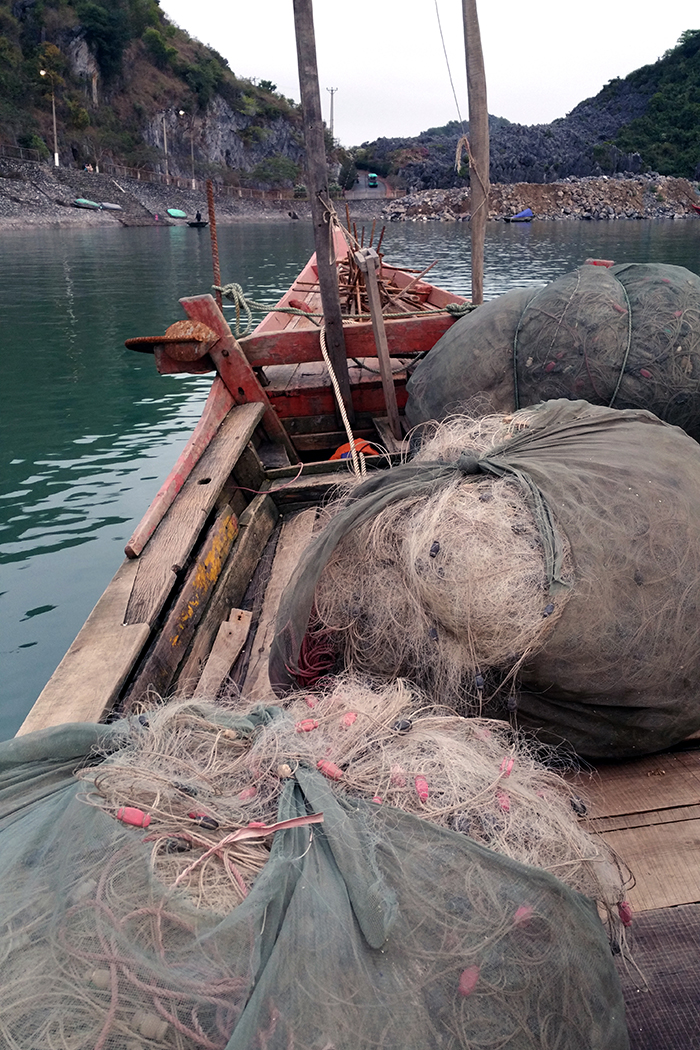
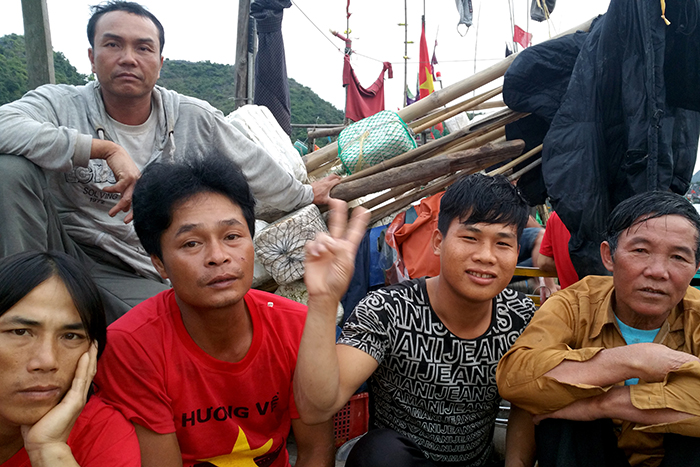
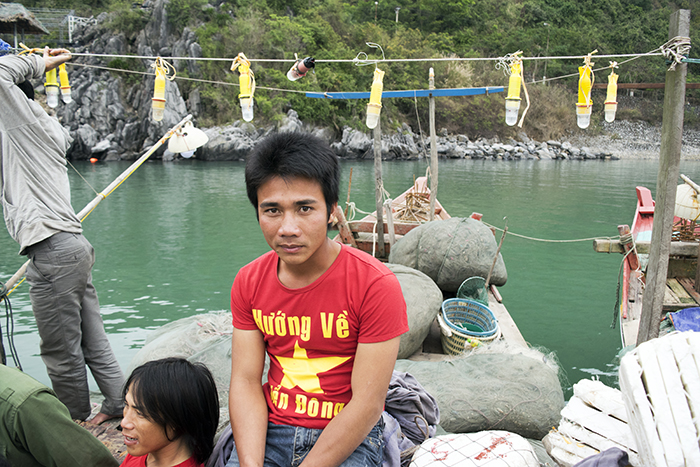
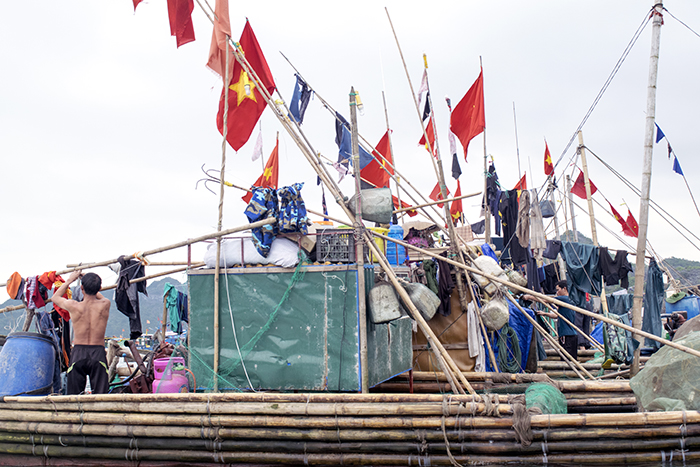
It’s also clear that the fishermen have never hosted foreigners on their boat before. Several men linger back, just staring, while their drunken mates show me around. I’m given the grand tour, which includes huge piles of nets like webbed hillsides in the back, the waterlogged underdeck where they keep their catches, a sleeping area in the front sheltered by a short wood awning, and the main deck, where they all huddle and keep booze, snacks, and extra clothes.

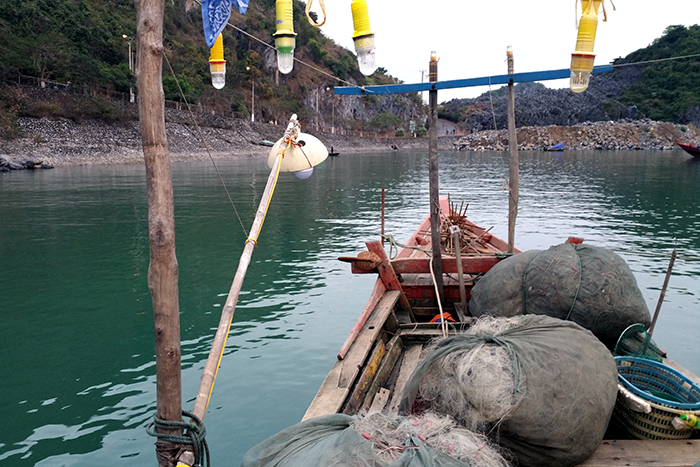
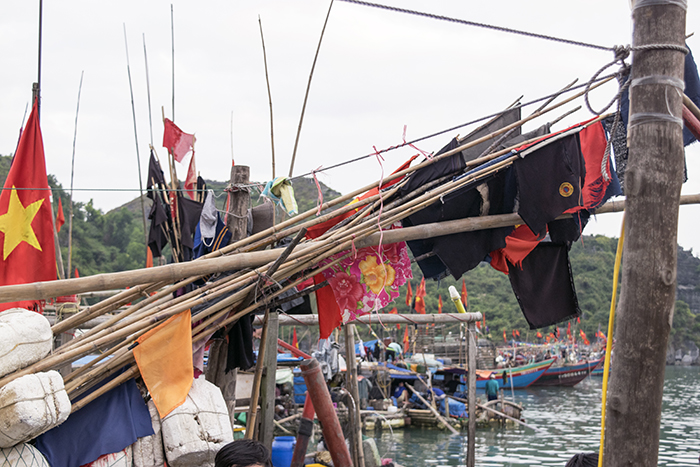
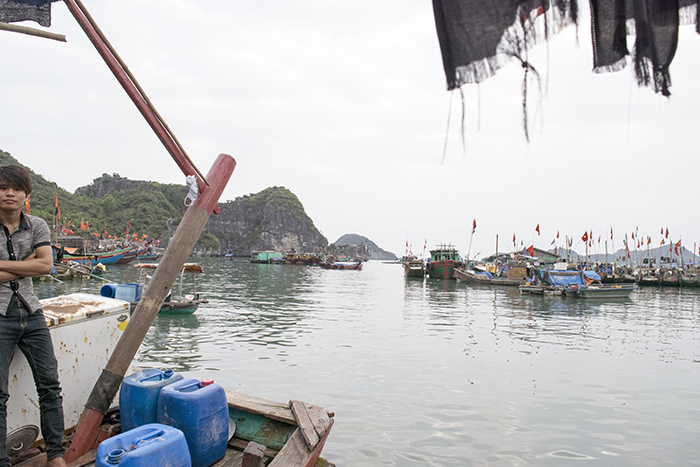
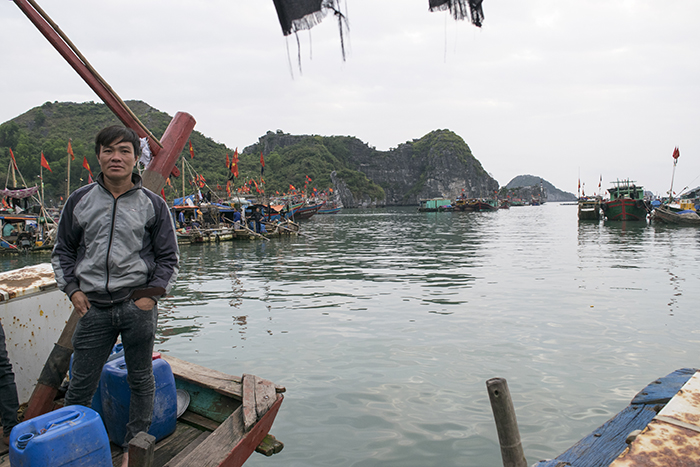
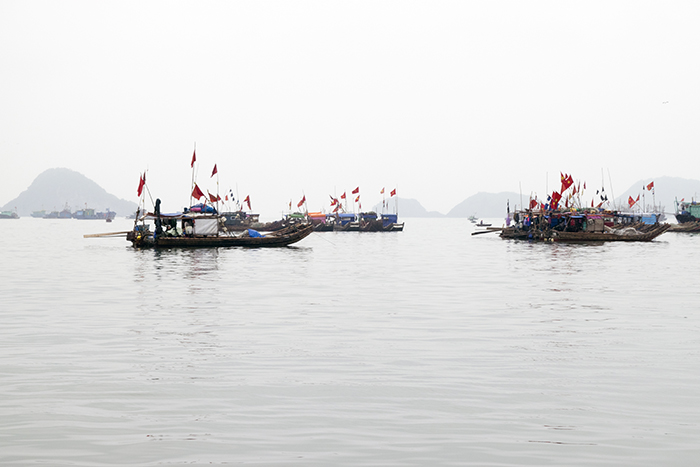
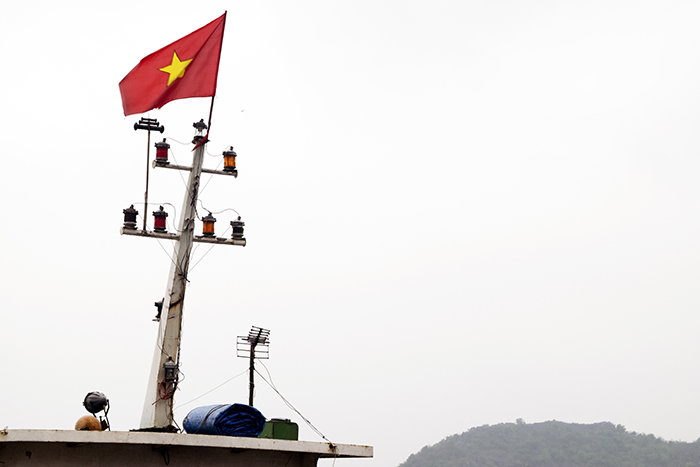
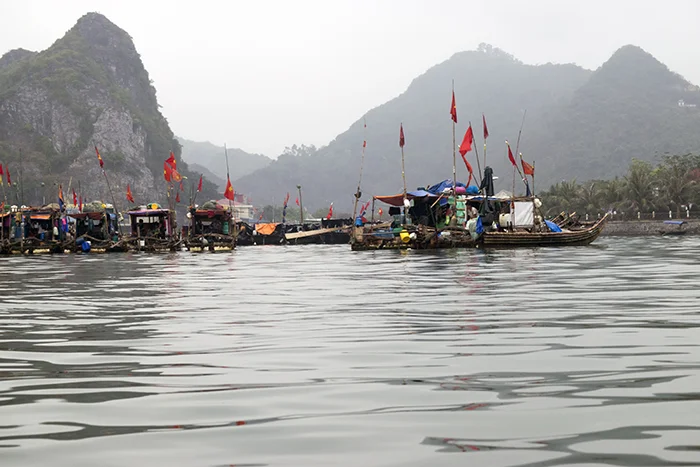
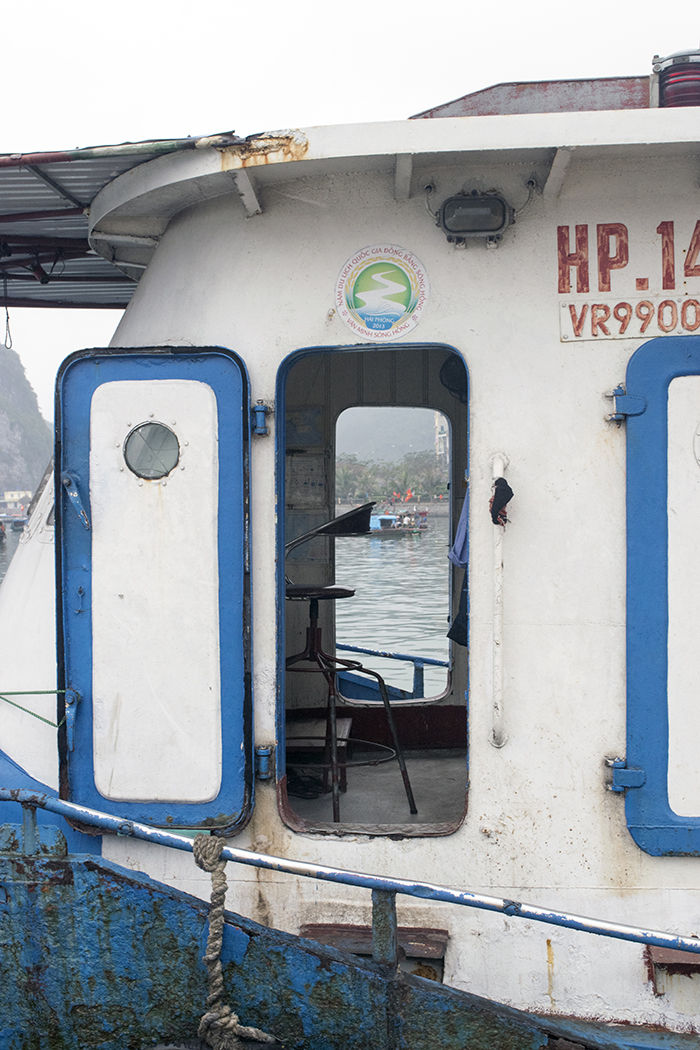
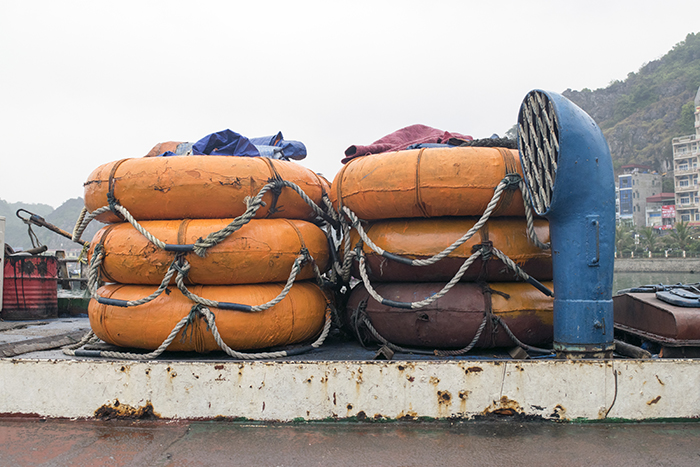
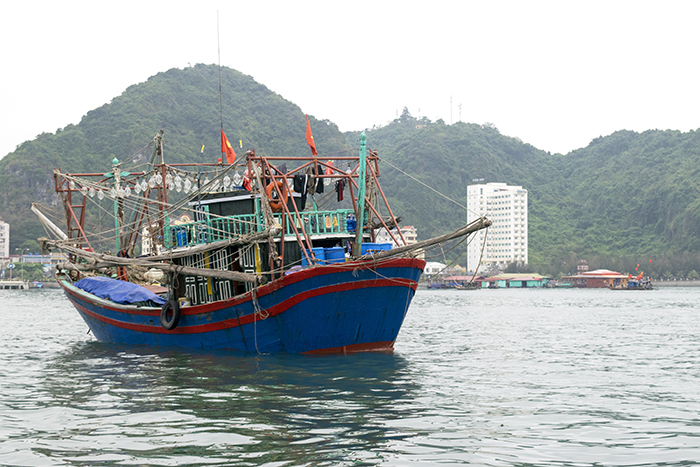
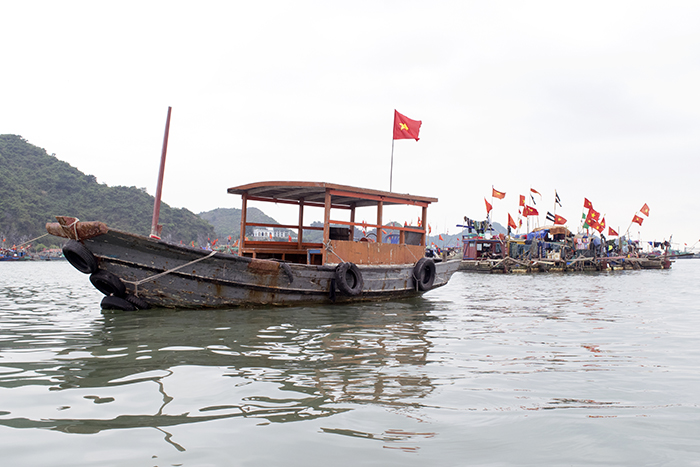
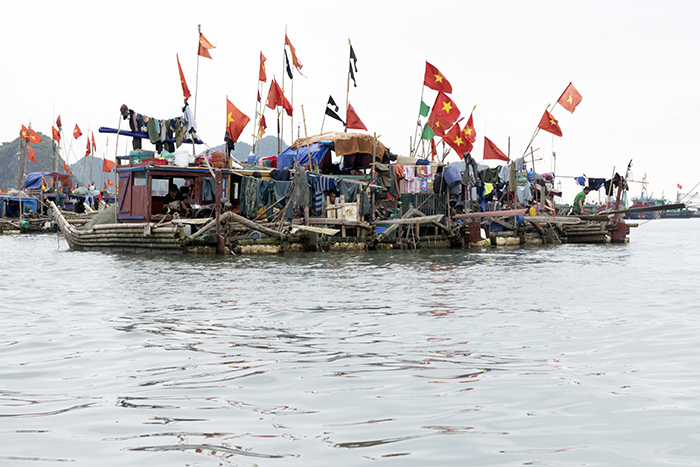
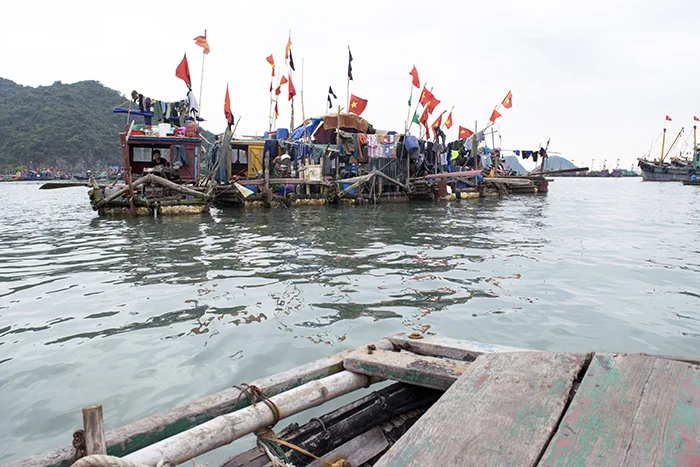
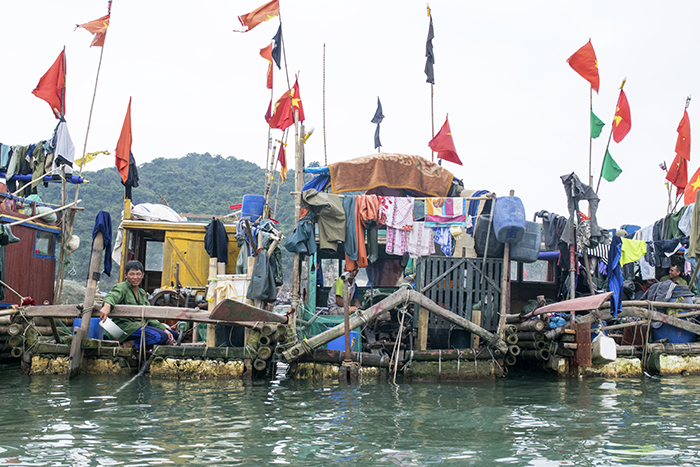
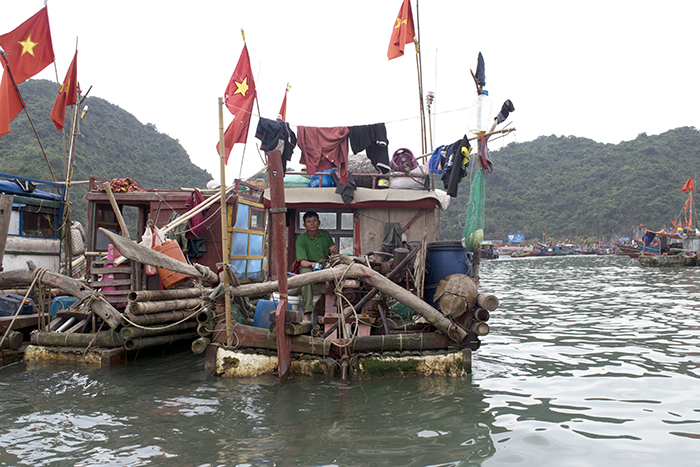
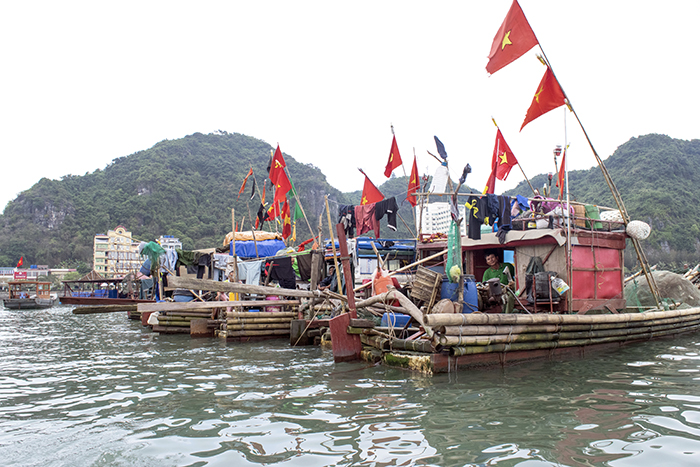
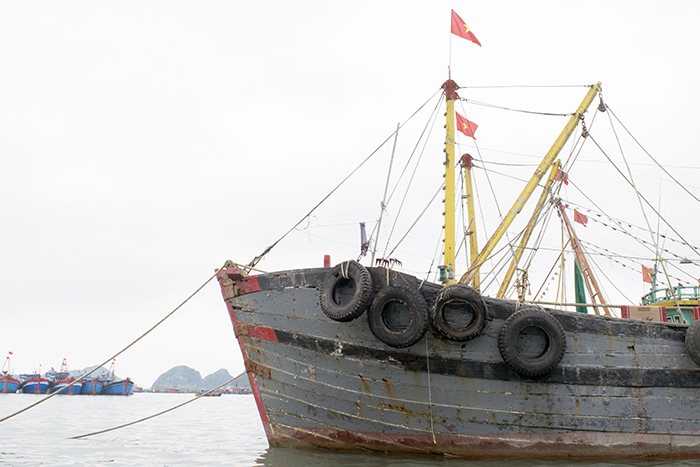
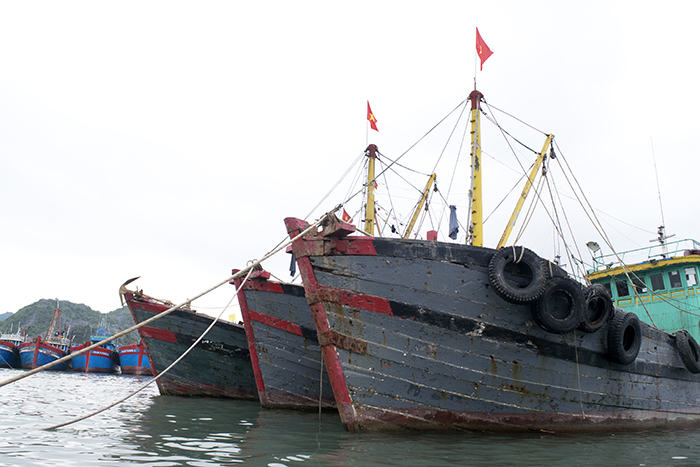
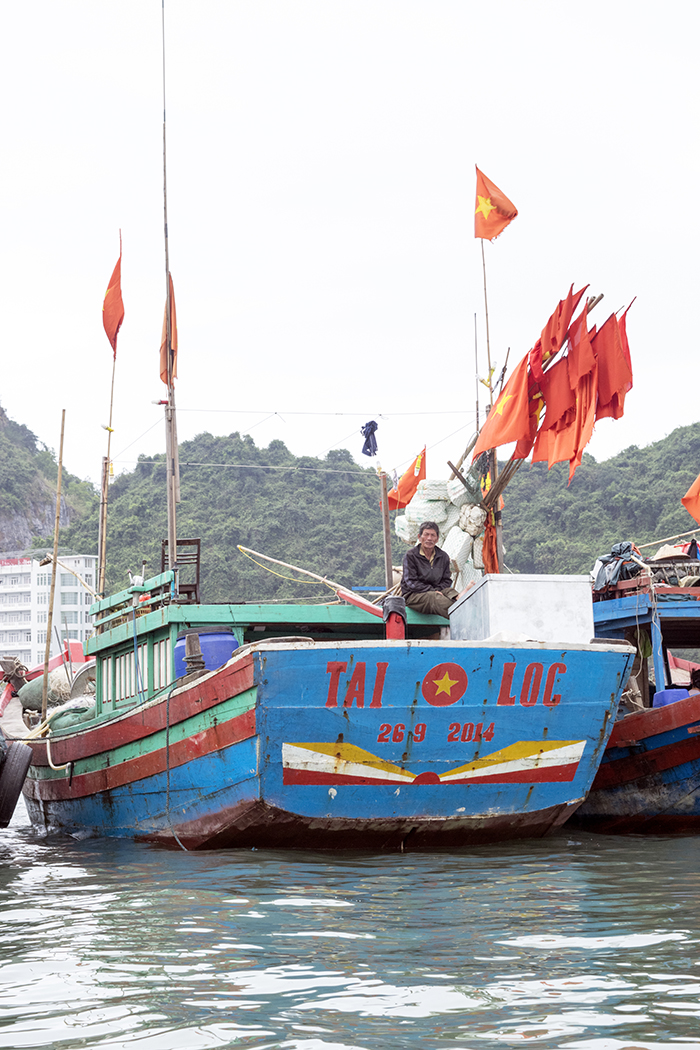
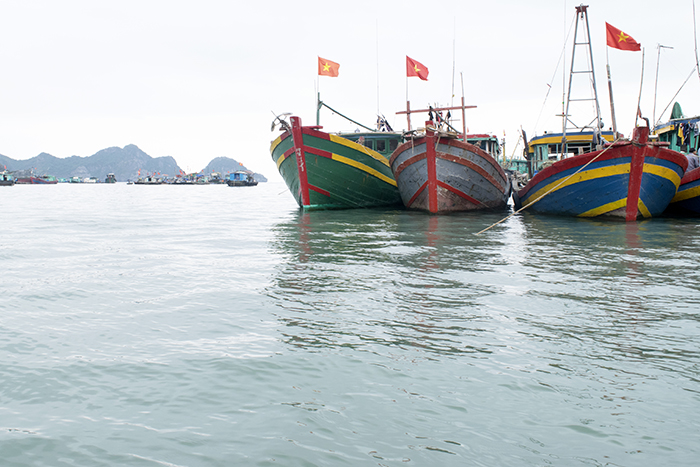
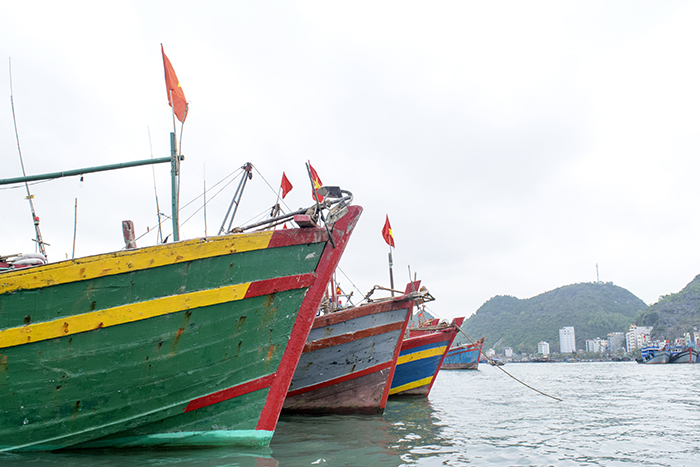
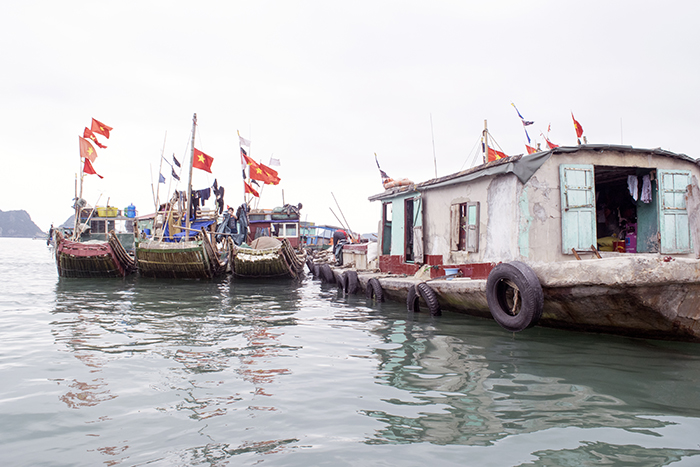
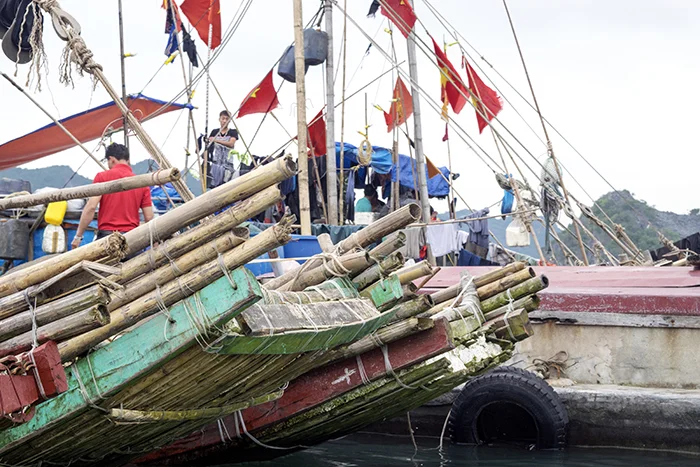
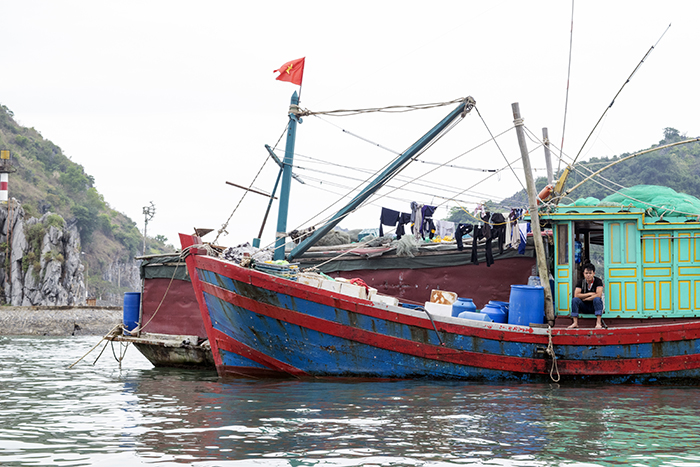
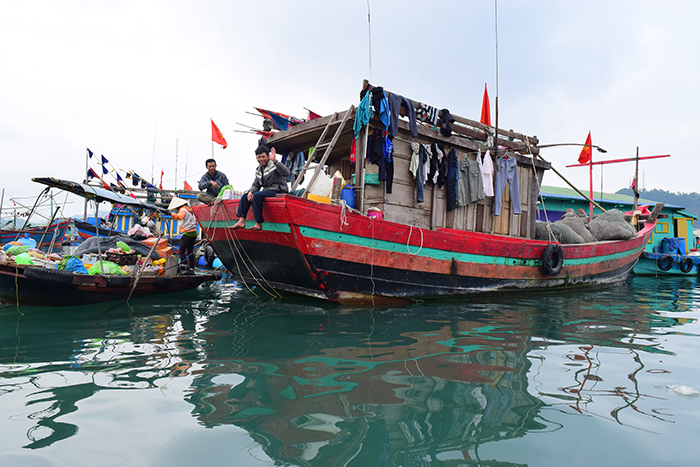
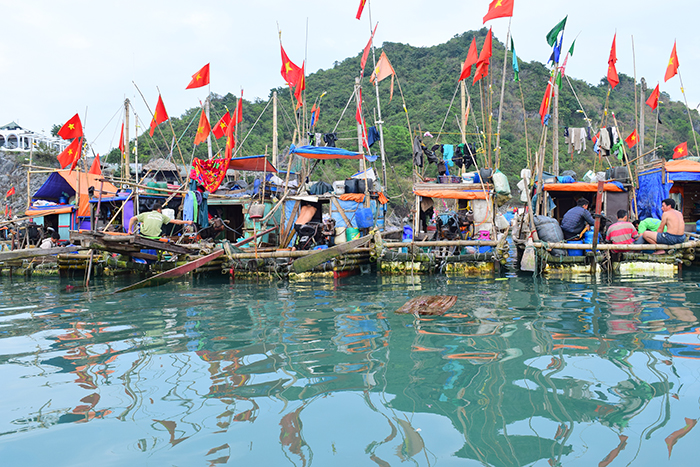
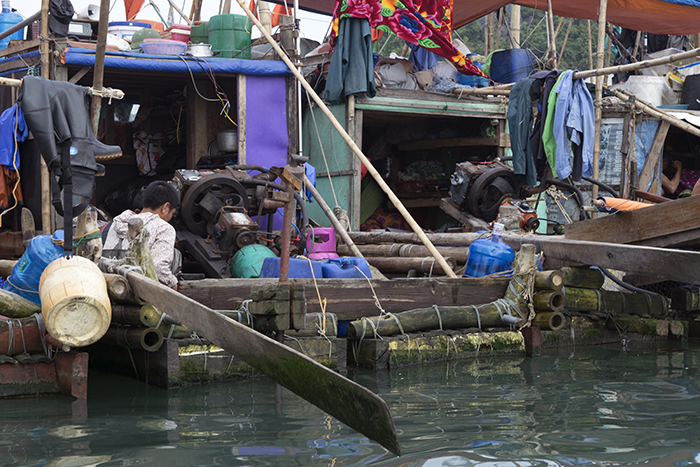
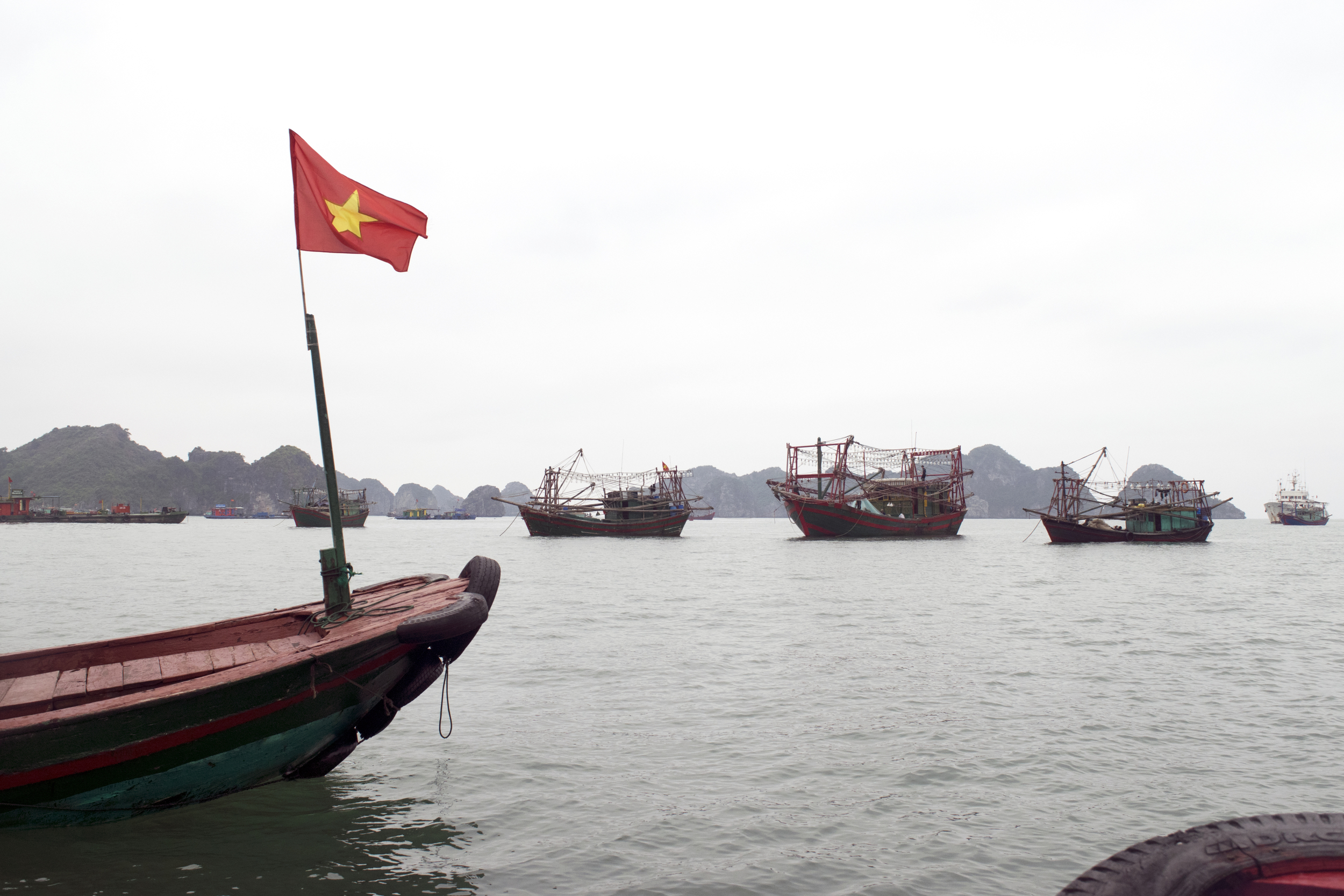
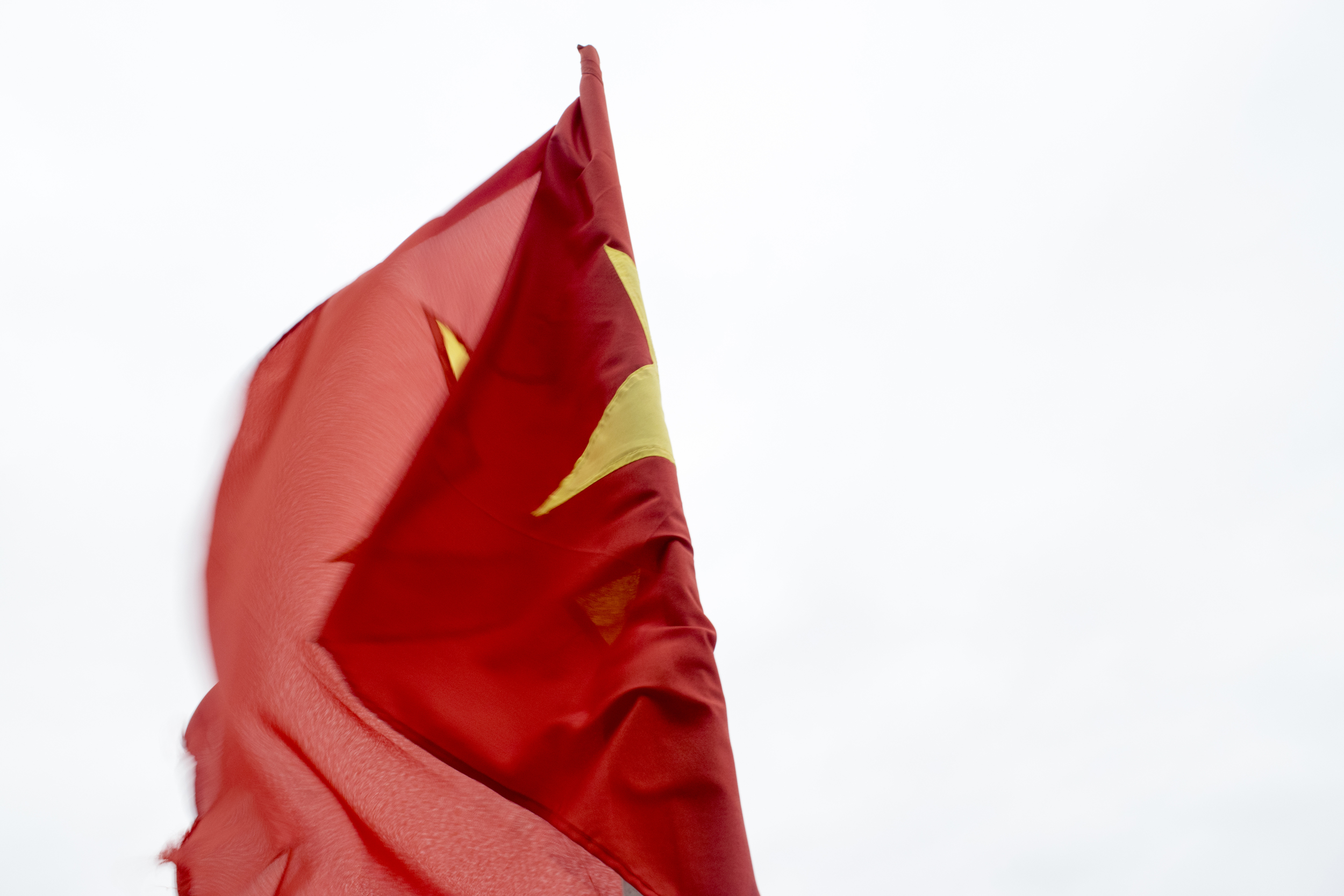
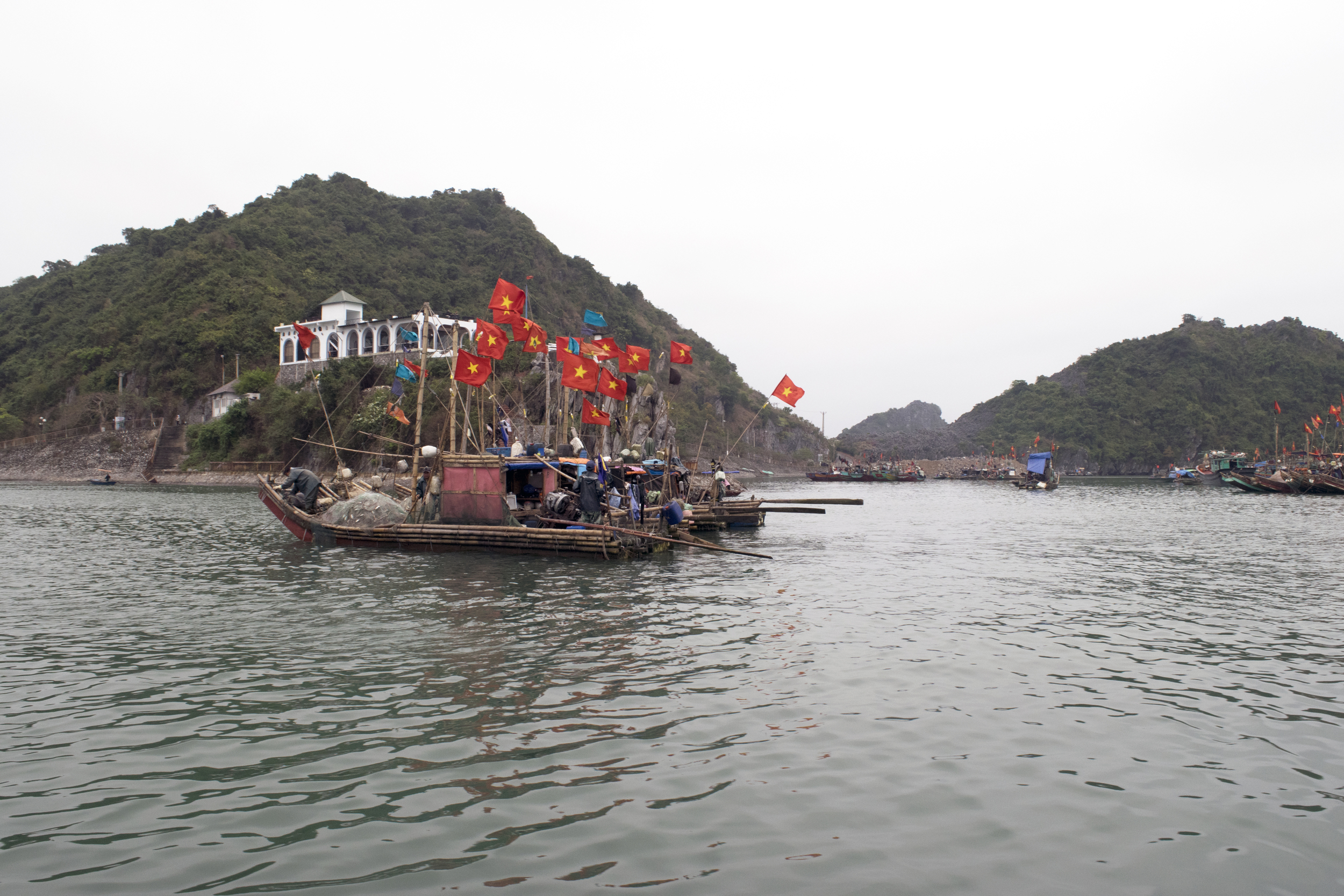
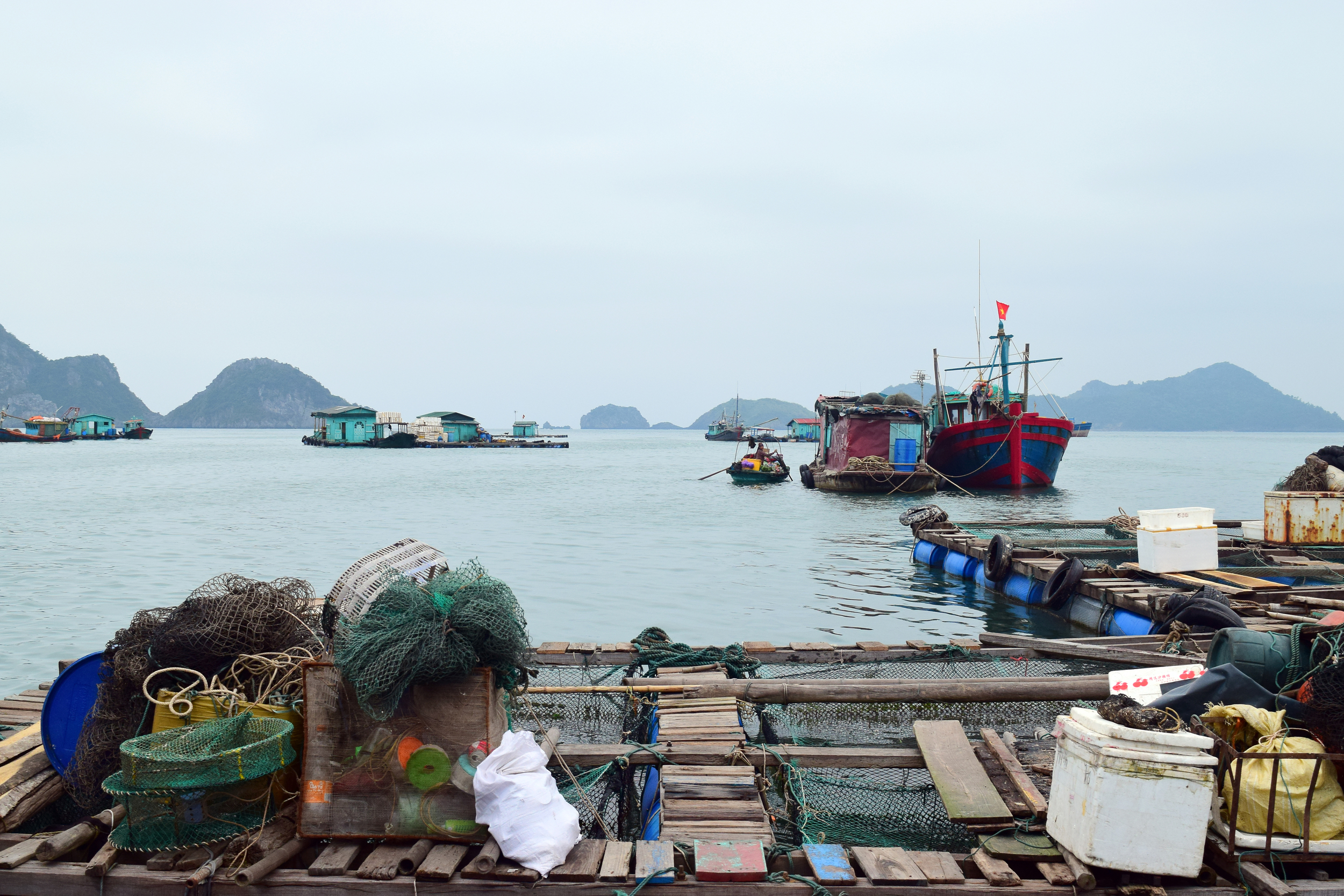
The boat itself is a floating miracle. The decks are made of damp wood, rusty nails, and shredded tires. There’s bamboo sides and blocks of foam keeping everything above water. It all seems to defy gravity. I can also finally see all the flags up close, the ones I’ve noticed from the shore that decorate the masts of every vessel in the bay. This ship carries black ones and red ones; and they’re all just ragged sheets of cloth. The black ones remind me of pirate ships and I wish I could ask them what they mean. I have a million questions about them: are they all from Ha Long Bay or other regions of Vietnam? Do they fish all night? What do they catch? How long has it been since any of these men has stepped foot on land? But unfortunately the language barrier leaves it all unanswered.

We spend a couple hours on the boat, just hanging out and taking it all in. However, as dusk begins to fall, we’re ushered off. It’s time for the crew to prepare to set out to sea; they have work to do. We’re taken back to shore by the same smiley guy and he takes one last selfie with us on his phone before paddling back out to his sea home.

Welcome to a Lost World

Location: Cat Ba Island, Ha Long Bay, Vietnam

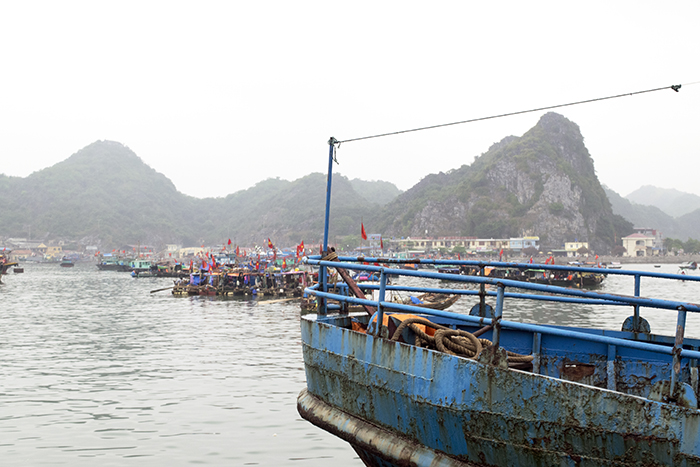
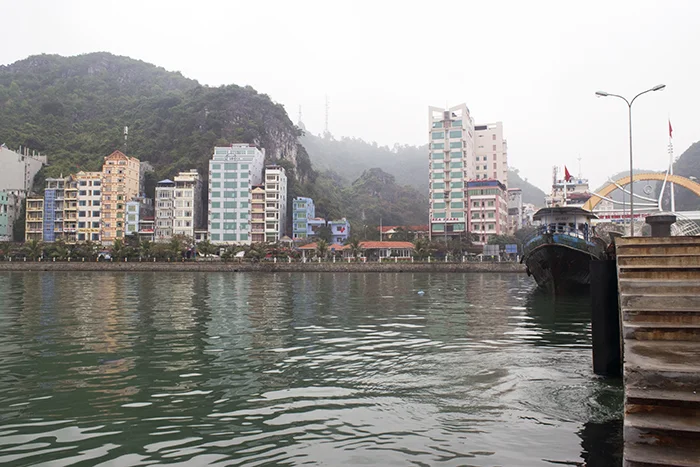
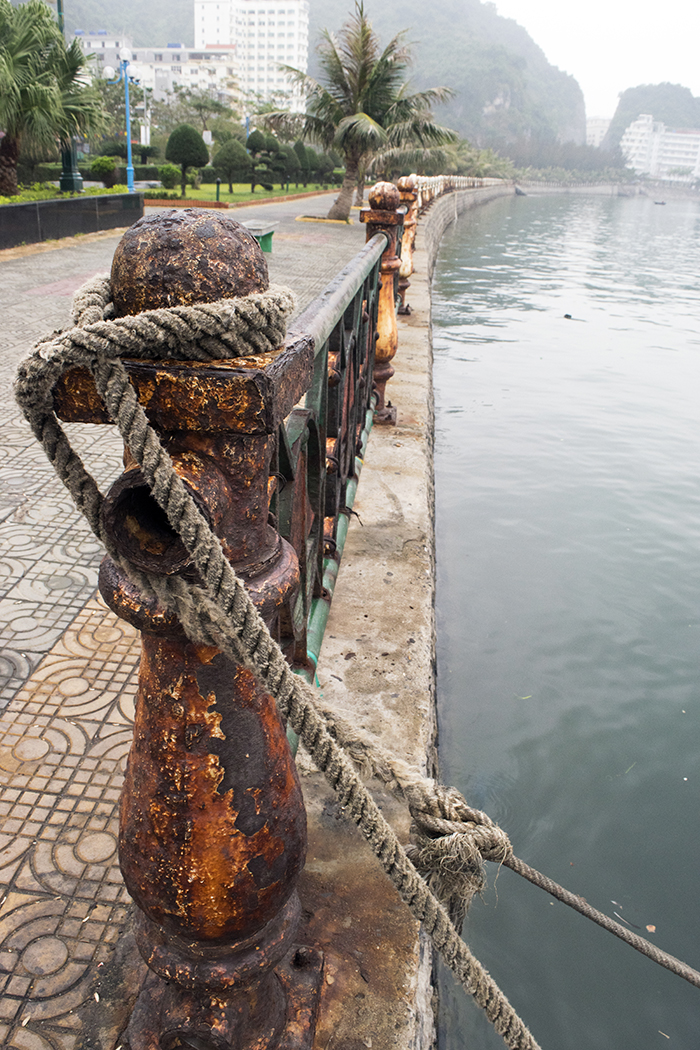
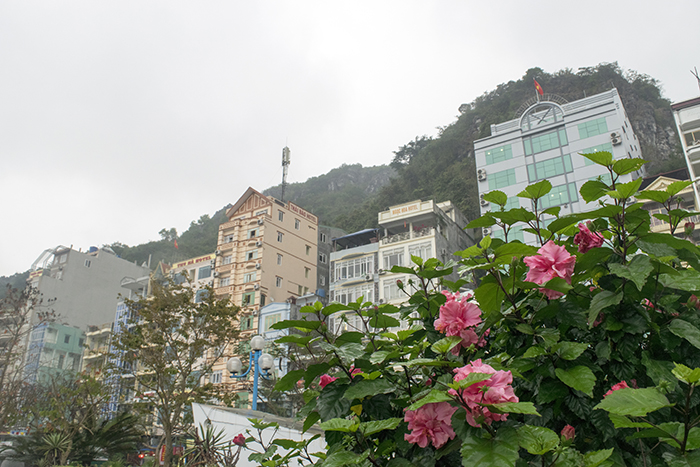
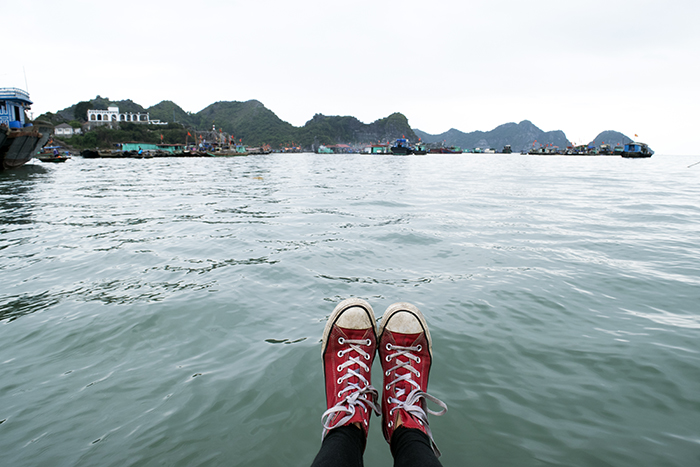
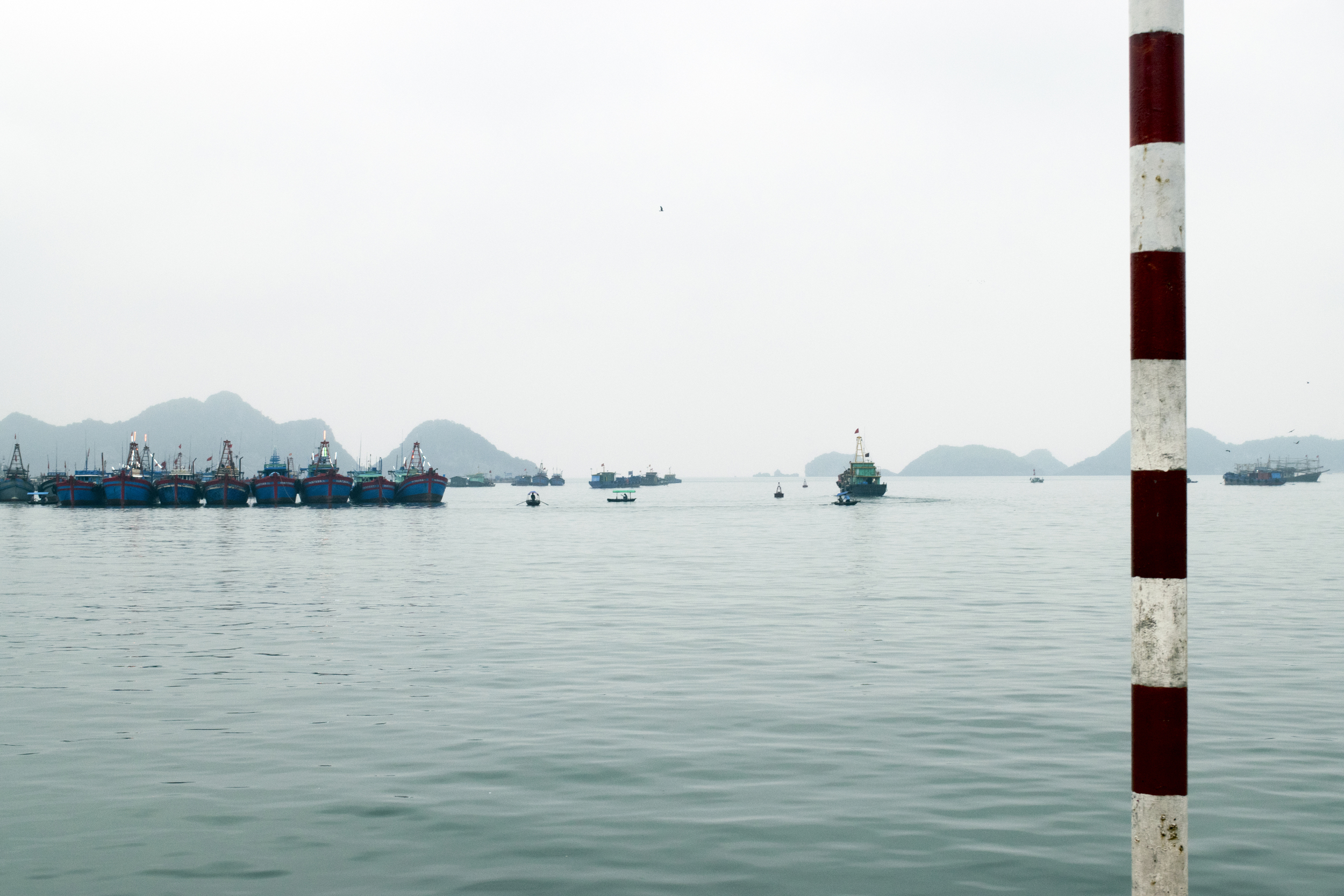
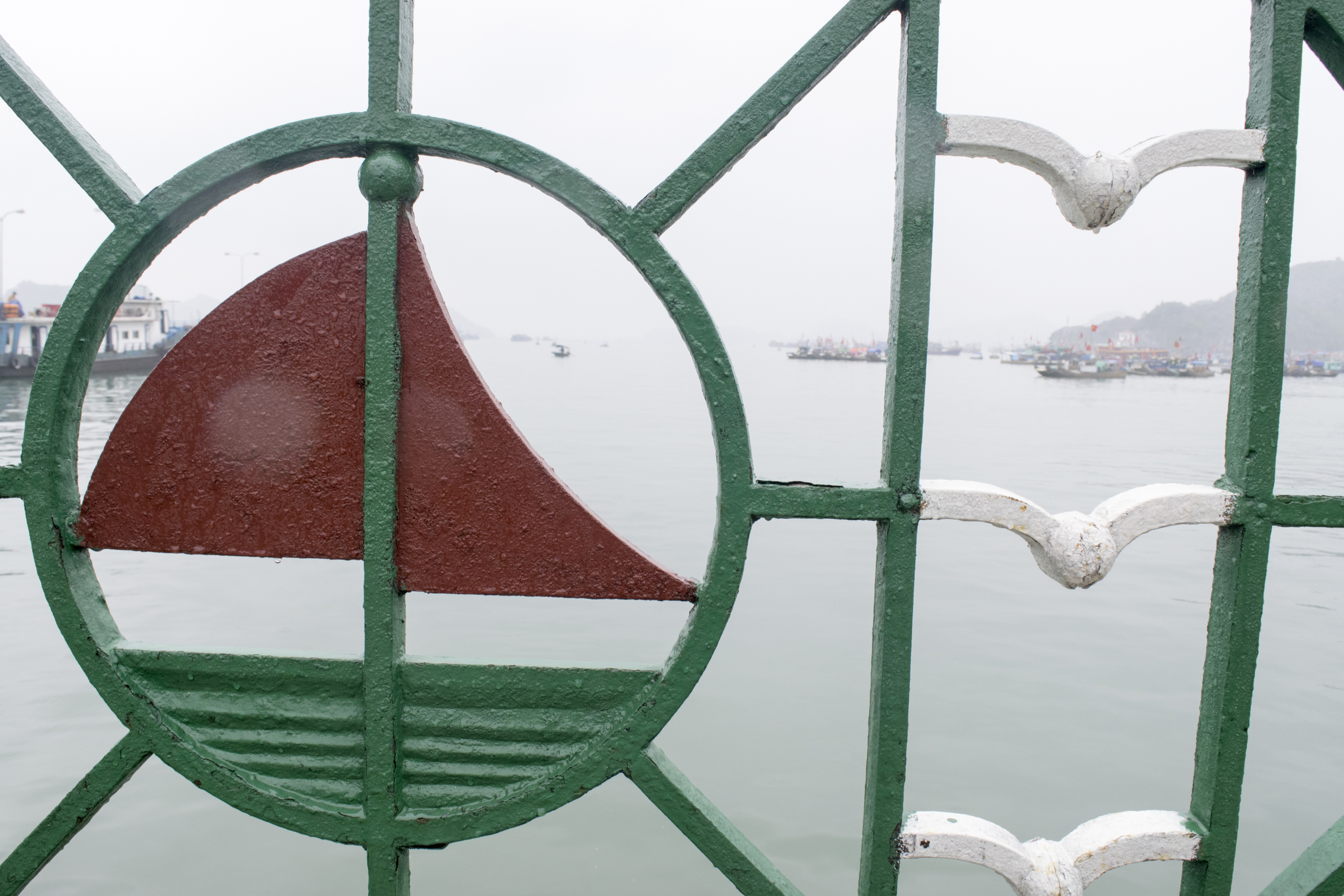
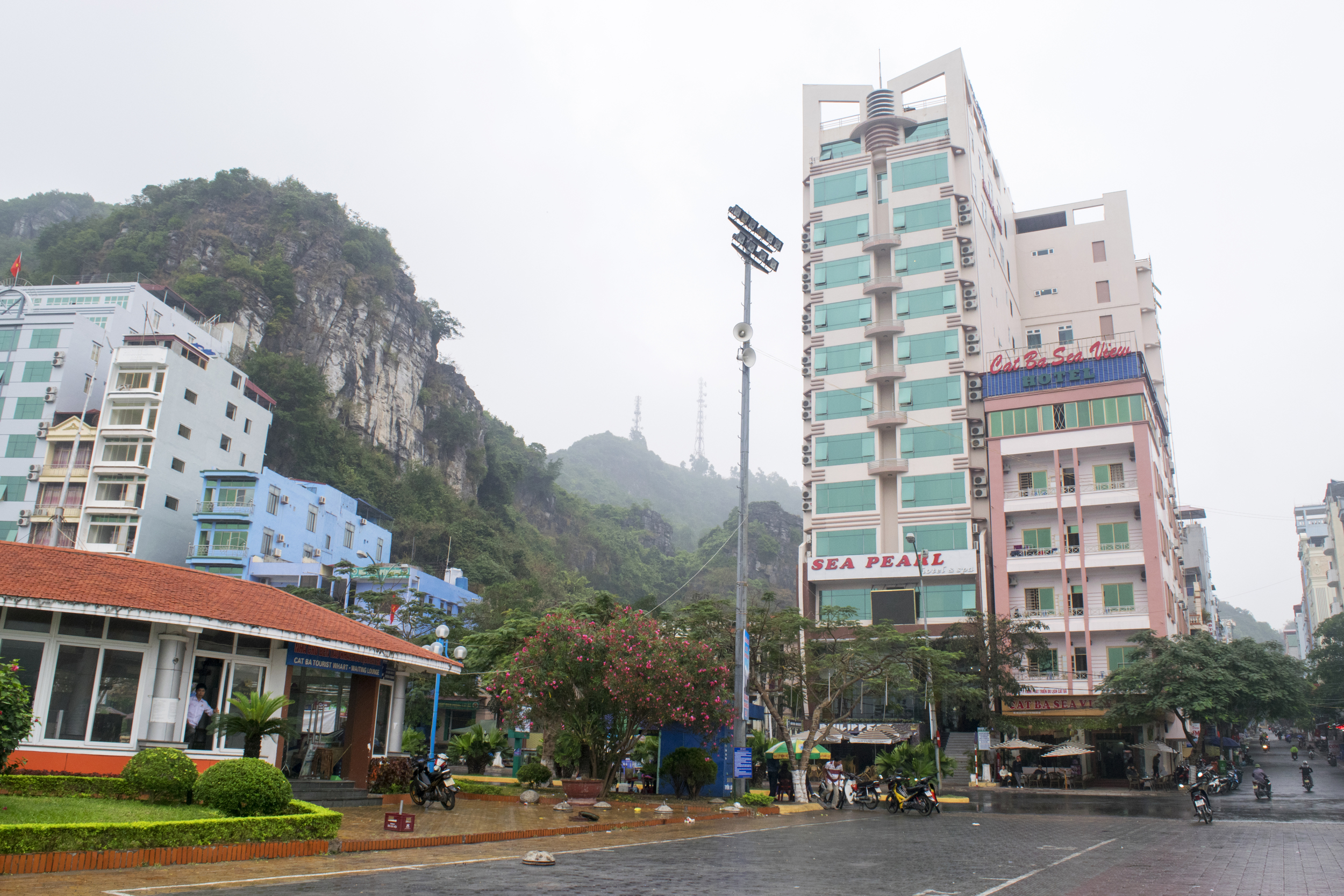
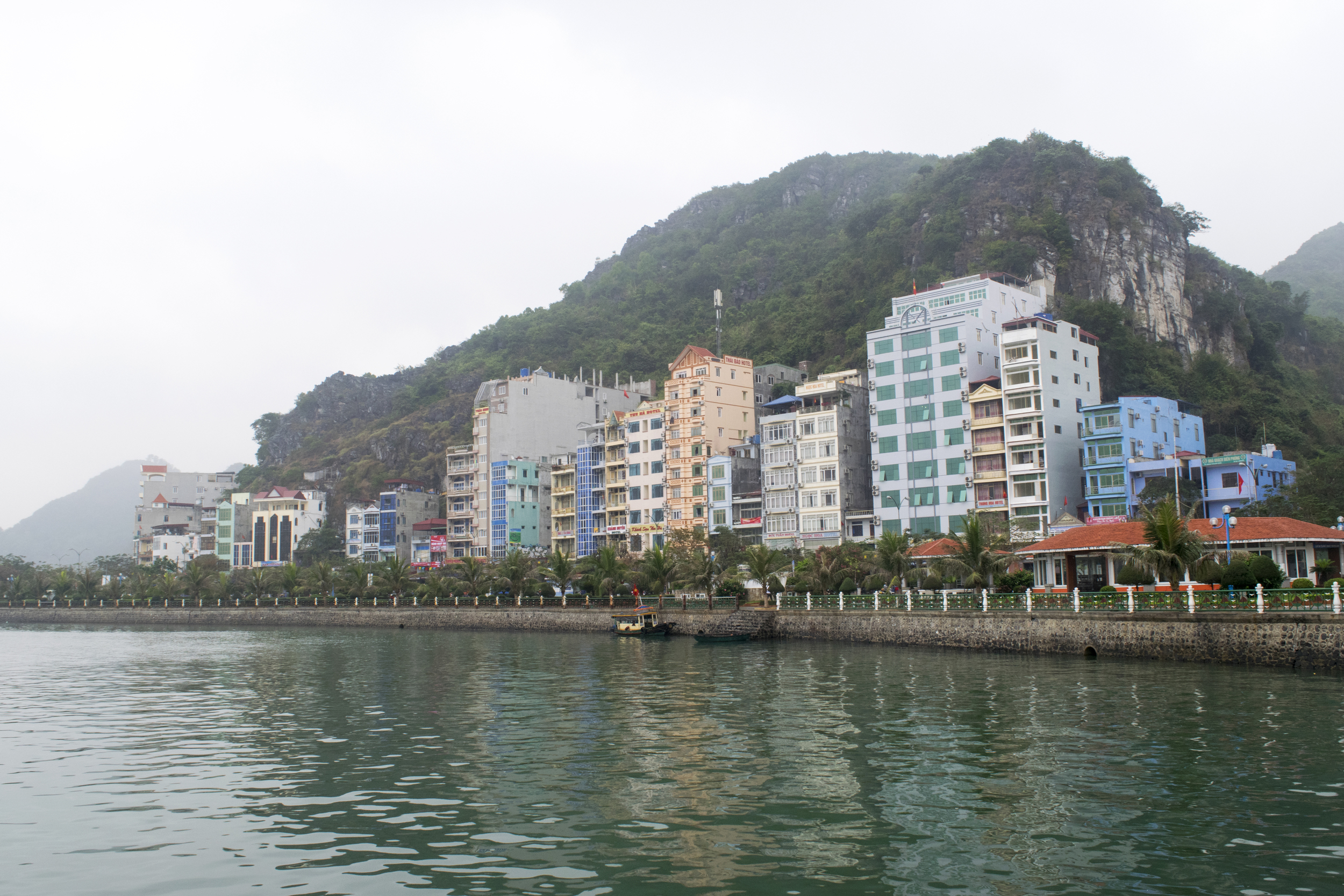
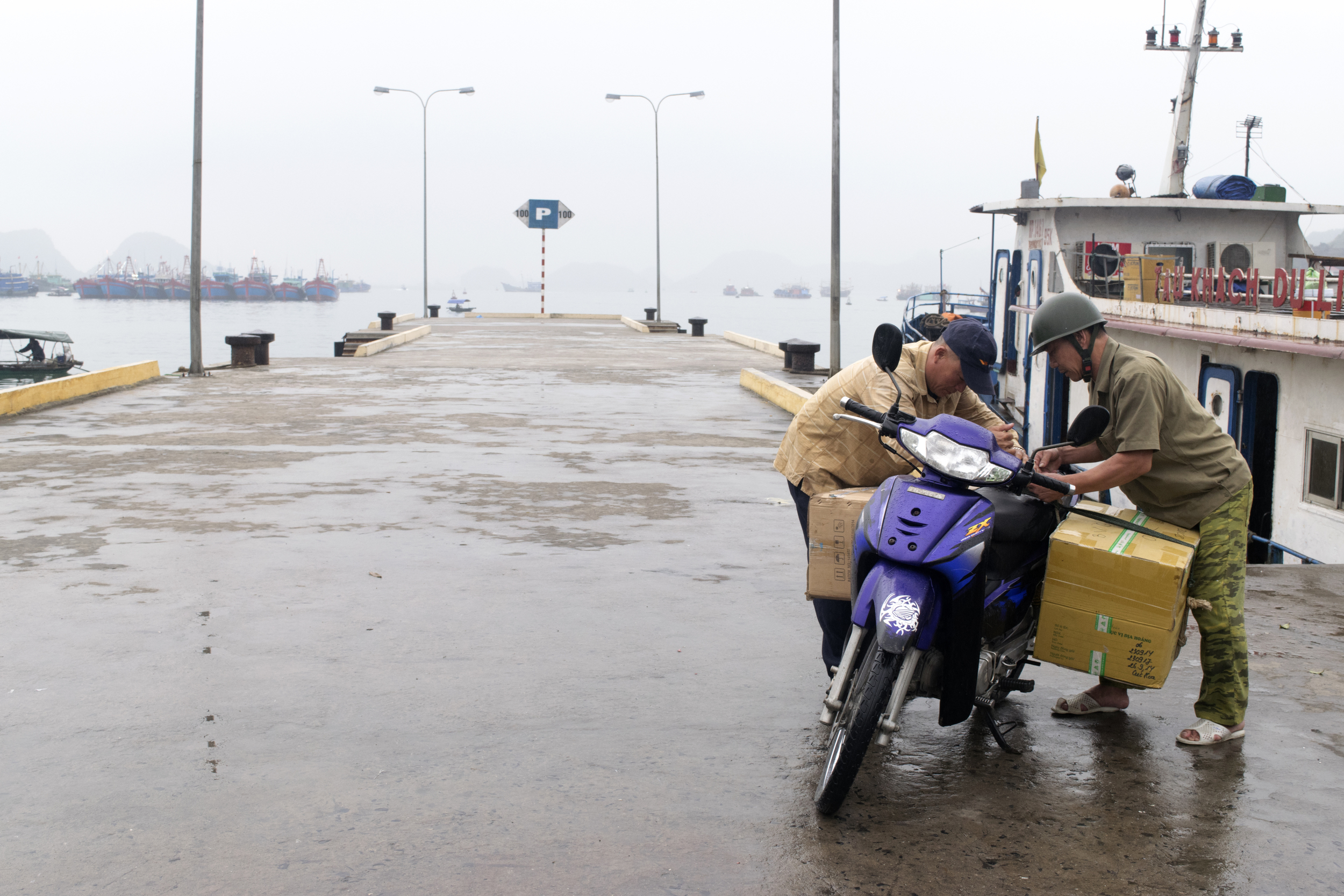
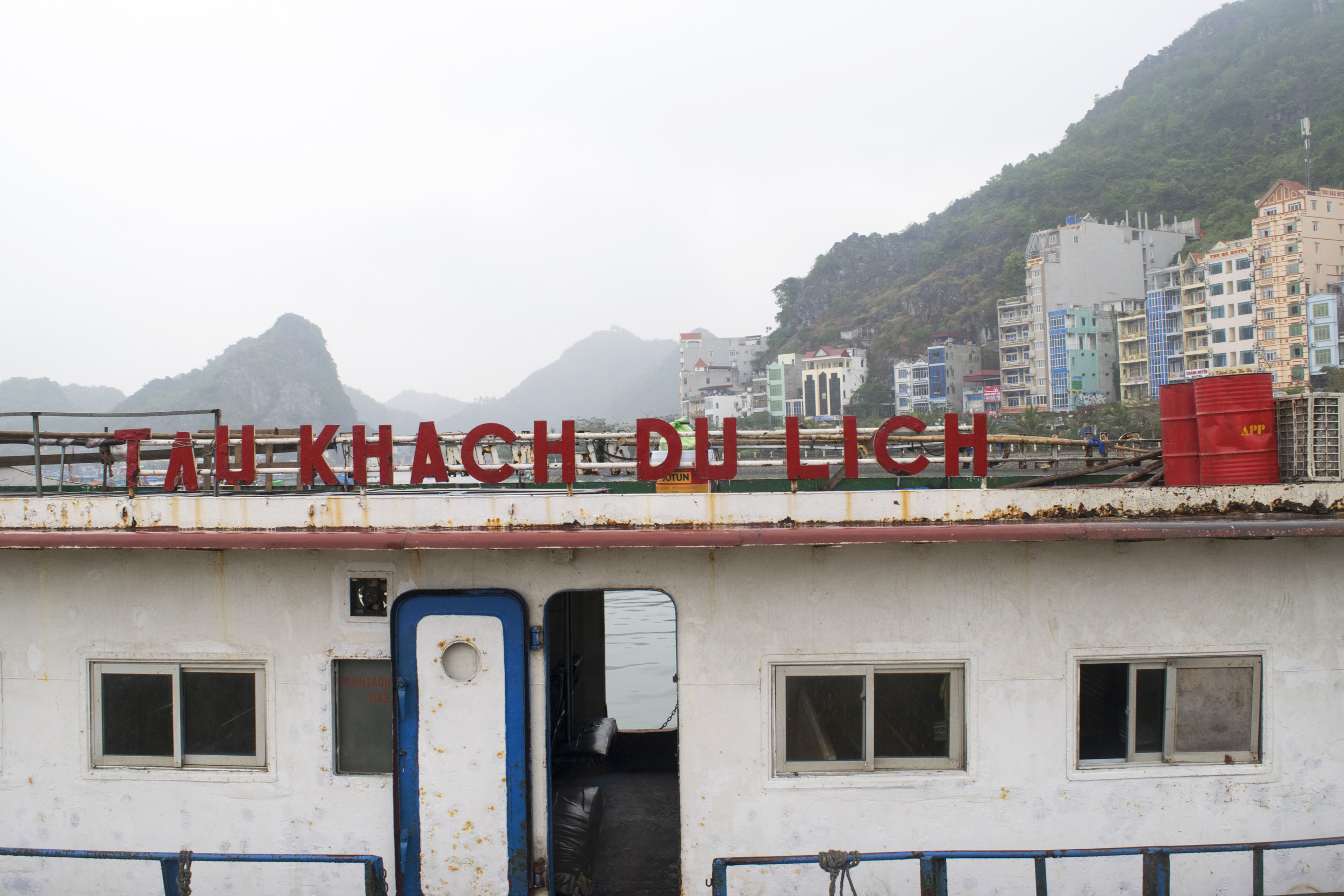
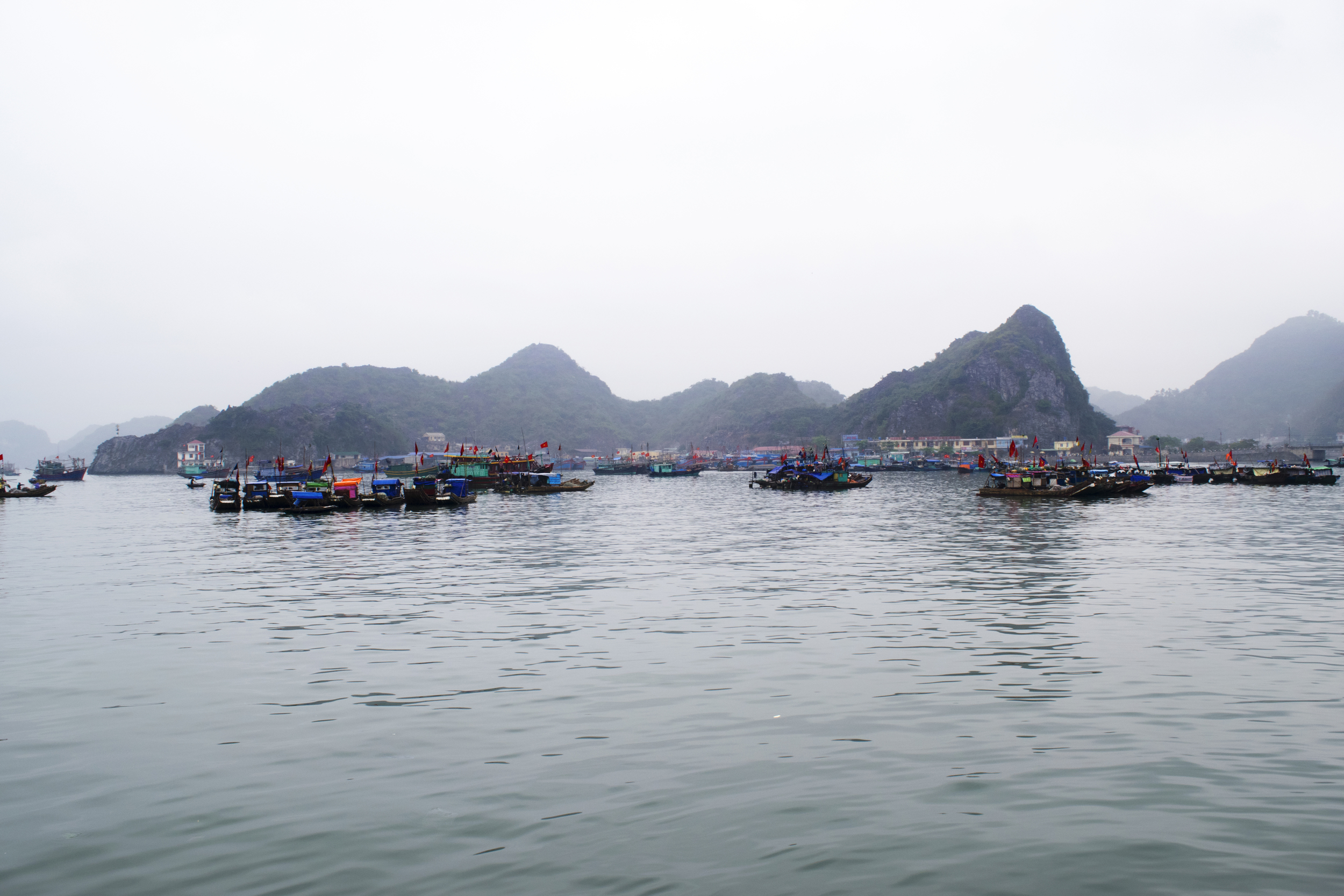
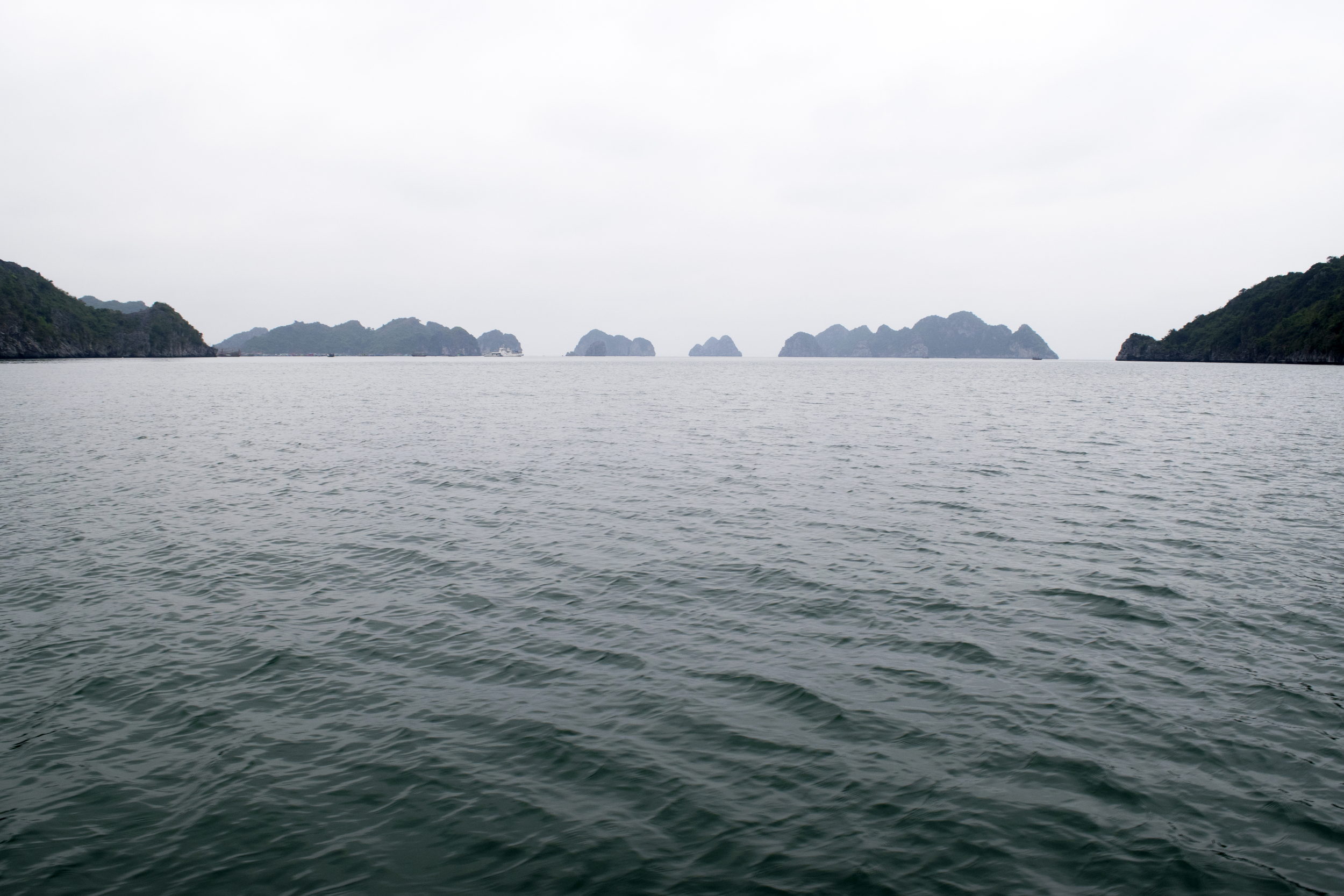
Yesterday, I arrived in the humble, half-moon-shaped port town of Cat Ba Island. It was late afternoon and the waterfront was shrouded in a dense fog. The air stank of seaweed and salt. Everything was tinted a deep emerald green, from the profiles of craggy mountain peaks looming in the distance to the fishing boats bobbing in the harbor to the calm water lapping against the stone steps of the pier. It was much chillier than Hanoi and before dinner I redressed in my warmest gear: a pair of ripped jeans, Converses, a threadbare, knitted hoodie, and an army-style windbreaker. I was still cold and sipped on a hot lemon drink throughout the night, keeping my palms wrapped firmly around the steaming glass.

But I wasn’t too worried about bad weather. I assumed that the dreariness would clear. I’d only seen rain three times so far in Southeast Asia and all encounters had been brief. I also met several people that evening that contested the past few days had been sunny and hot; perfect weather for the sailing and kayaking tours that Cat Ba was so recommended for.

However, when I woke up this morning it was even colder. I kept my blanket tucked around me when I crawled out of bed and when I peered out the hotel window I saw  a soft drizzle of rain had begun to dampen the streets. The locals wore fluffy ski jackets, their heads wrapped in wool scarves. I shivered just thinking about the thin fabrics of my own wardrobe.

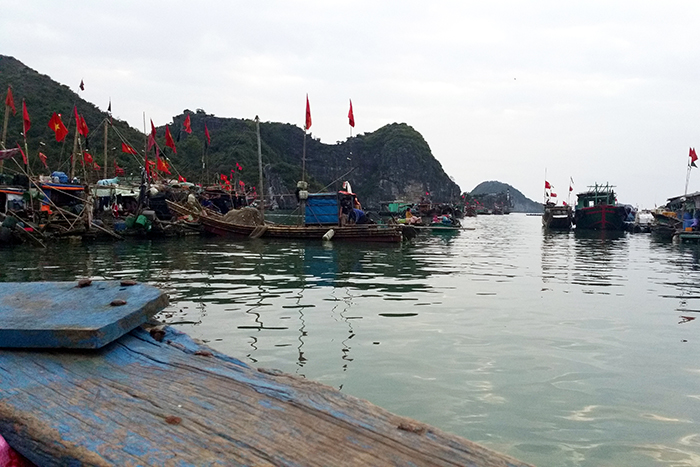
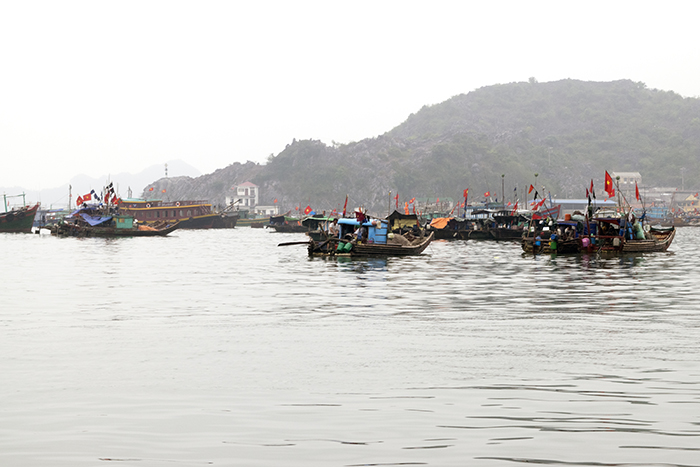
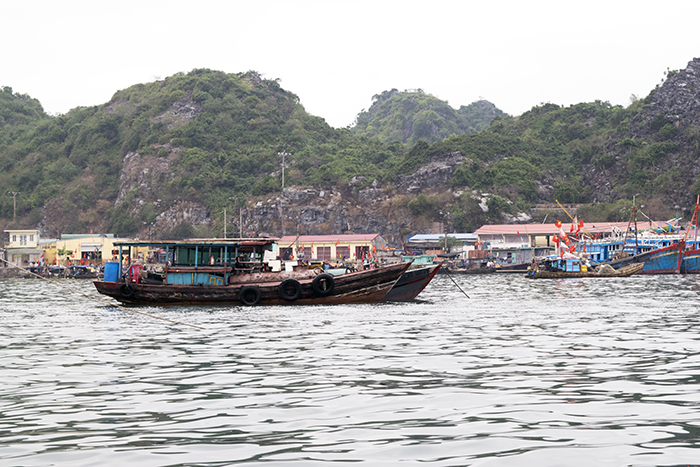
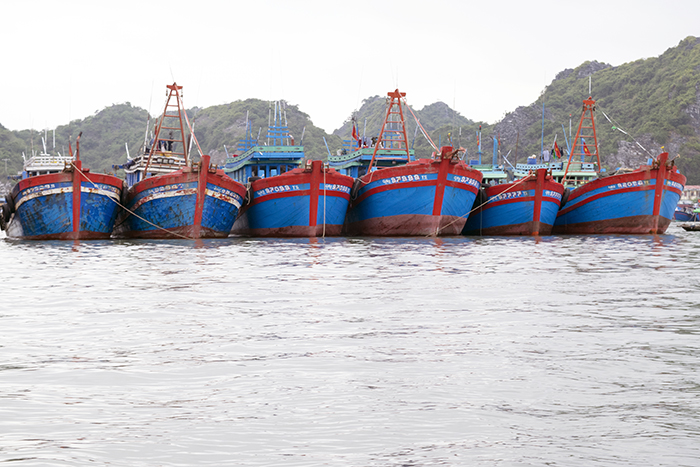
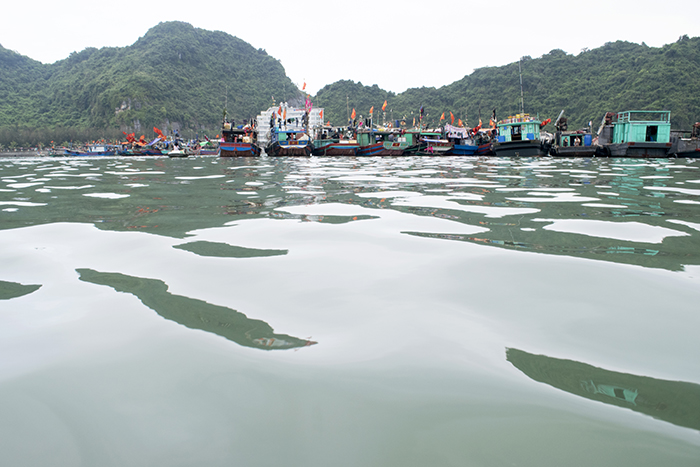
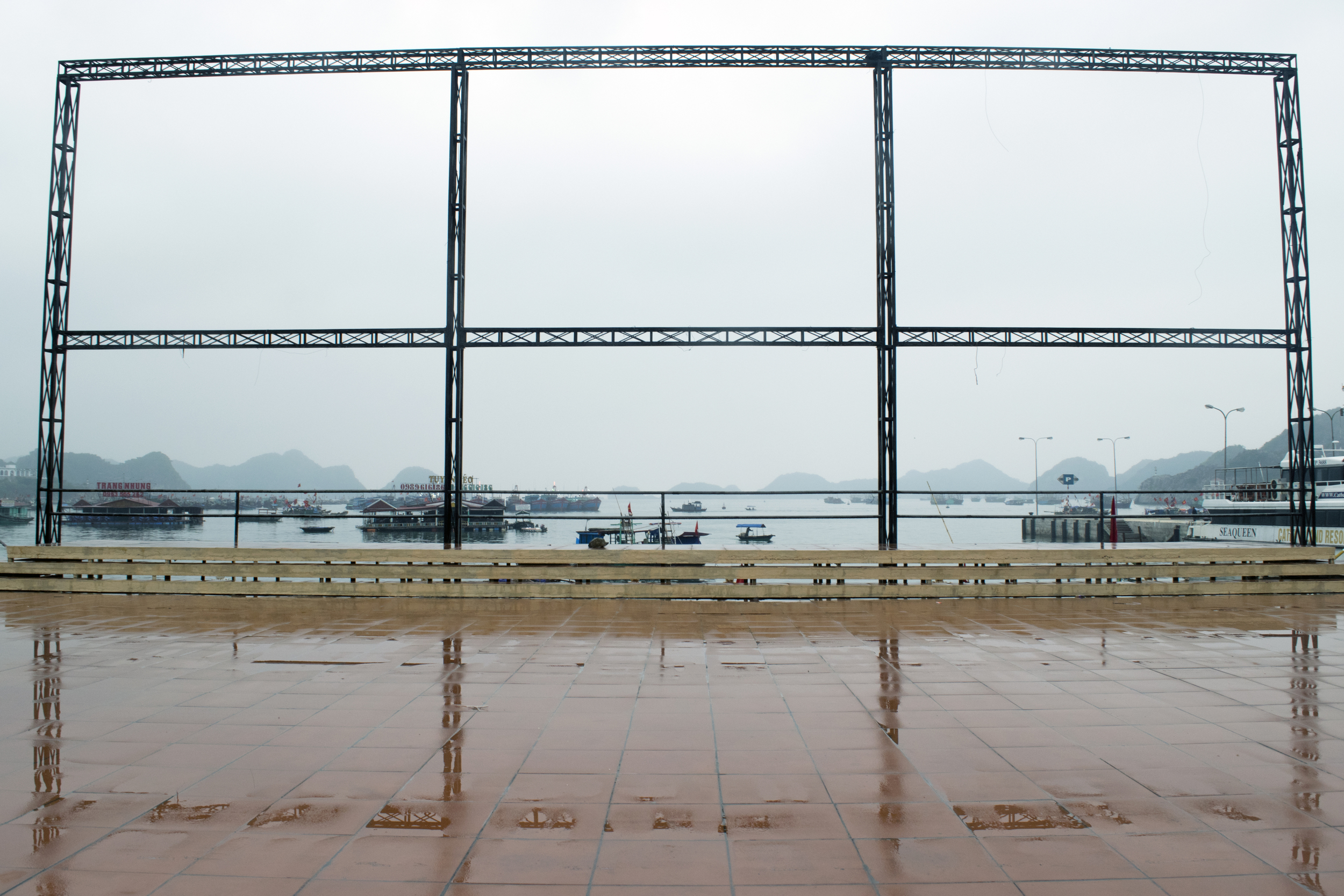
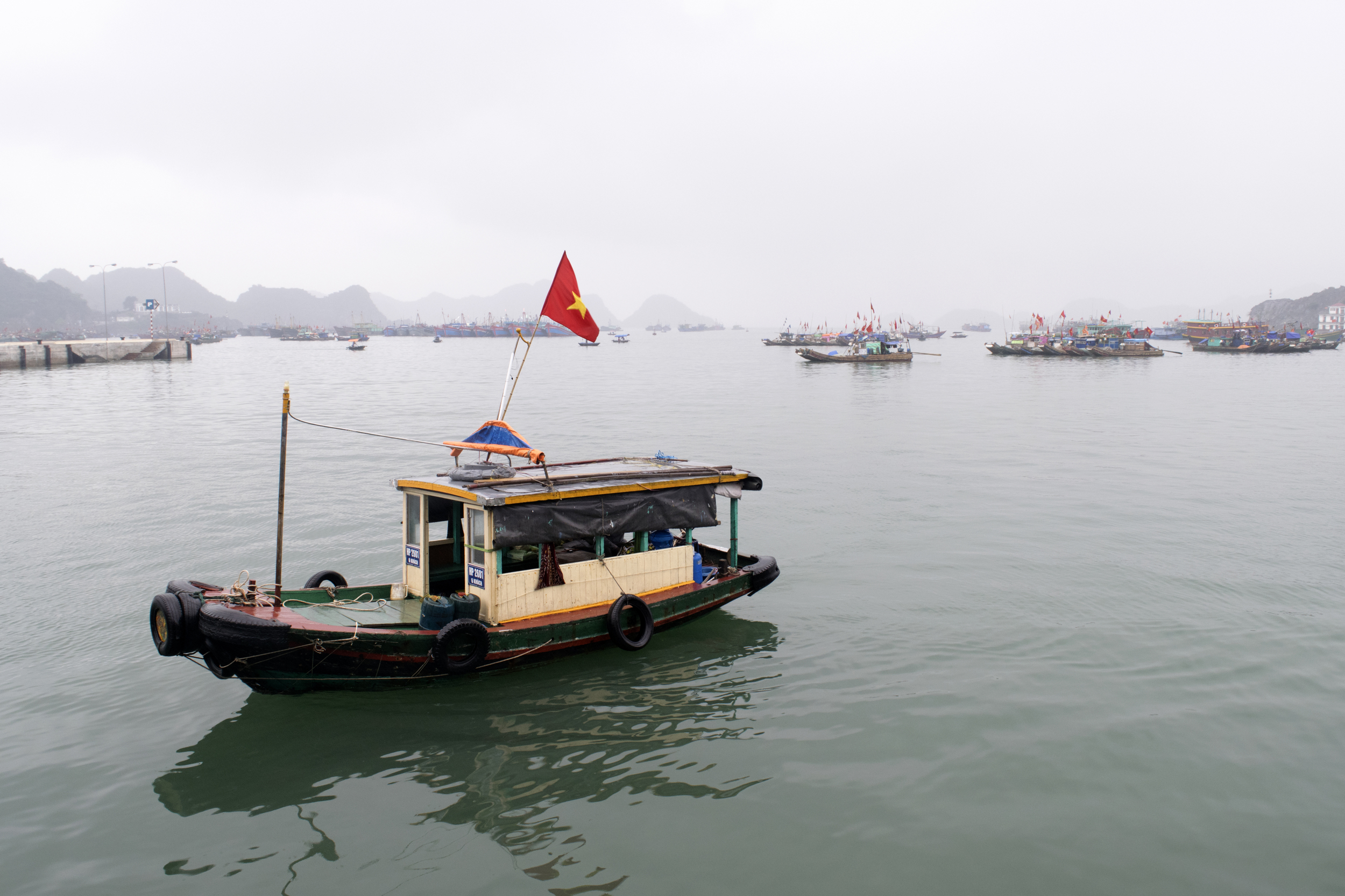
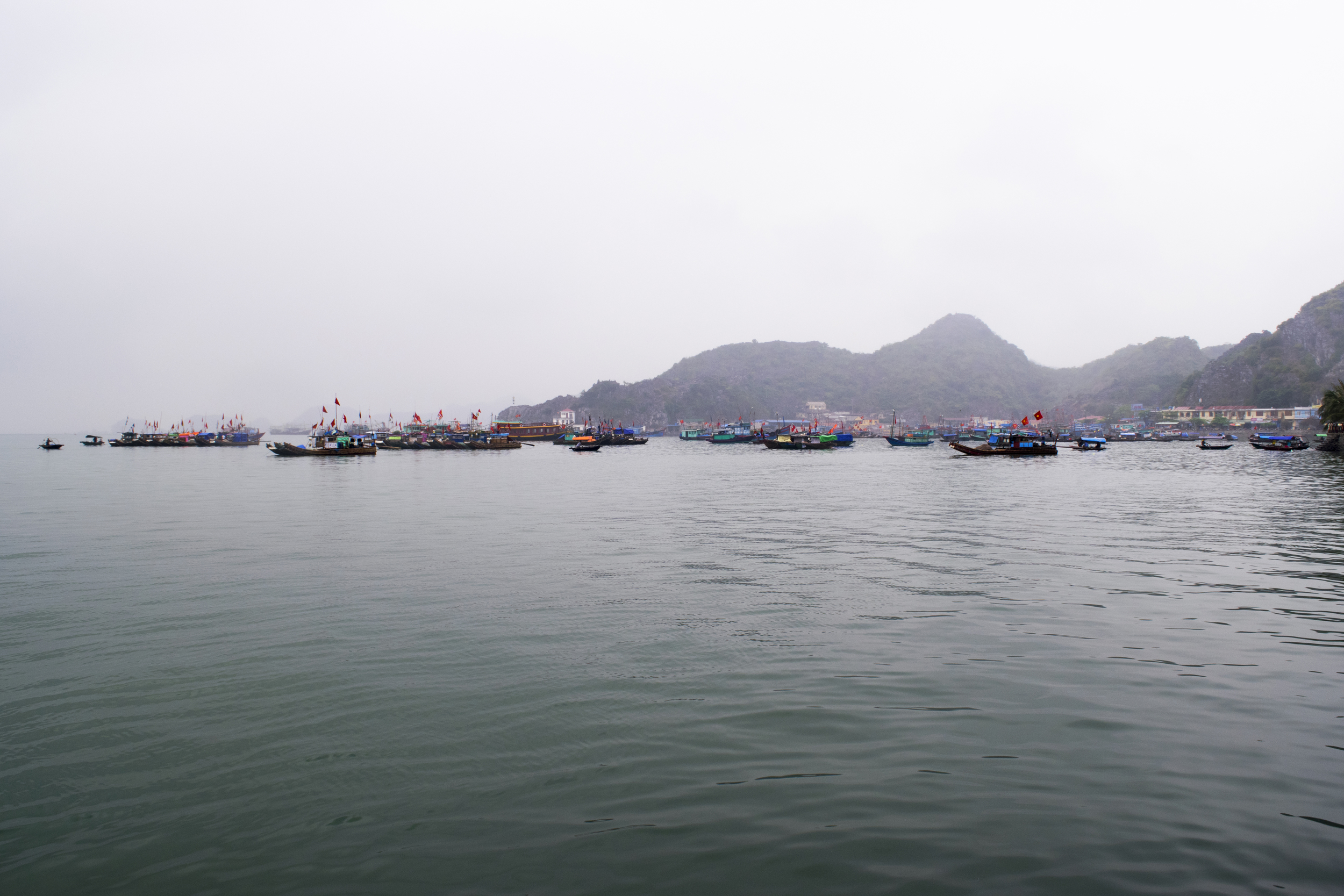
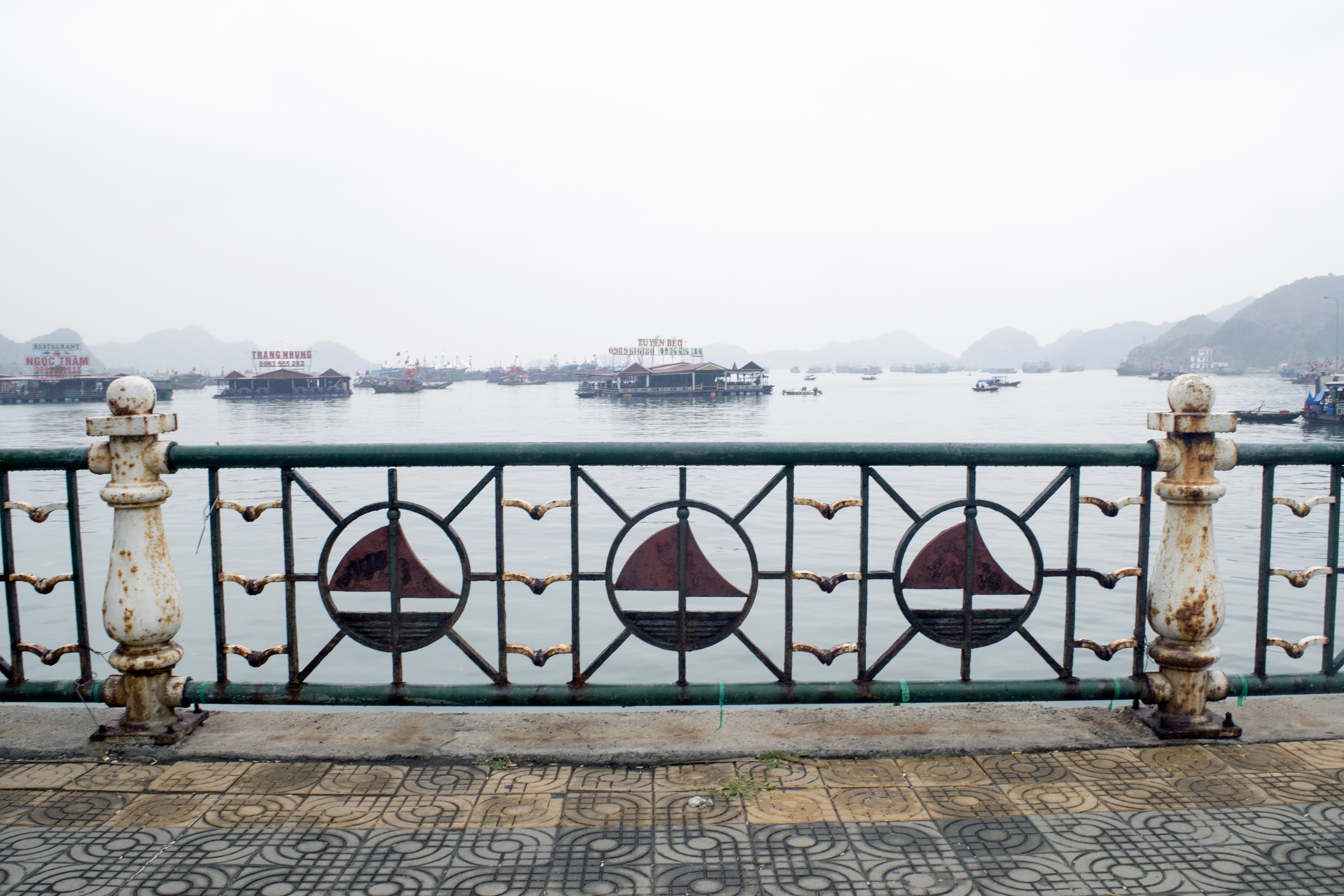
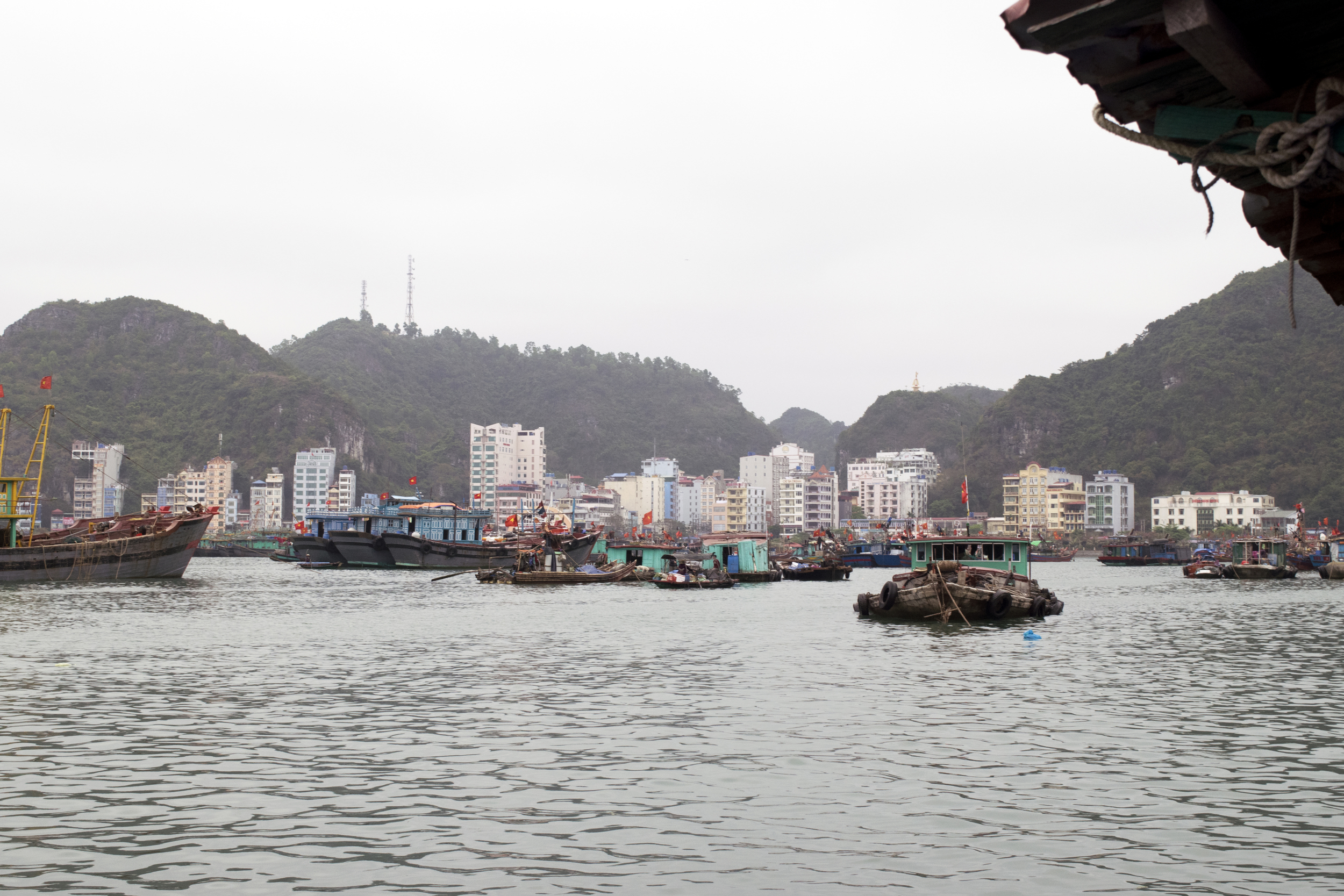
When I lifted my eyes to the shoreline, however, I forgot my hesitations about leaving the coziness under my covers. The view, one shadowed during the evening by the dimming light and fog, had now partially unclouded and was  mesmerizing. A rainy mist still held, but it seemed only to create a shimmering effect over the port, one that offered the softened impression of a painter’s brush strokes. The bowl-shaped harbor, whose steep sides were composed mostly of  stone cliffs, surrounded a flat, jewel-toned waterscape spattered with hundreds of mismatched, colorful boats. It reminded me of Jackson Pollock’s bright, messy paint splotches and the  pirate ships drawn in children’s storybooks. I had a fleeting thought that I might be looking at artifacts of a lost world. I wanted to experience it.

“Let’s go fishing.”

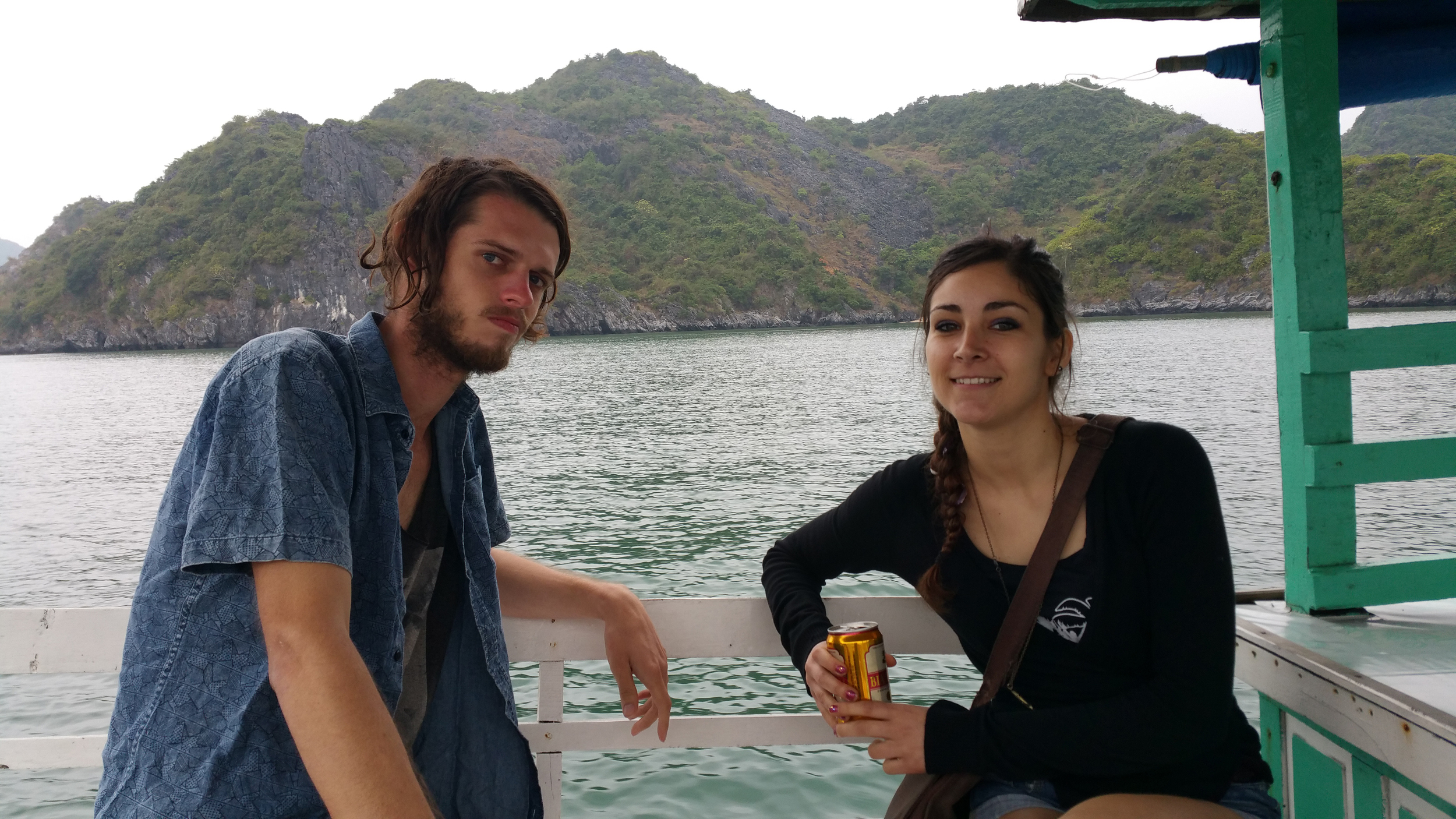
An hour and a half later, my friends and I made our way down to the pier. We were all bundled in our warmest outfits, and had pooled funds for a cheap bottle of vodka, a few cans of M-150 (a Red Bull-esque energy drink), and a little bit of passion fruit juice. Our plan: ask a captain of one of the smaller vessels if we could charter his boat for a fishing excursion. Nobody was sure it would work or where the next few hours would take us. It was one of those devil-may-care adventures.

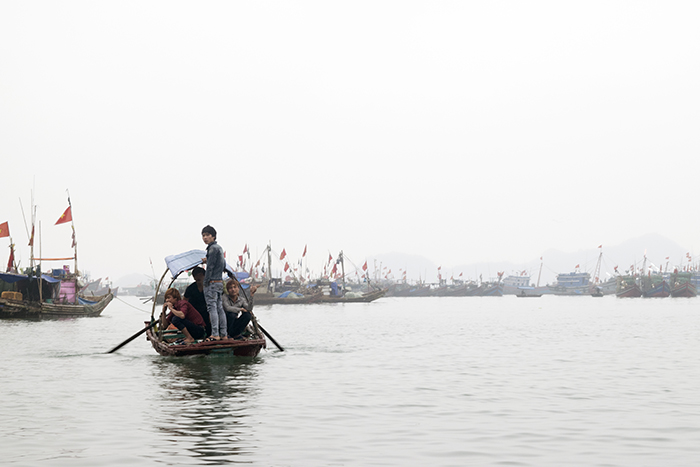
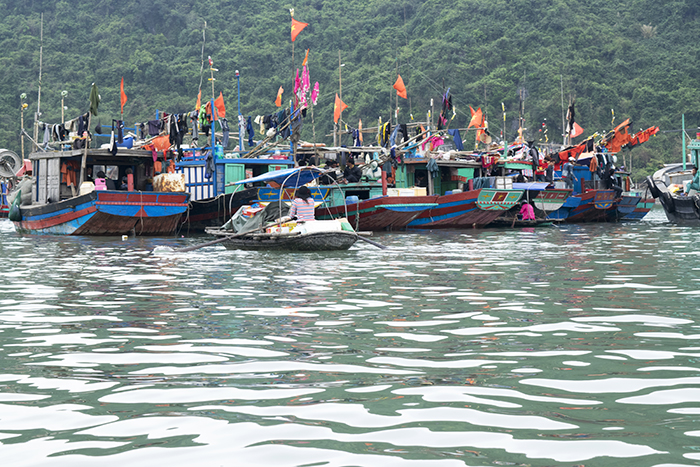
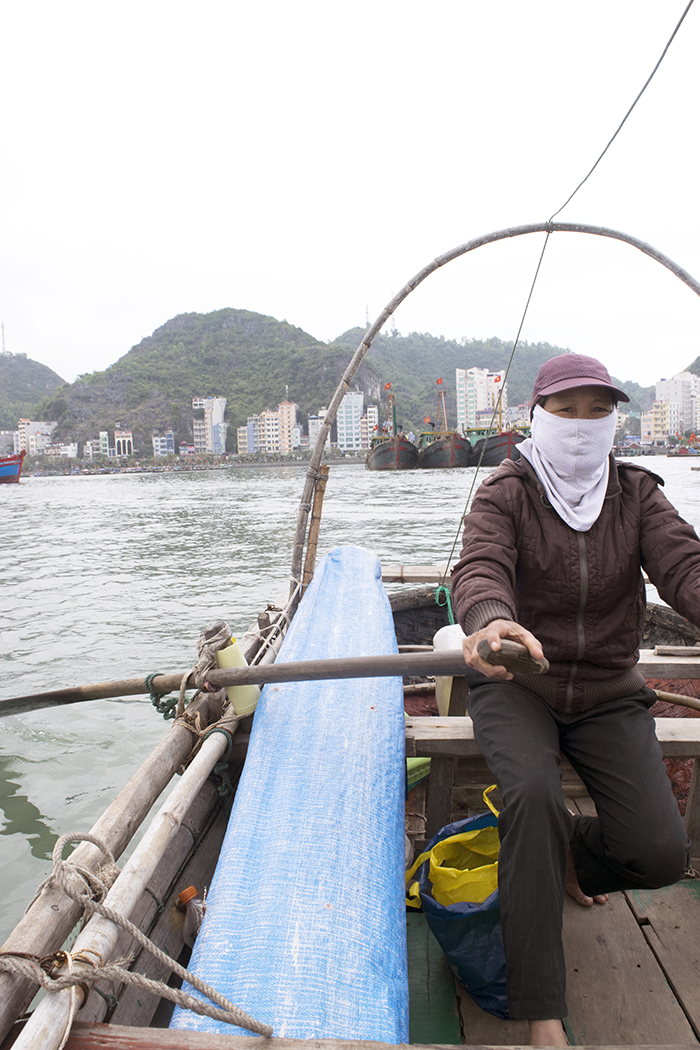
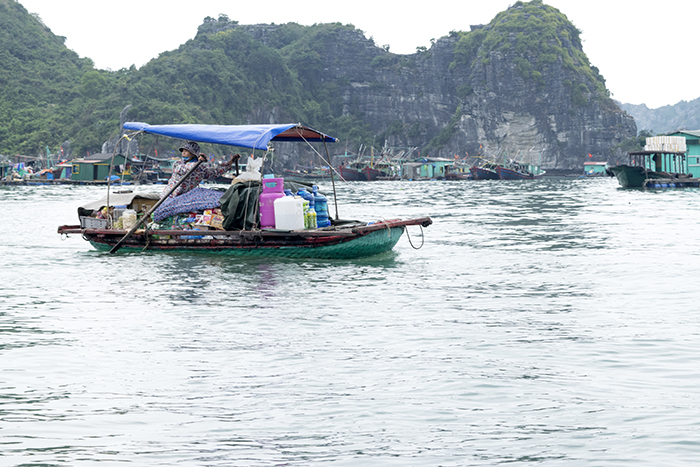
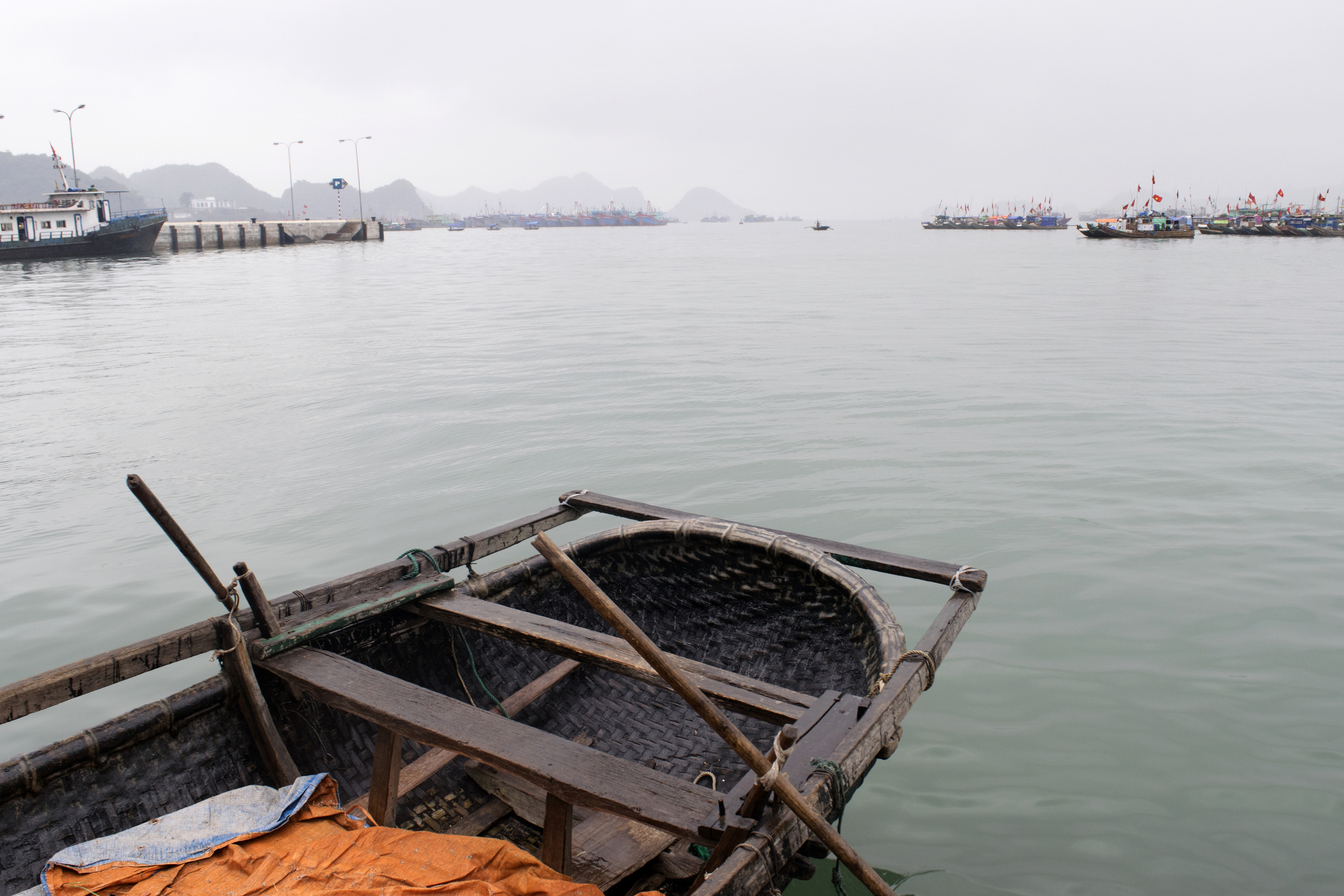
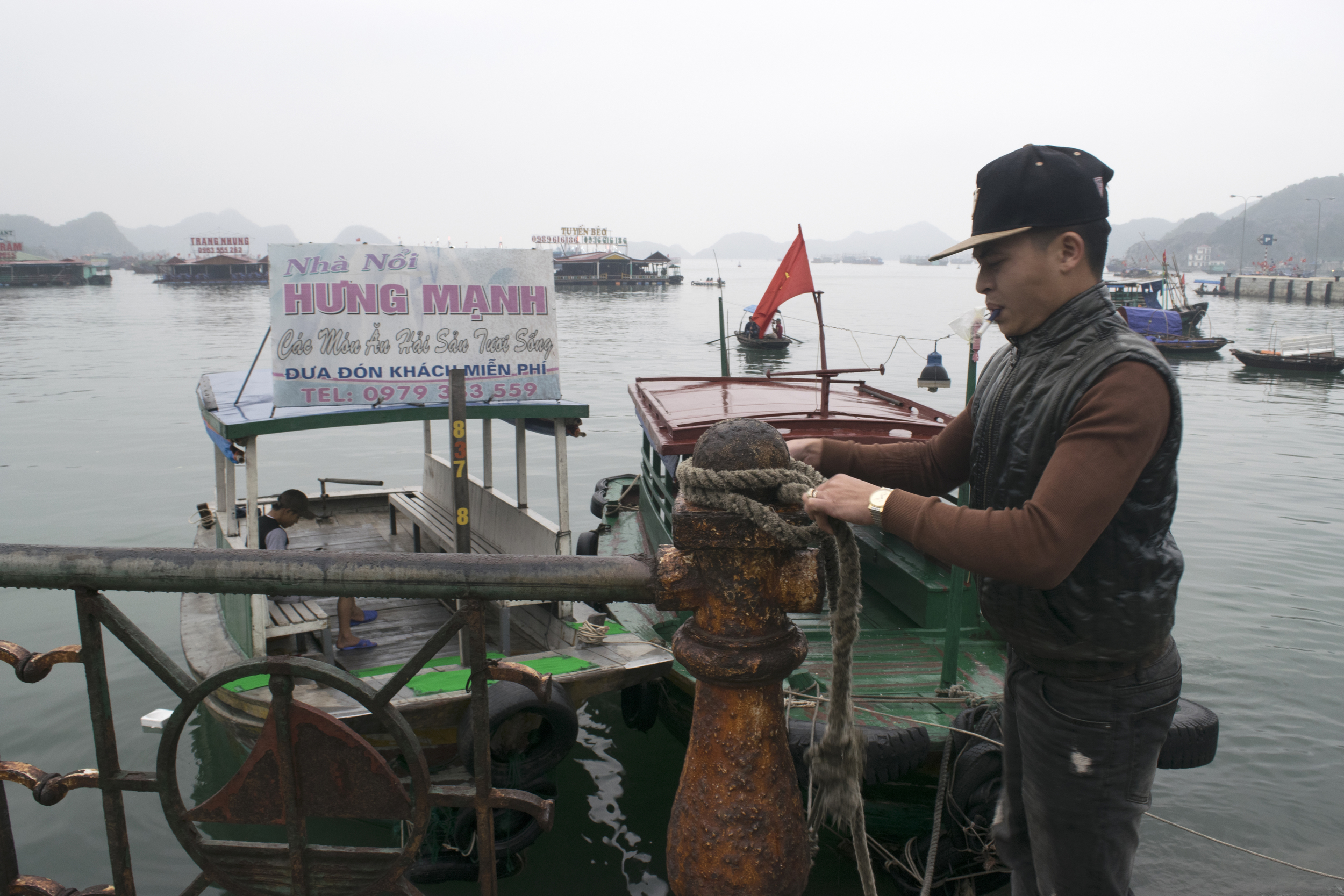
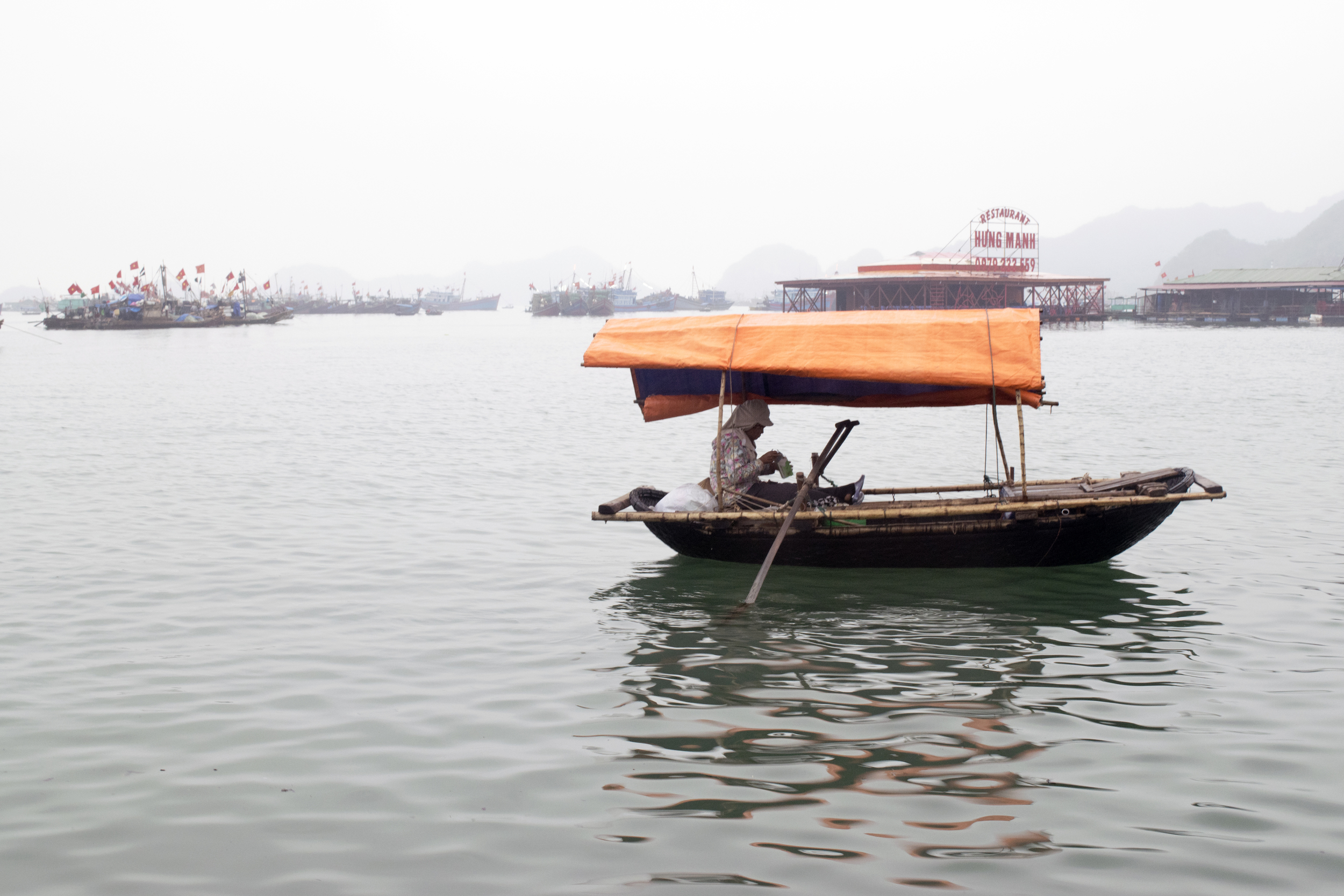
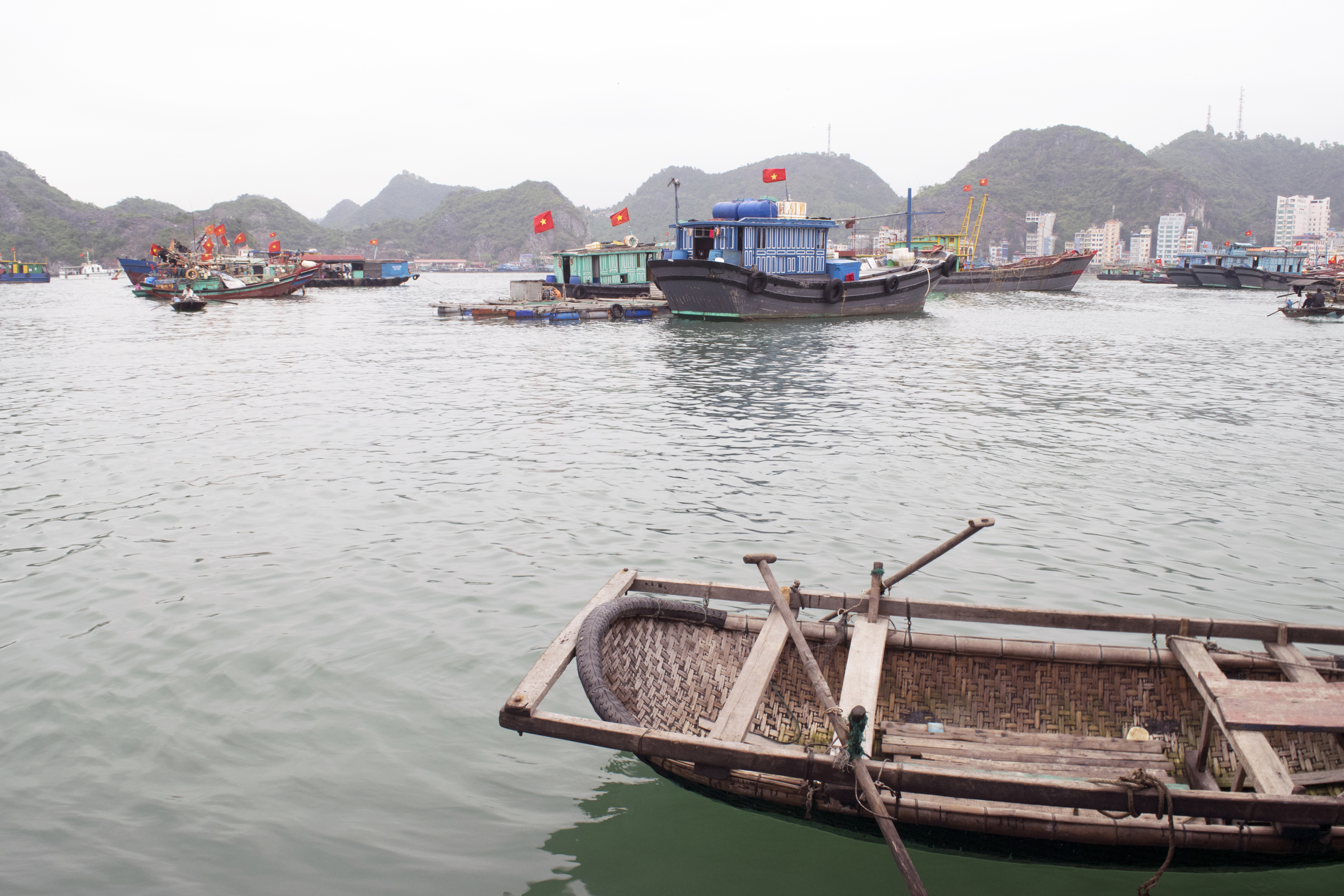
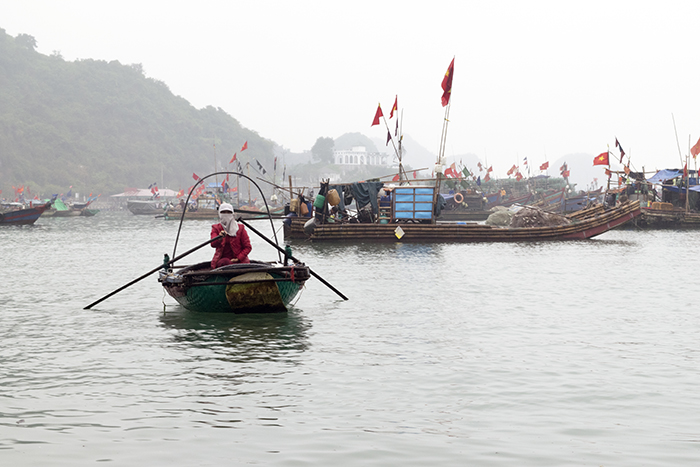
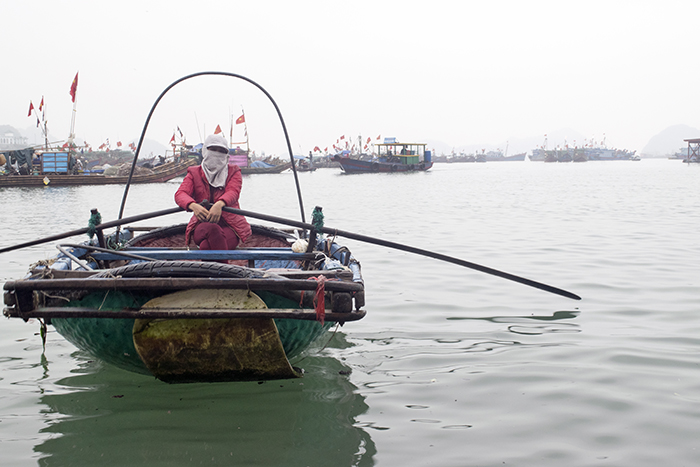
As we scoped out the scene, we spotted a landing where a woman in an oval-shaped, woven bottom boat had docked. Her elbows rested on two heavy wooden oars. A teenage girl standing on the shore called out to her. The woman paddled over and the girl climbed in, settling on a wooden plank bench. They then began to slowly make their way through the maze of fishing boats.

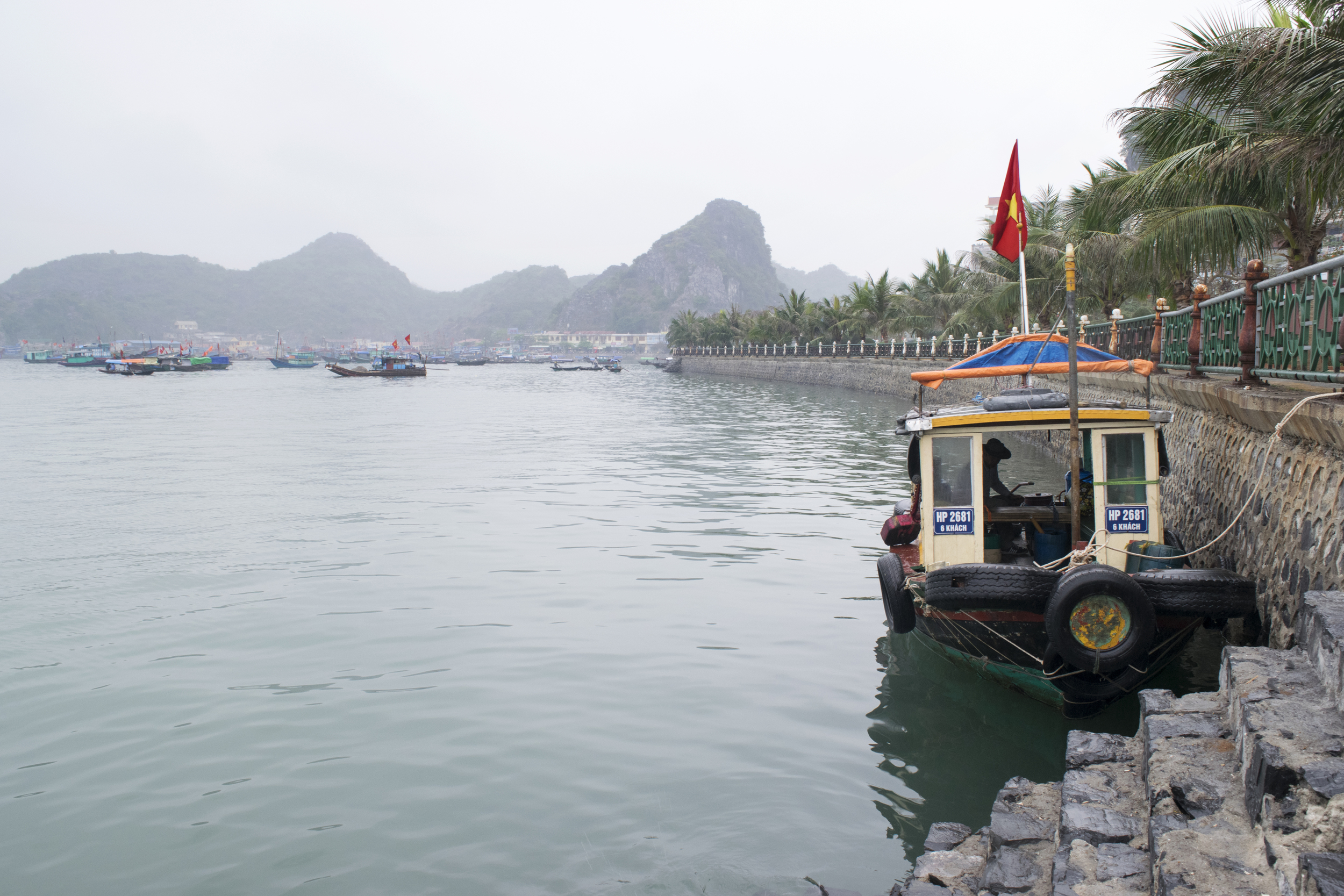
When we arrived at the same landing, I saw the stone steps led directly into the water; several bottom rows were wet and coated in a dark, fuzzy layer of algae. One of my friends called out to another woman in a boat-taxi. When she arrived and we asked about fishing, she only pointed to one of the floating restaurants that sat in the water. It quickly became clear that she didn’t speak English. A young man saw our struggle and sauntered over, asked what we were looking for. When we told him, he nodded. He owned a motorized boat and after a bit of haggling (one of my friends kept repeating that he’d rather rent one of the paddle boats and row out there himself than pay $10 per person) we found ourselves in a little white-and-teal painted wooden craft on our way to sea.

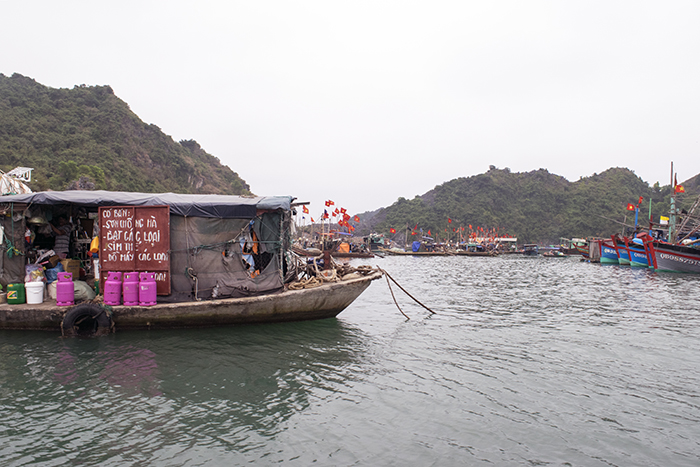
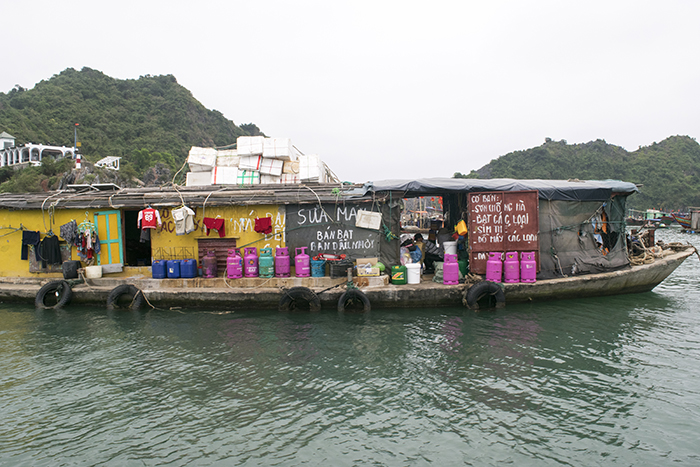
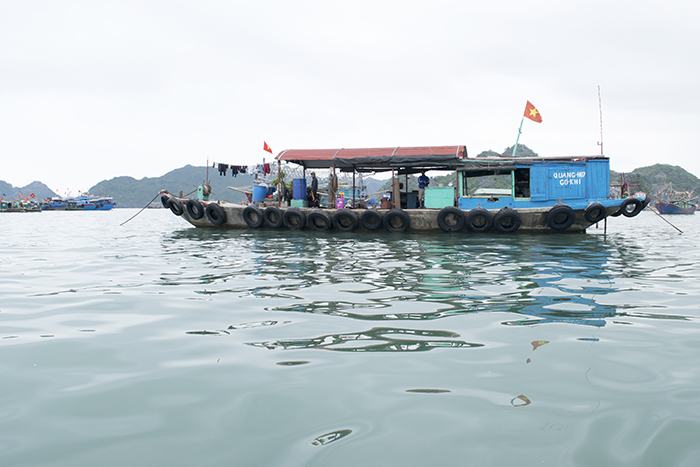
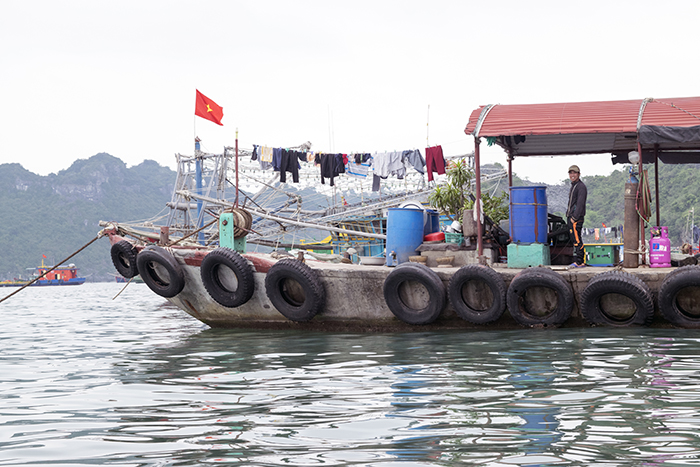
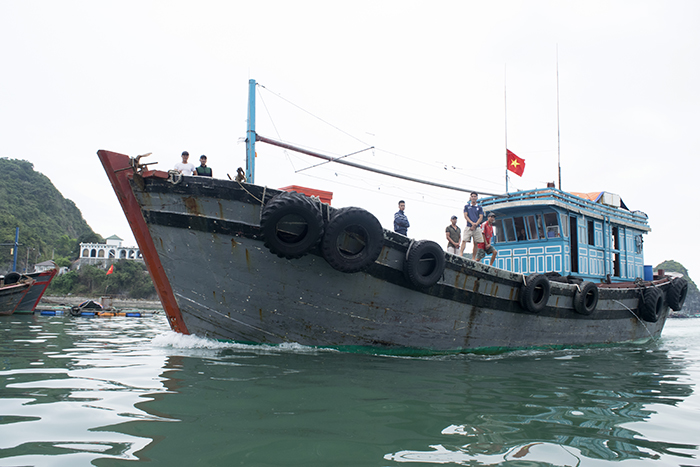
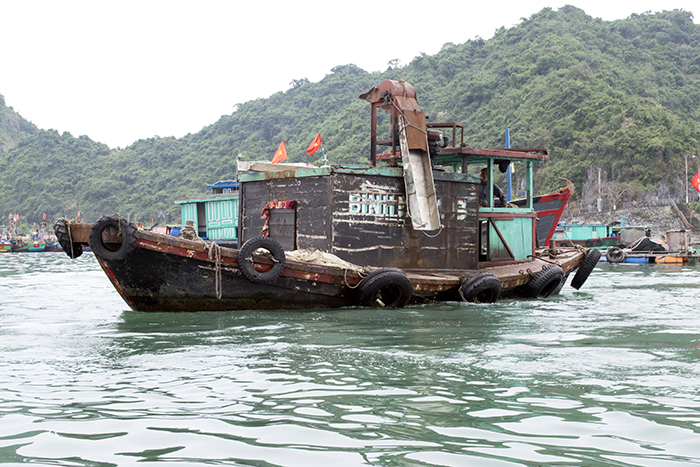
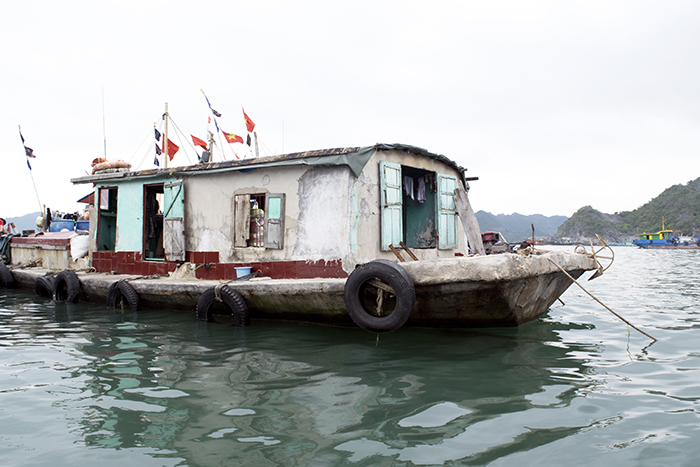
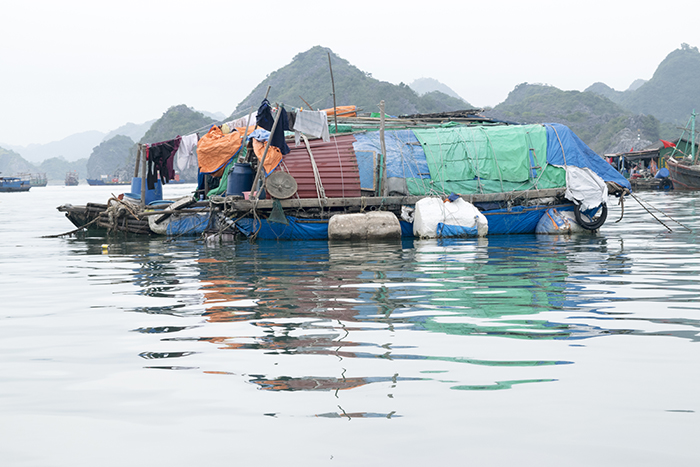
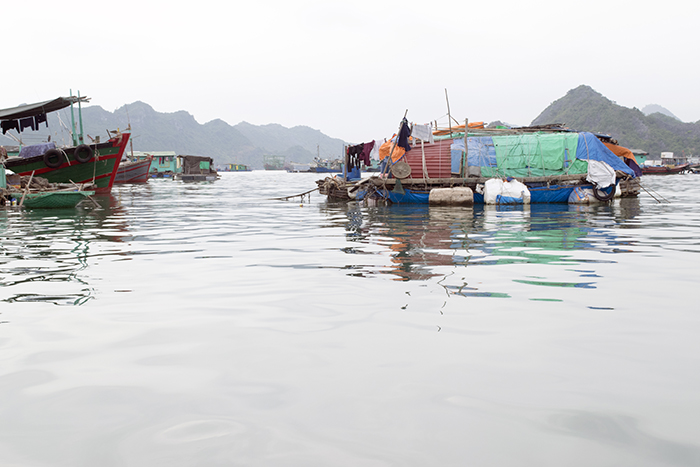
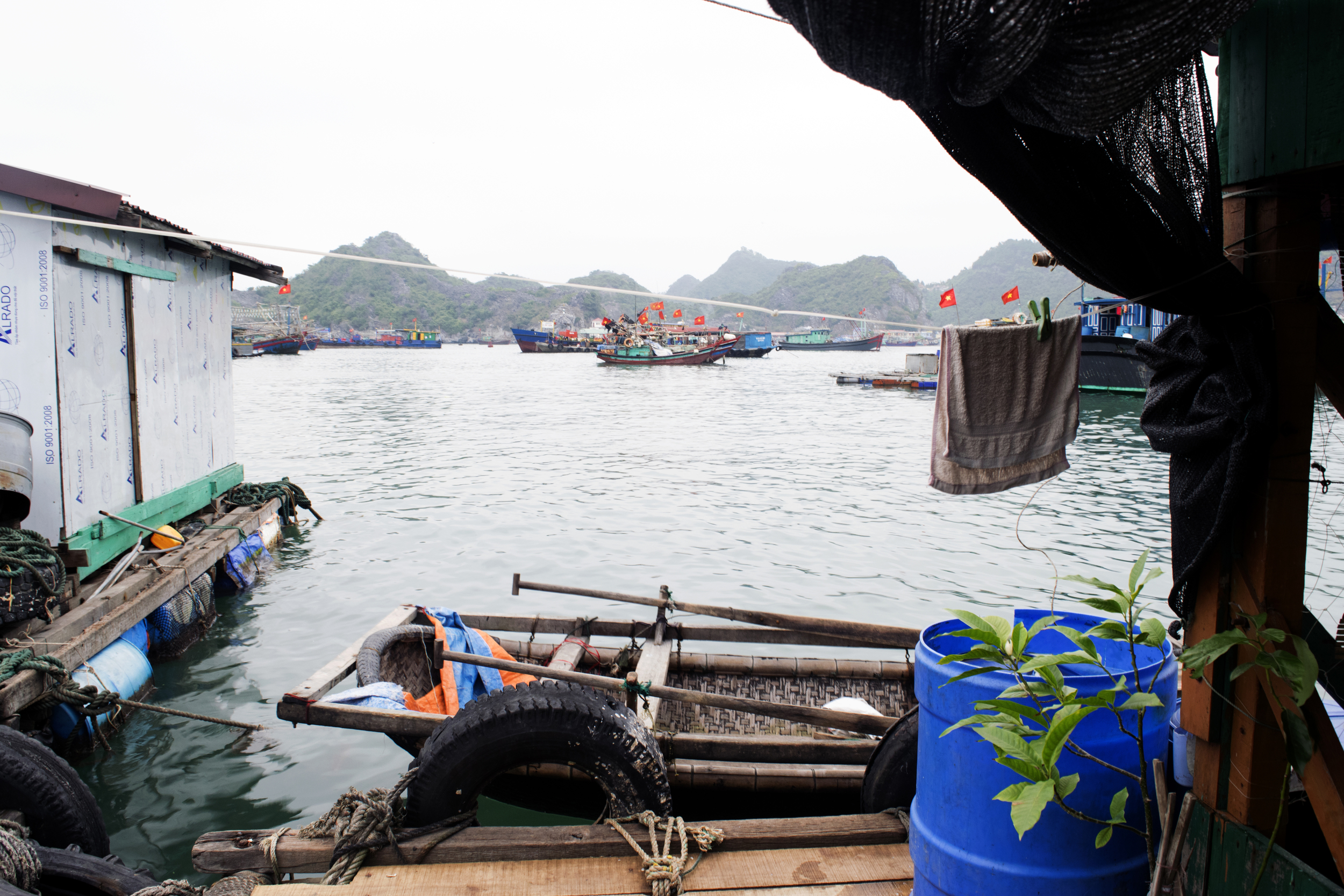
Once we were in the water and level with all the boats, I saw they were even more incredible than I’d first thought. There were dinghies, schooners, and steamboats of all sizes and made from all sorts of strange materials. There were foundations assembled from bamboo bottoms tied together with rope, foam blocks stacked on top of each other, tires, and mismatched planks of wood. The engineering looked so random I was reminded of my Lego days, when I refused to abide by the instructions in the box and, to the horror of my little brother, would construct impractical, rainbow vehicles that had dual uses, like space travel and transport of small-to-medium sized dinosaurs. And, like my creations, everything on these real-life boats was vibrant. All were decorated with large light bulbs, full clotheslines, at least a handful of red Vietnamese flags.

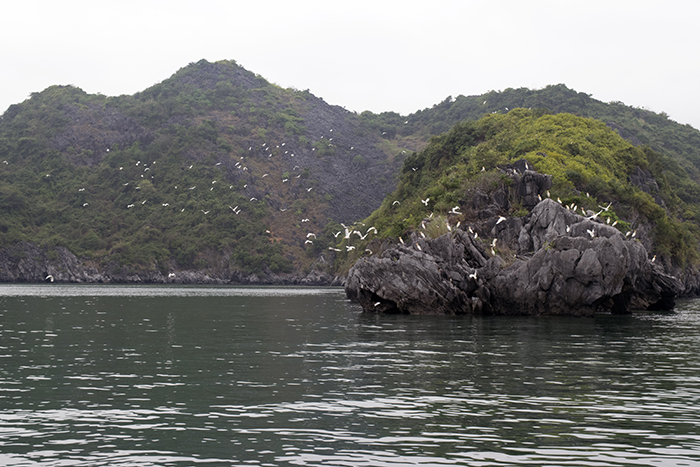
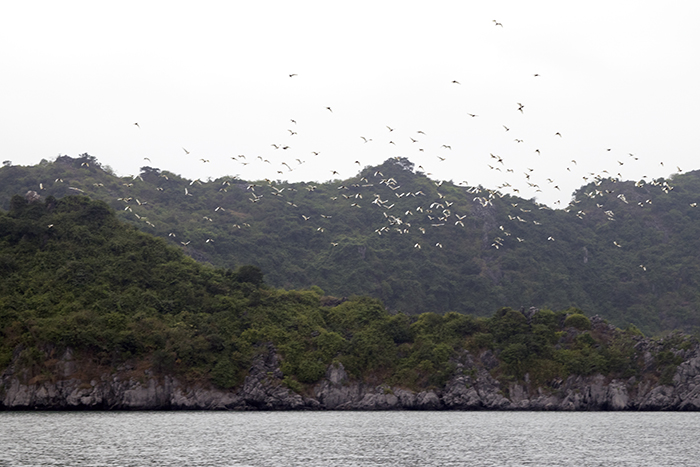
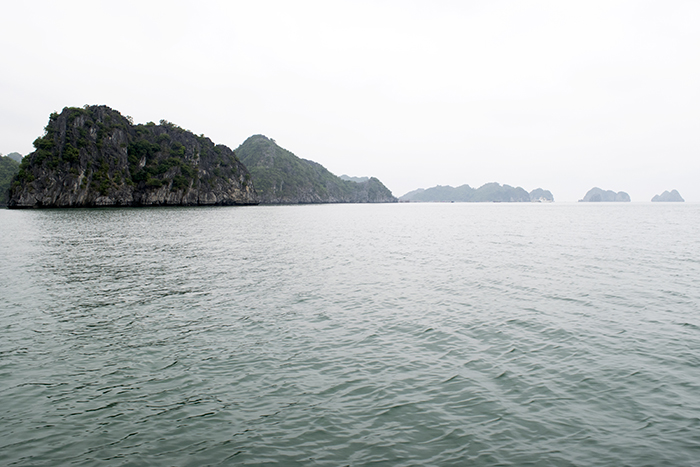
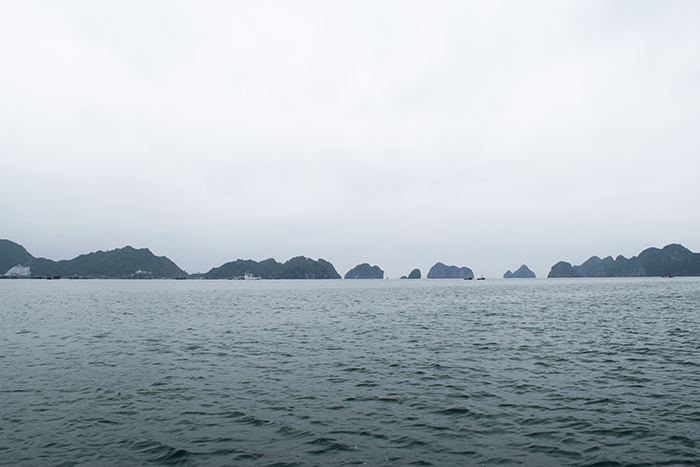
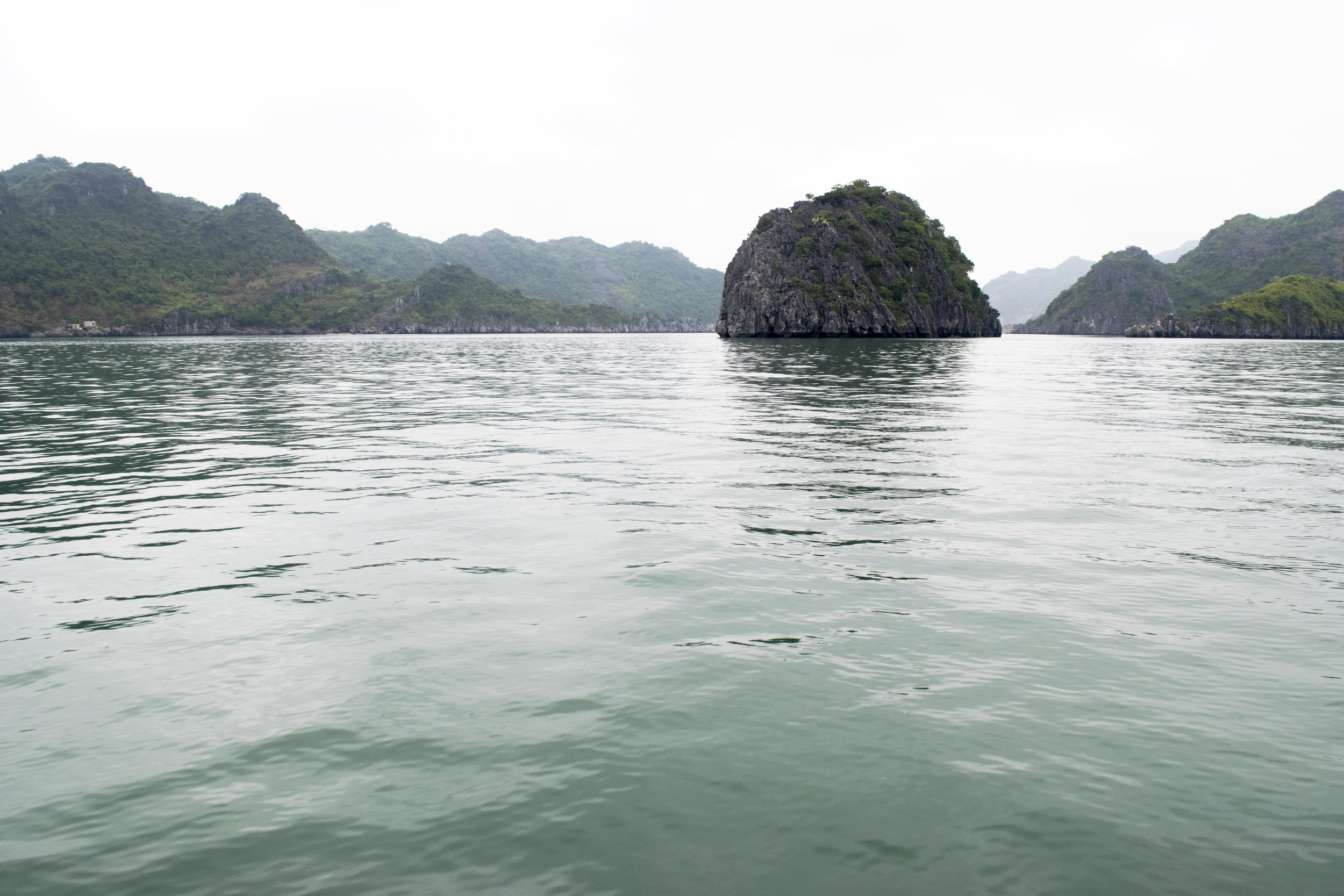
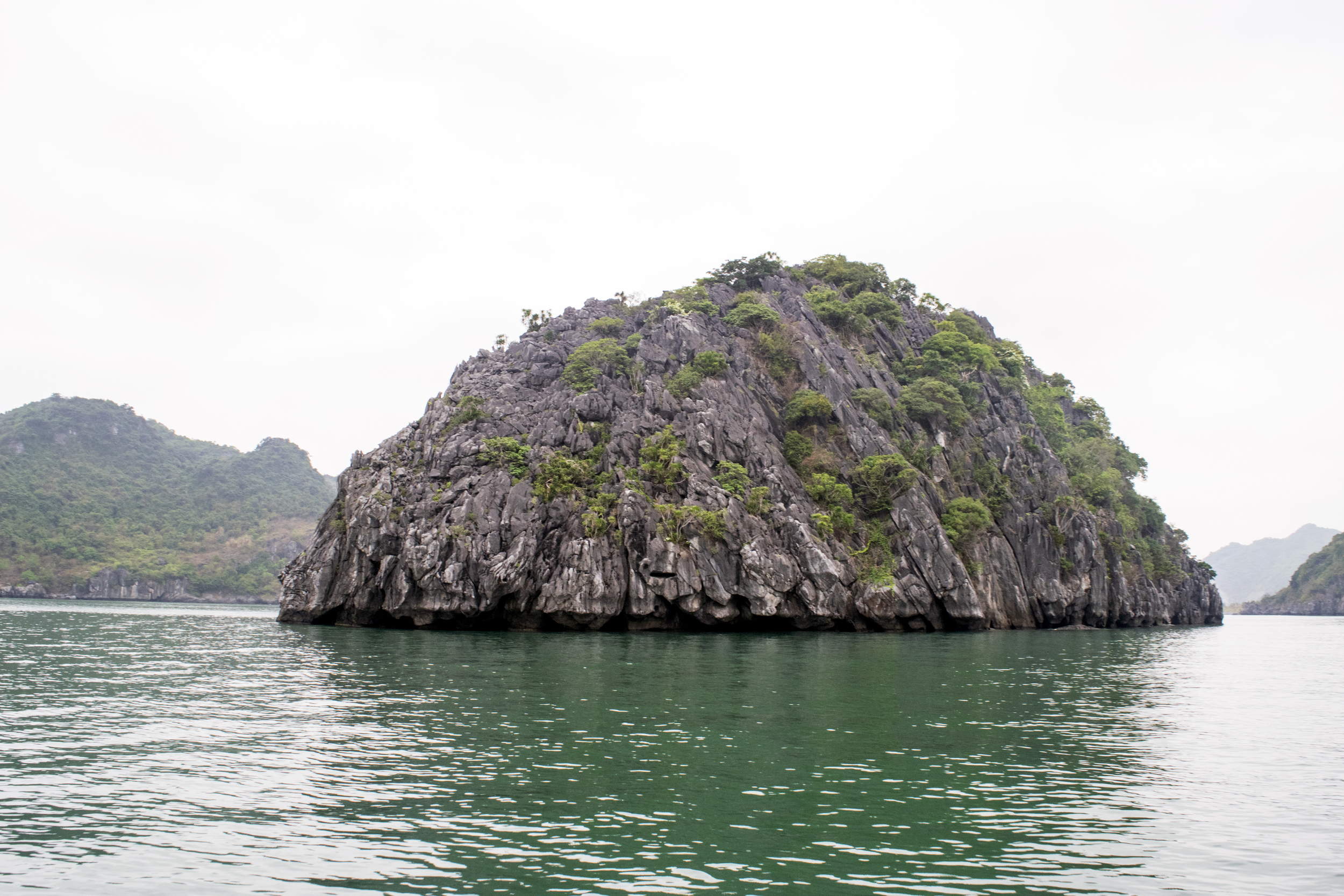
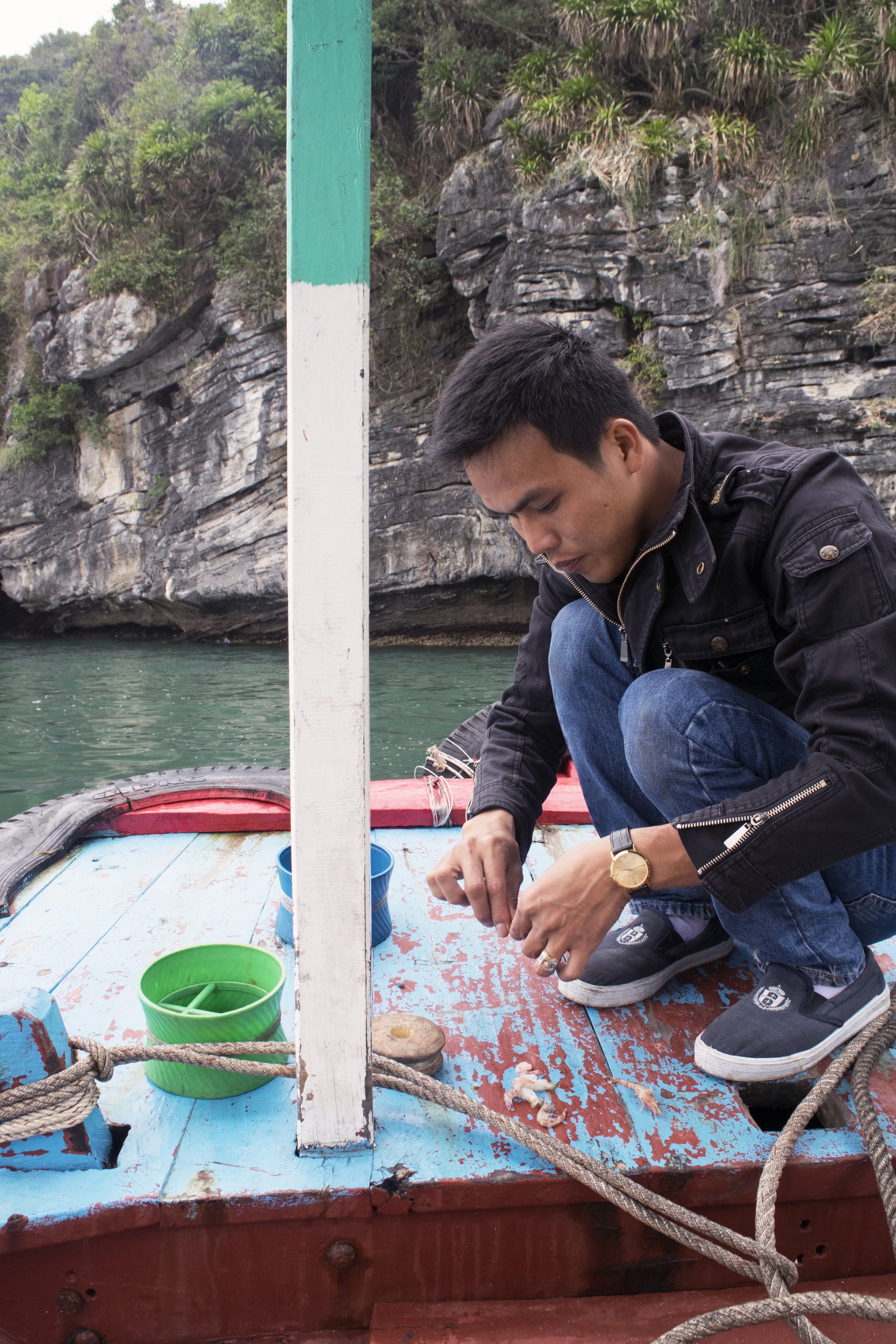
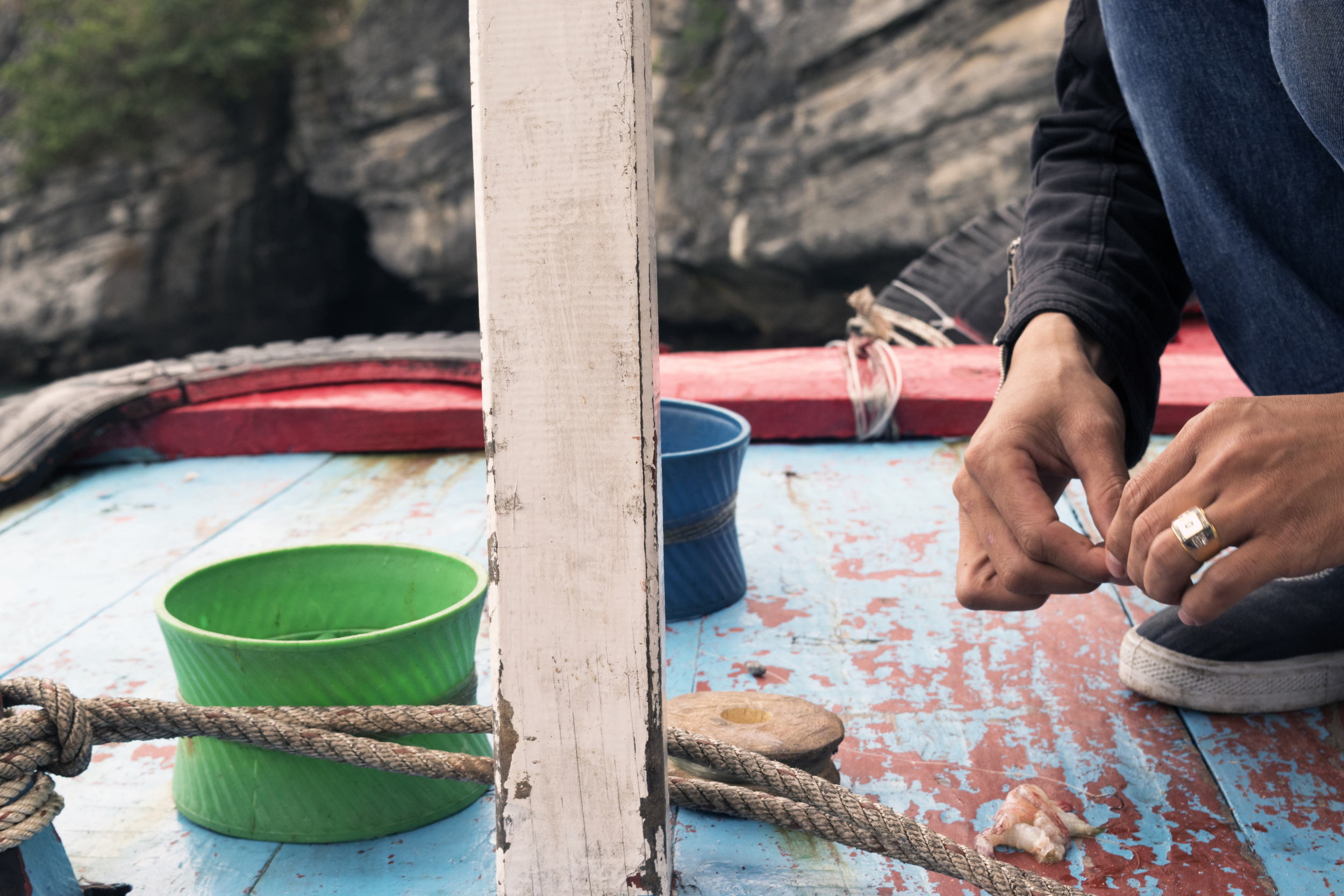
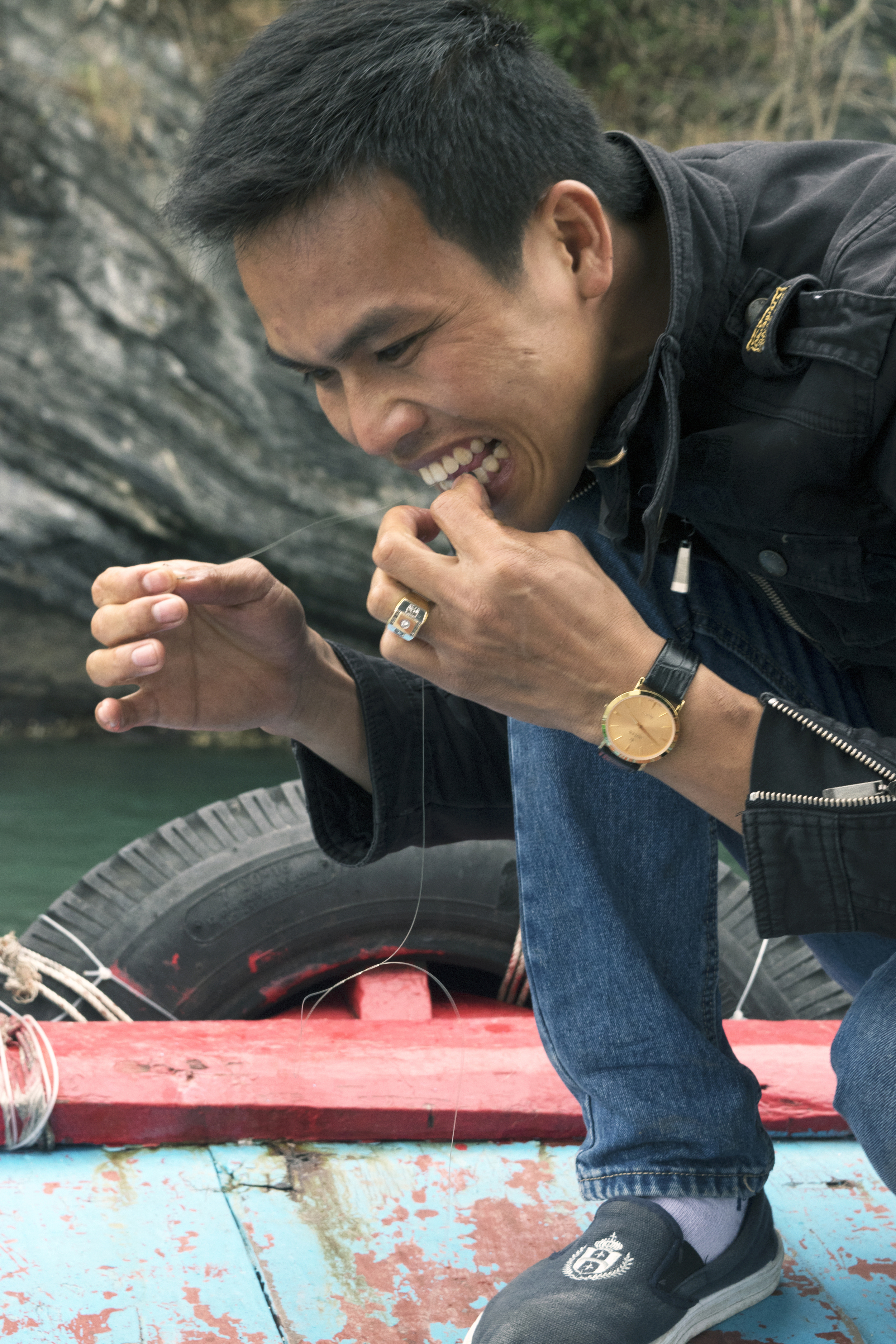
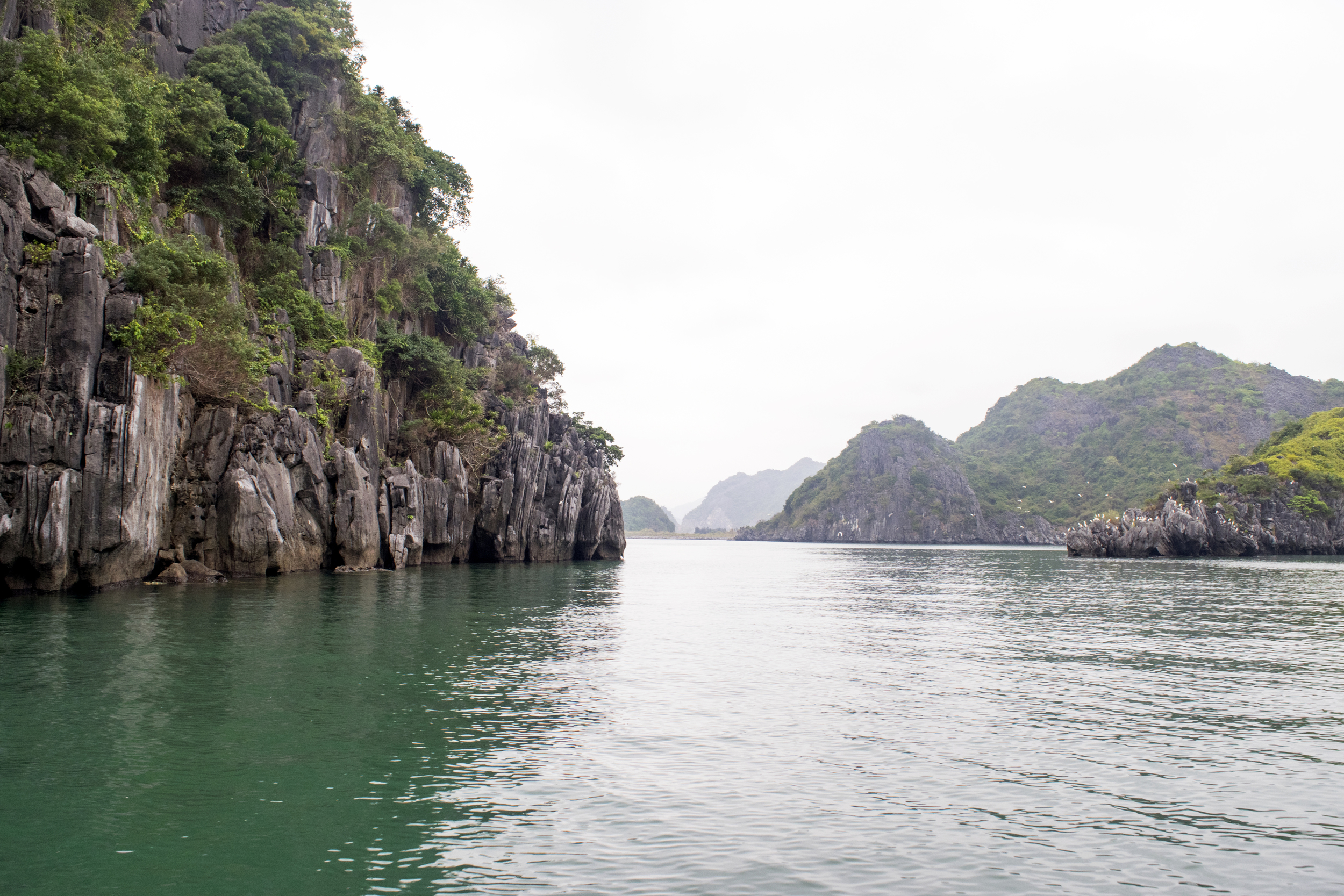
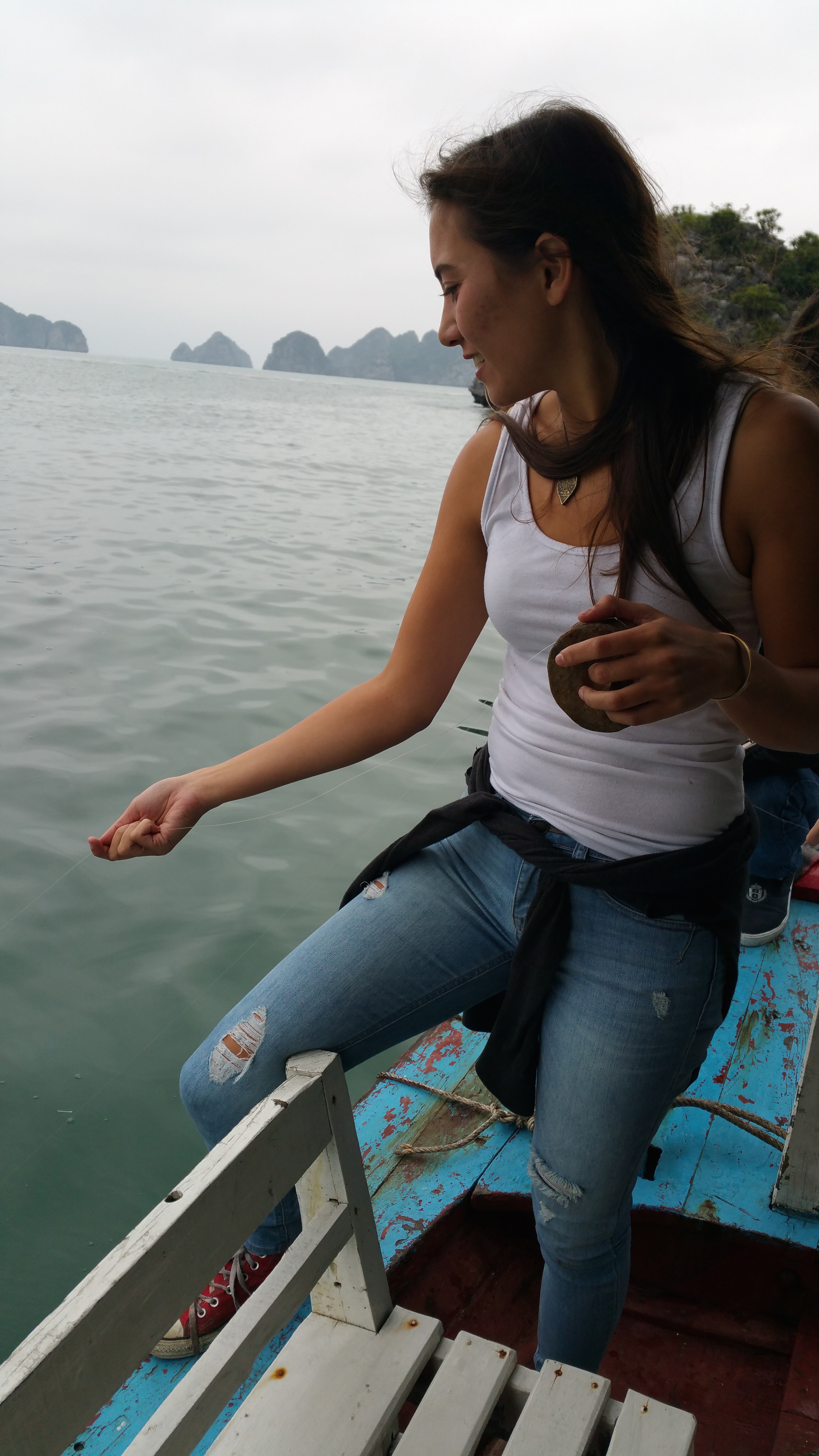
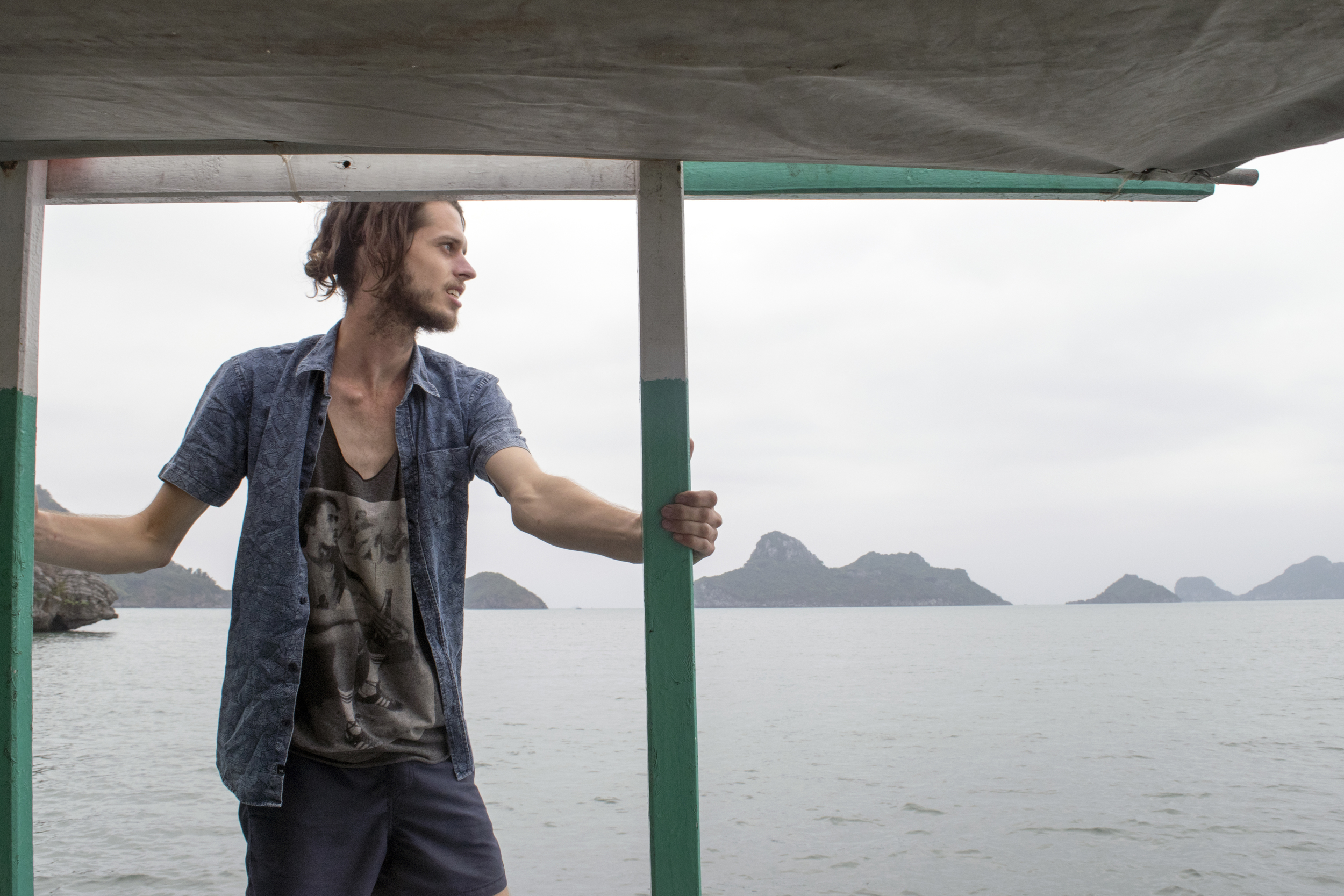
We motored out between the rocky cliffs of islands, some studded with green foliage and others bare, steep, and rough. Our captain found a suitable spot by the edge of one particularly cragged island and revealed several simple spools, some wood and some plastic. Each one held a twist of clear fishing line. He knotted tiny metal hooks on the ends, then pulled the shells off a small pile of slimy prawns. We cut into the soft gray flesh with the rusty hooks and dropped our lines over the edge of the little boat and into the dark, murky water.

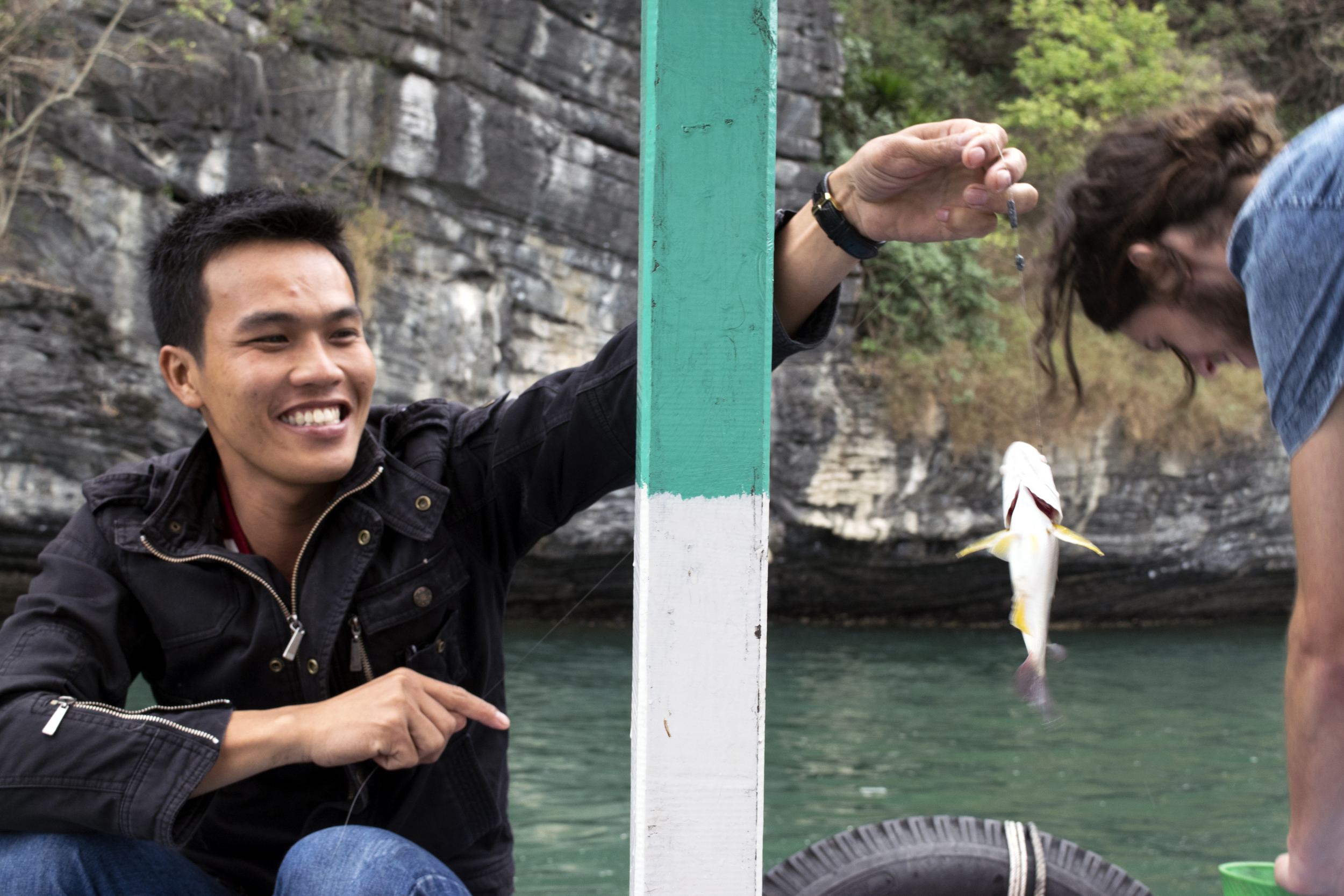
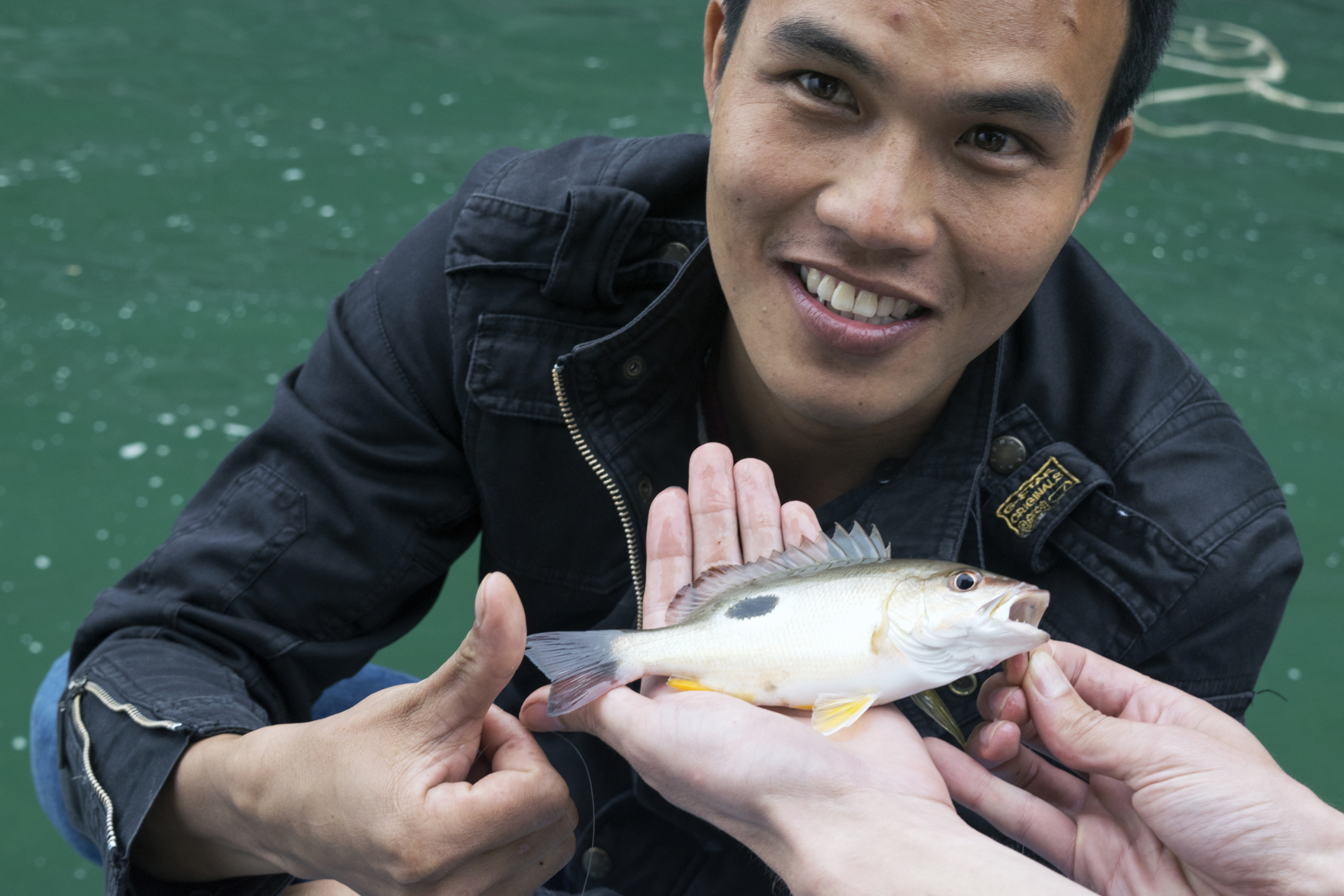
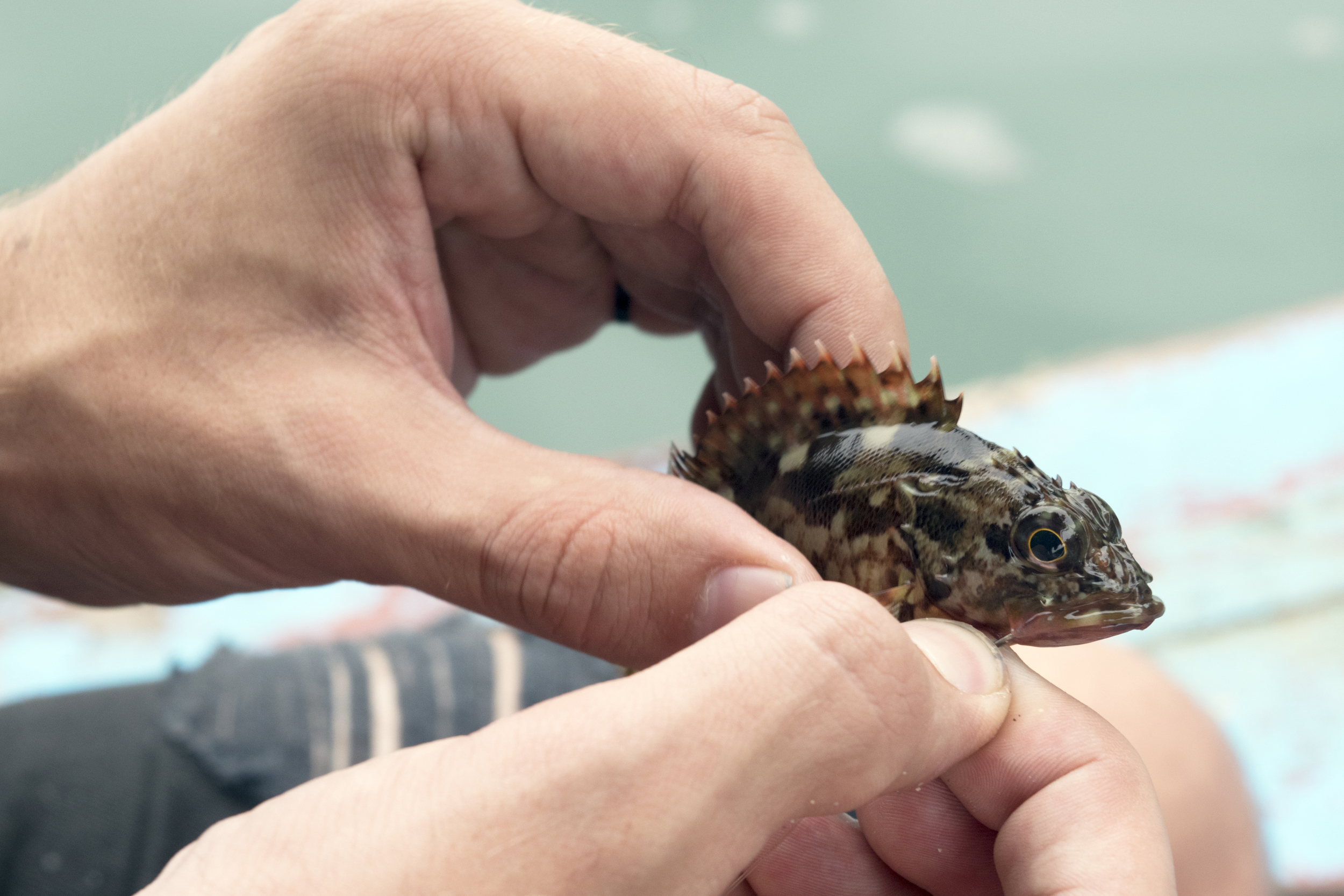
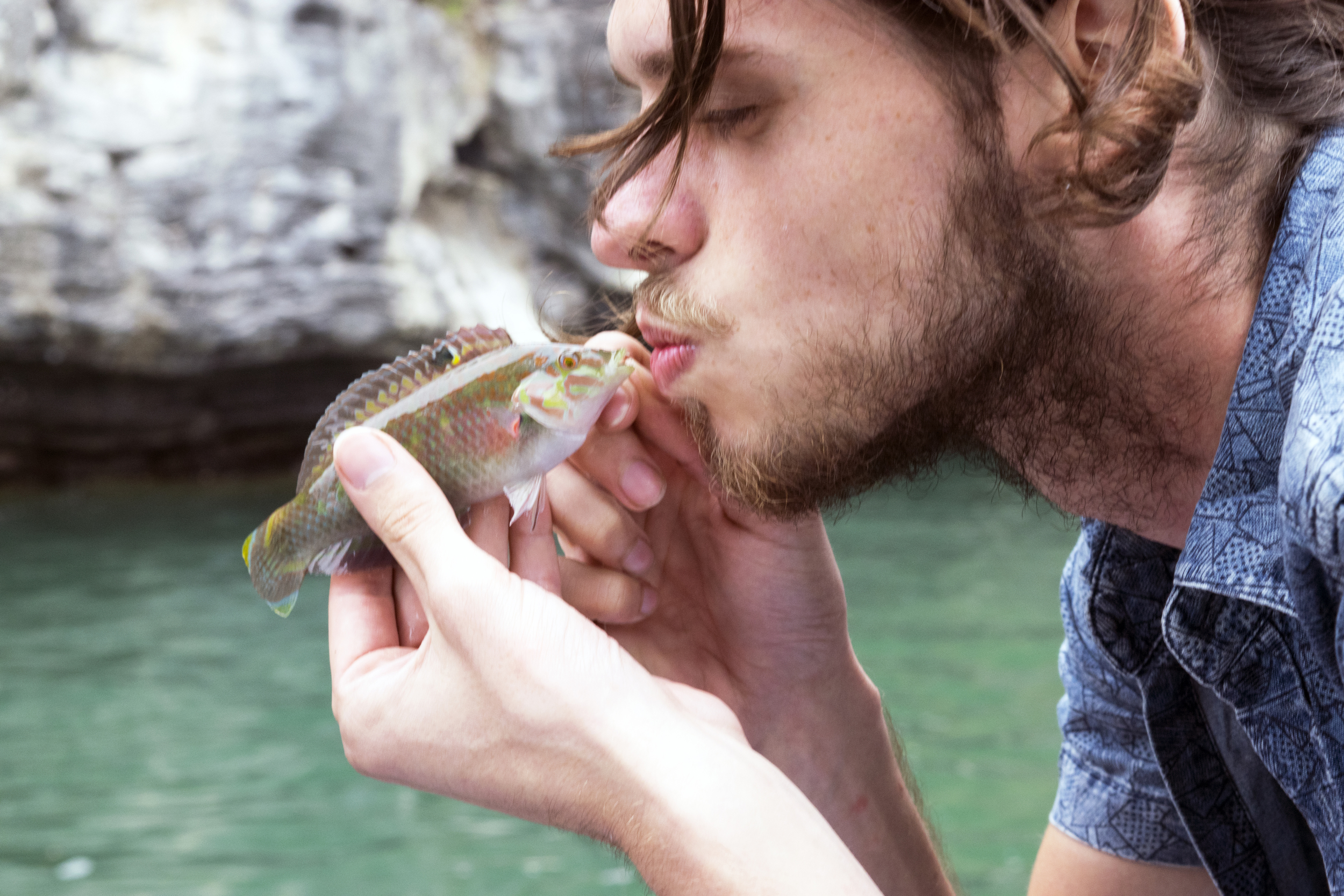
We fished for several hours, catching mostly colorful reef fish that we tossed back because they were too small to eat. Every once in a while, a large, orange-spotted jellyfish as wide as a stop sign would float up to the surface. The captain demonstrated that they weren’t poisonous and that we could pet them by tugging one up out of the water by its bumpy top. He motioned that they were edible, but nobody was hungry enough to test it out.

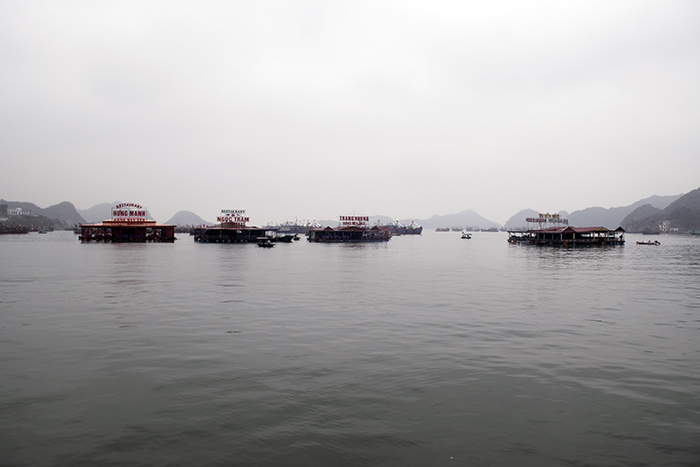
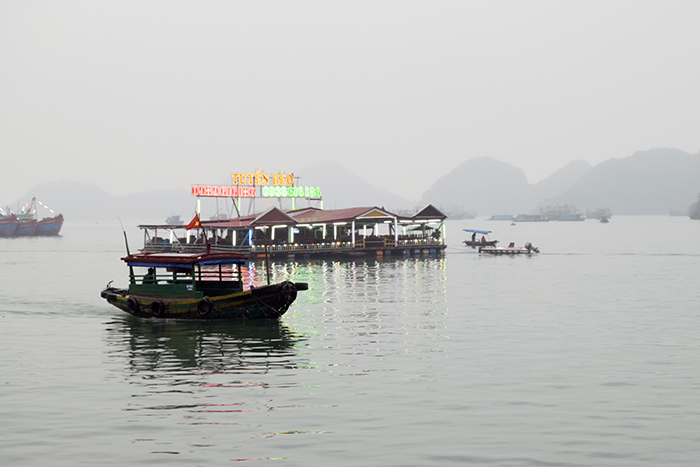
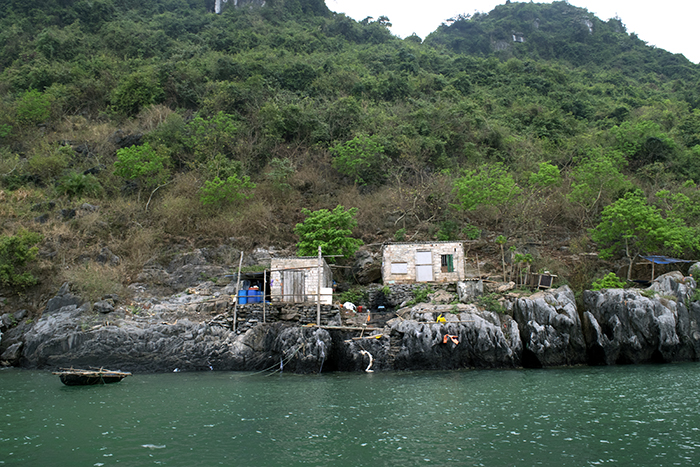
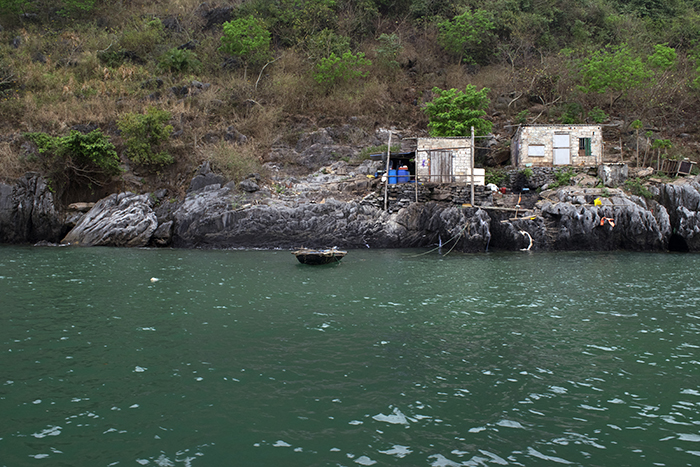
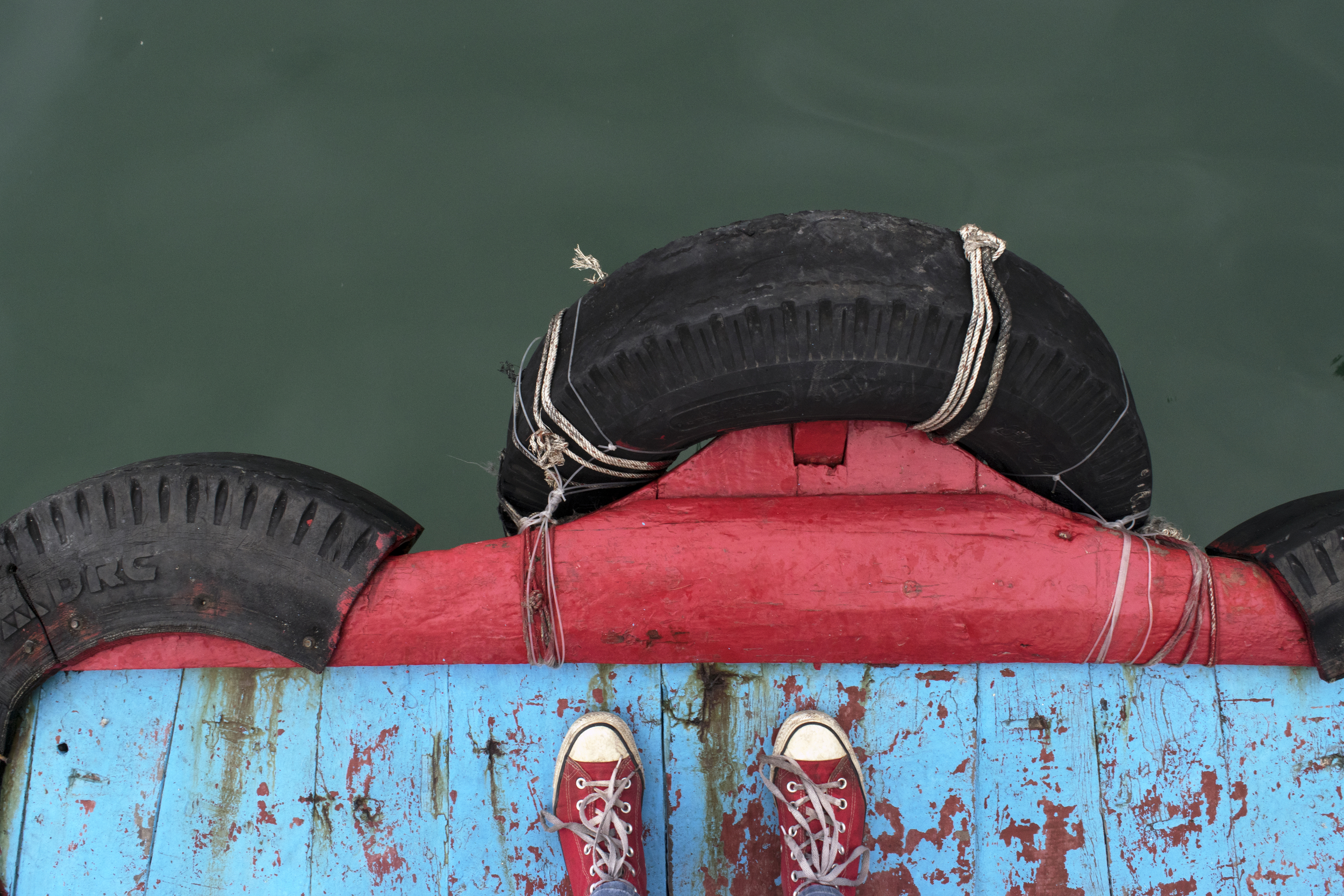
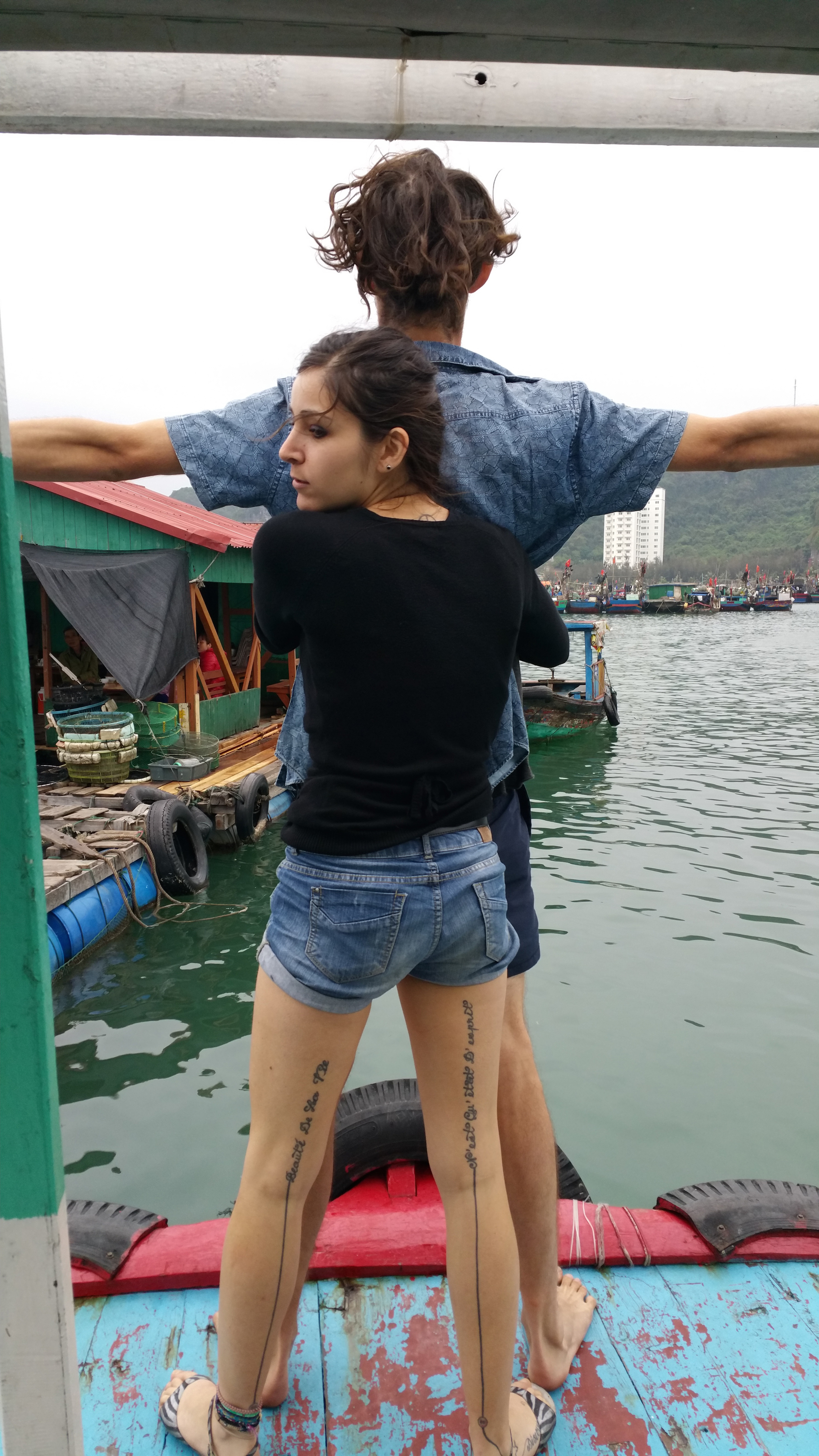
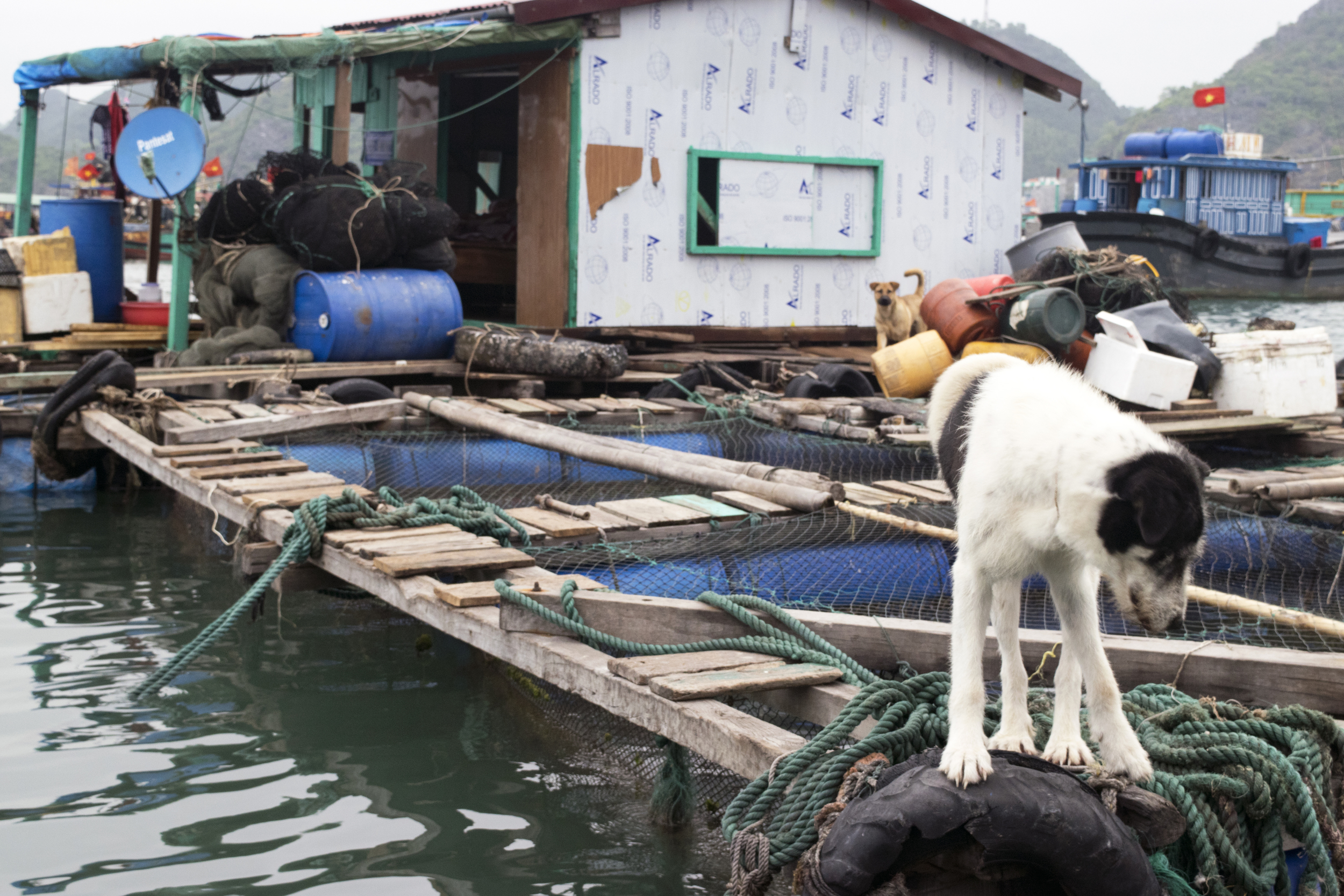
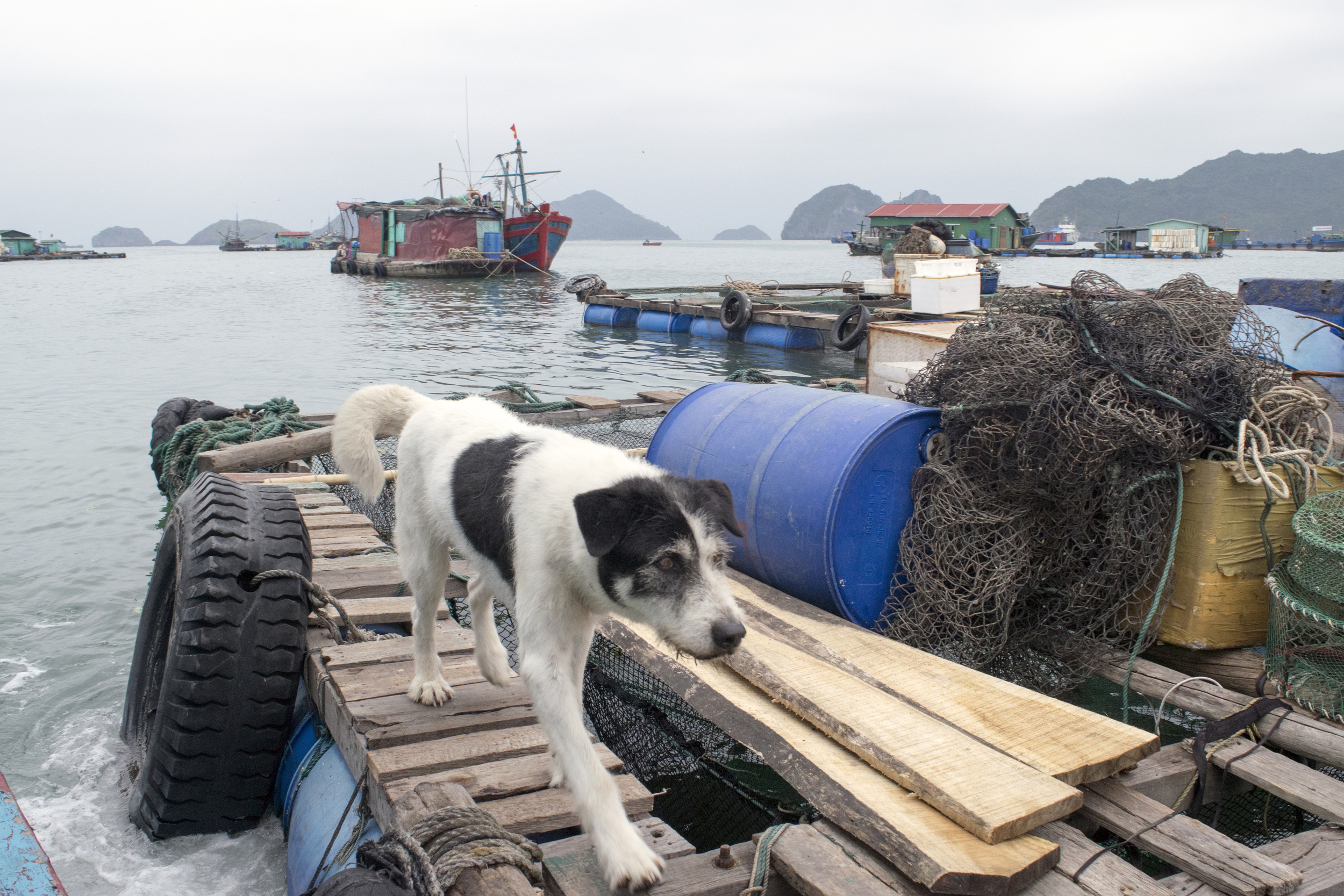
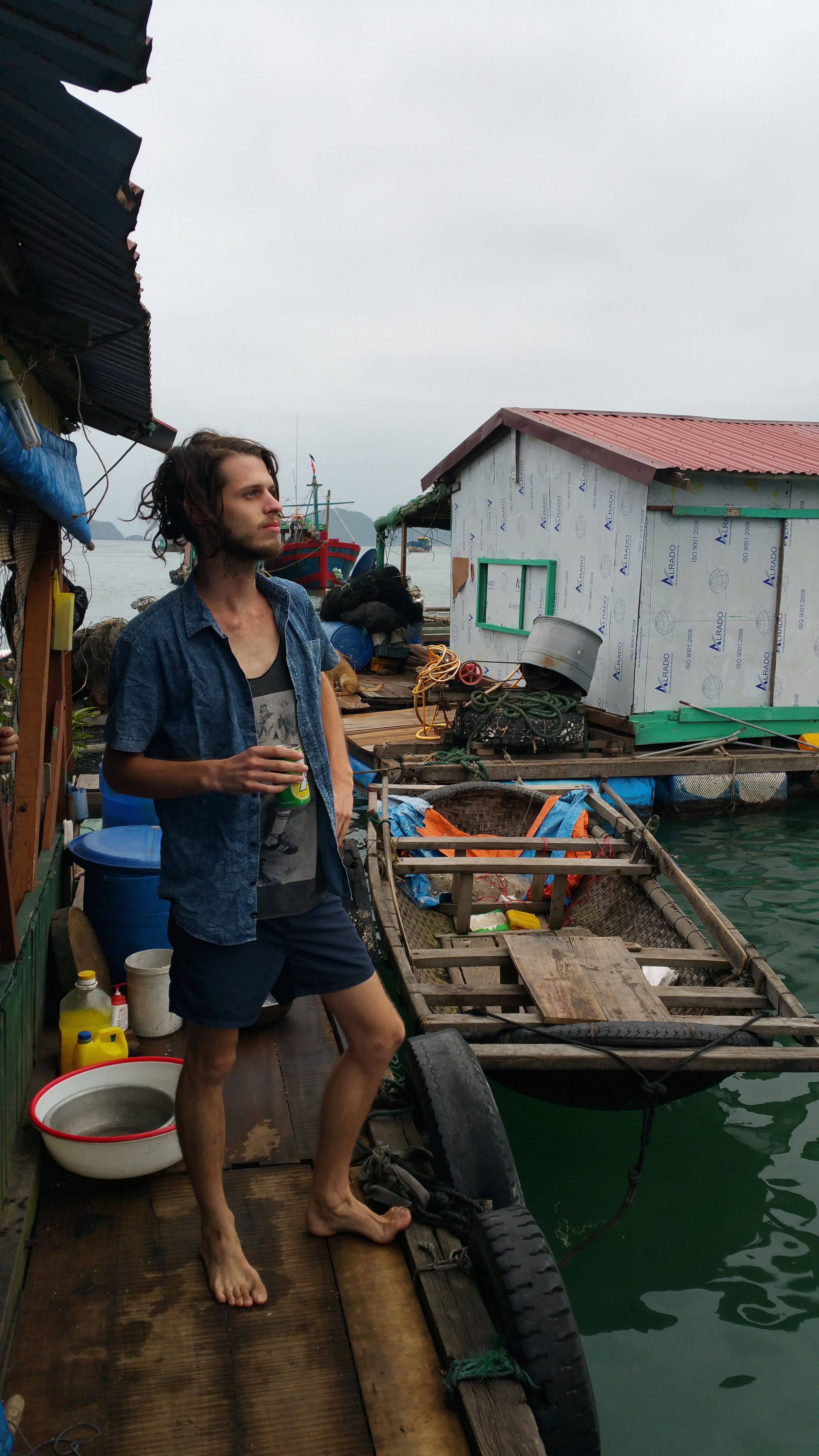
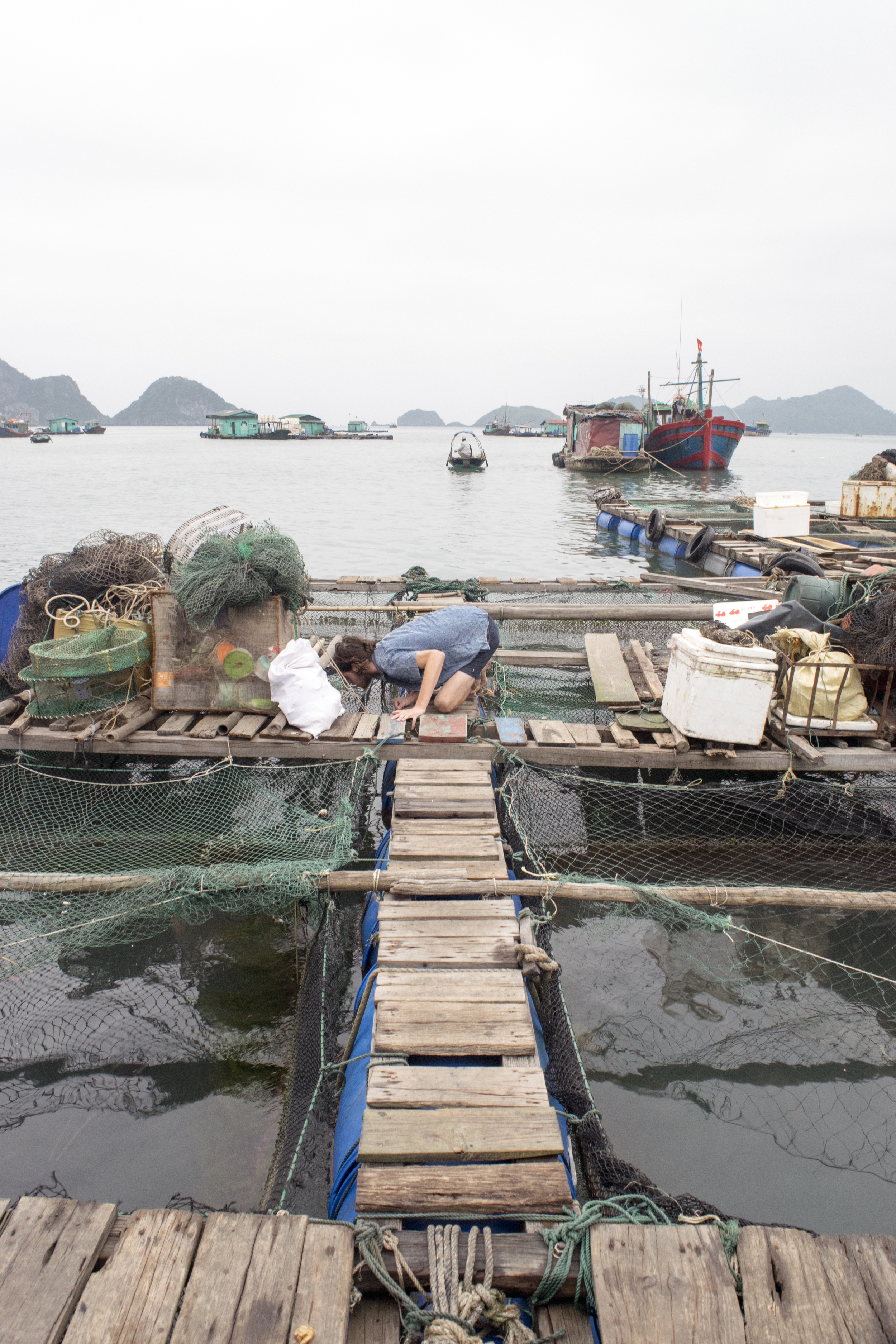
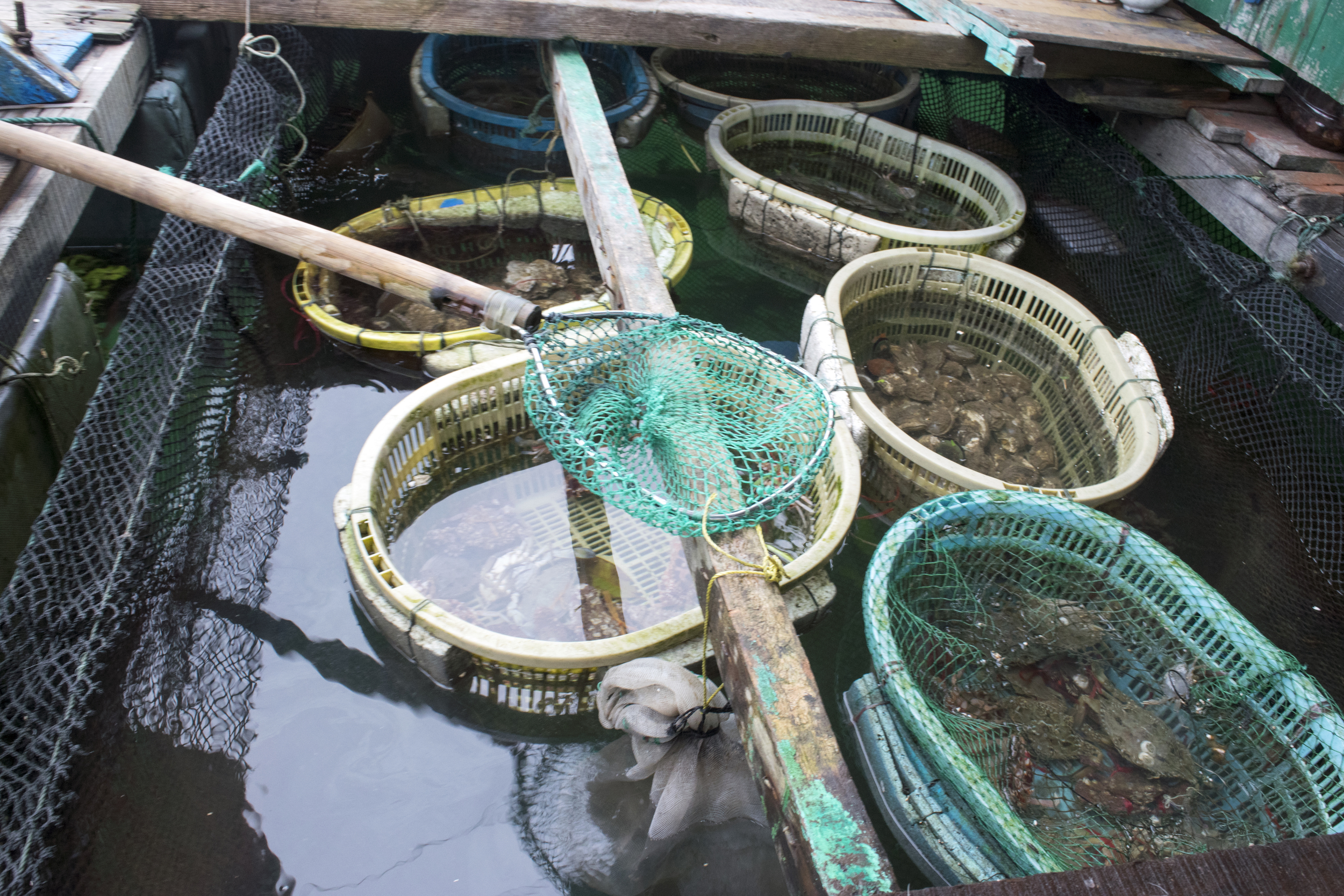
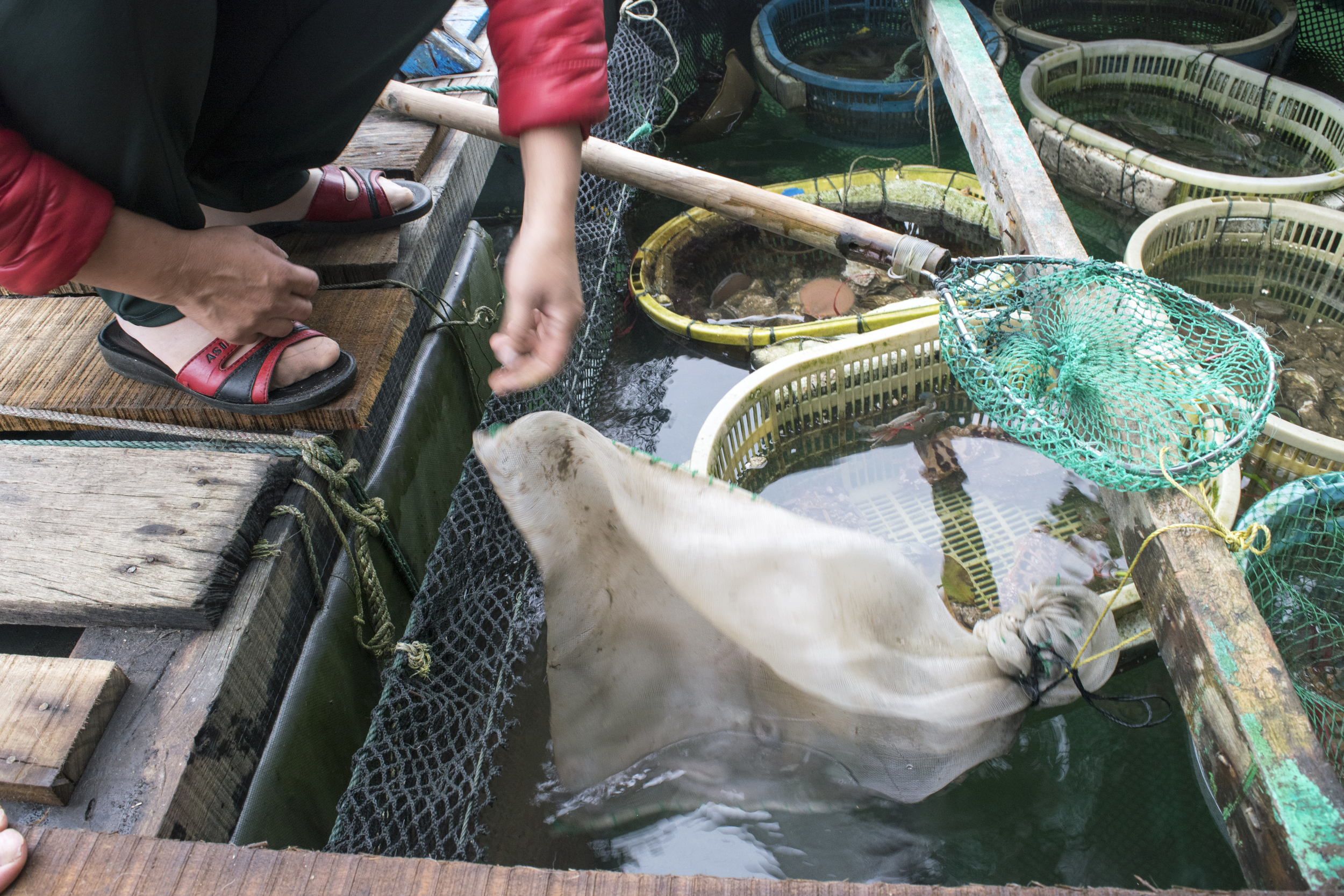
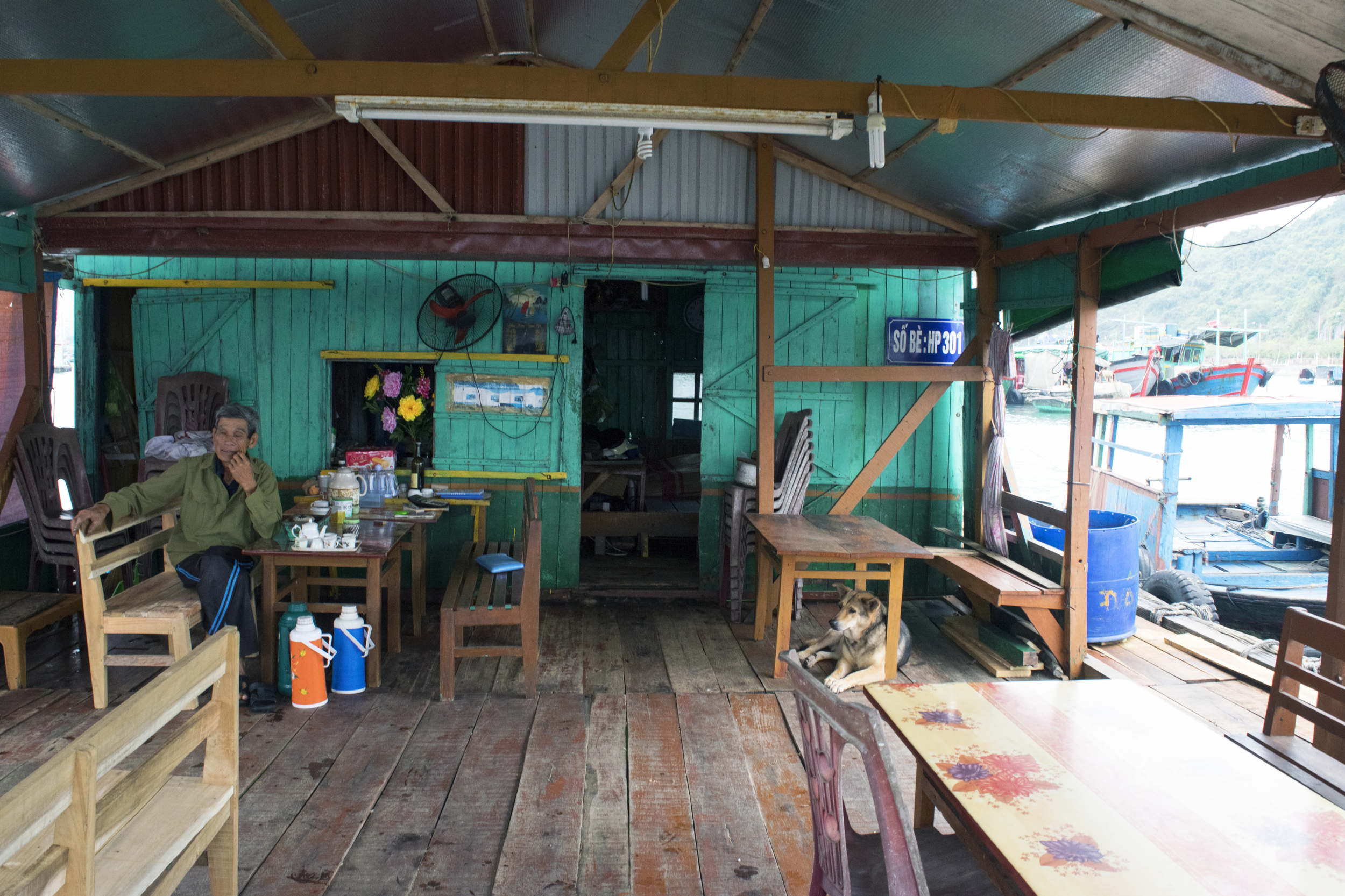
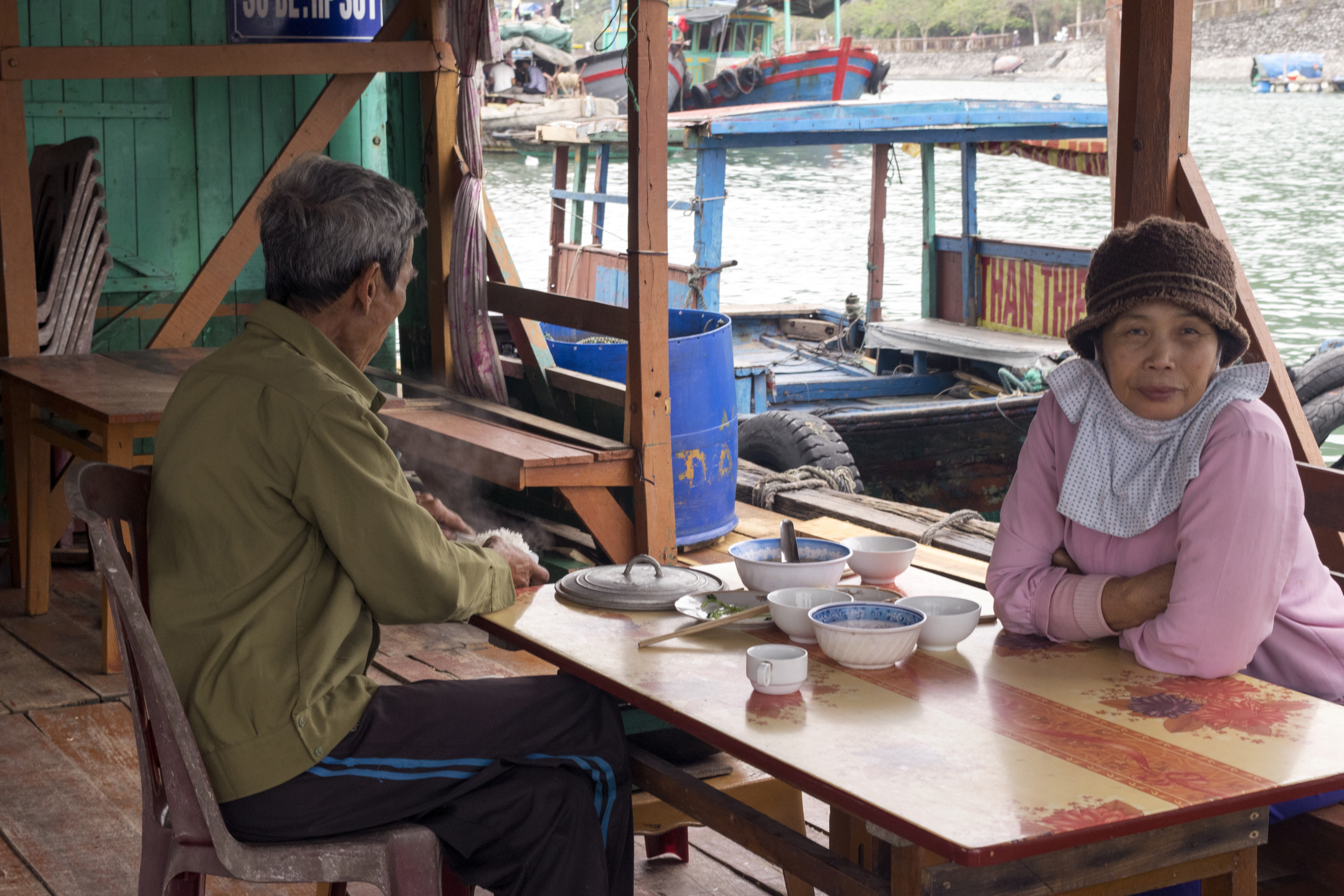
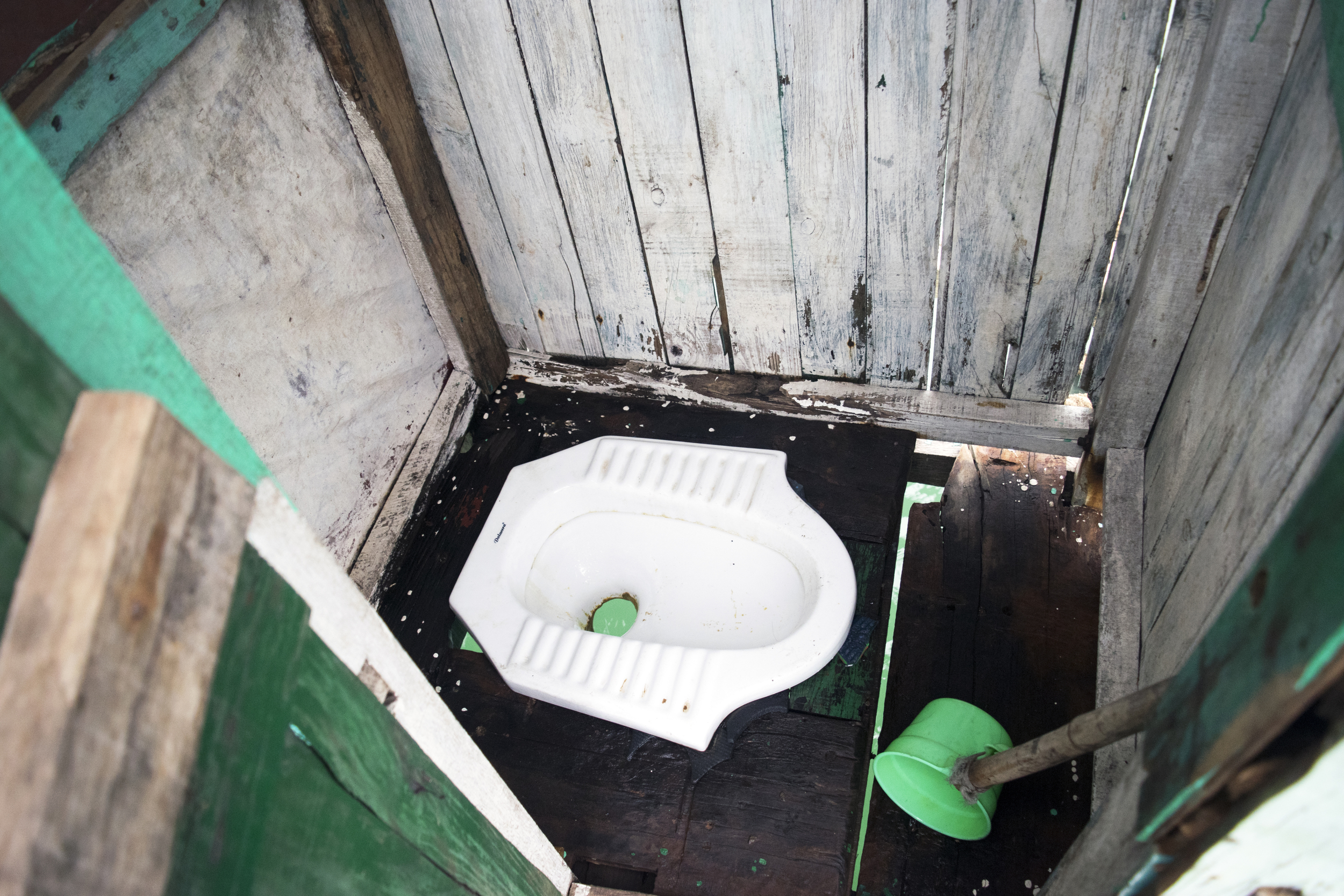
Instead of taking us directly back to shore, the captain brought us to one of the floating houses in the water. It had three sections: the dock, a planked grid with openings where nets holding an assortment of sea creatures hung in the water; a wide, covered porch area with multiple tables and benches; and a wood house with walls painted mint green and an outhouse that was nothing more than a porcelain hole over the water. This all bobbed in the bay. The edges of the wooden dock had been covered in rubber tires to prevent boats from scraping against it.

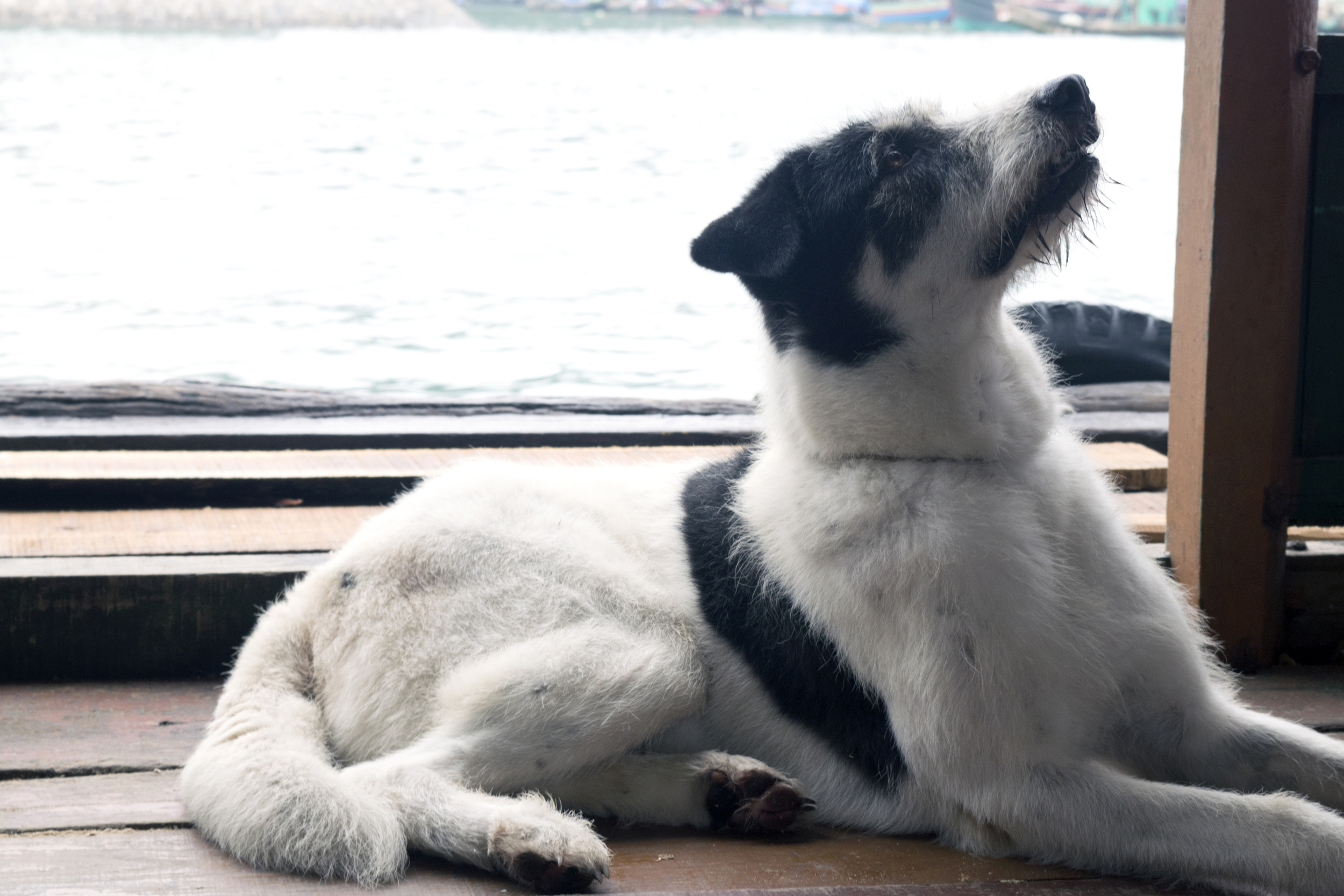
We were greeted by two large dogs when we landed; one was a black and white spotted mutt with wiry hair and long legs that watched patiently as we tied down the boat and sniffed us when we stepped aboard, the other a sleepy brown pup that preferred to lounging in the sun to our company. An elderly man wearing linen and smoking tobacco from  a tall, thin bong also ignored us. But a woman in a pink sweater greeted us and asked if we were interested in any of the fresh catch. We realized that this was the captain’s parents’ home and restaurant.

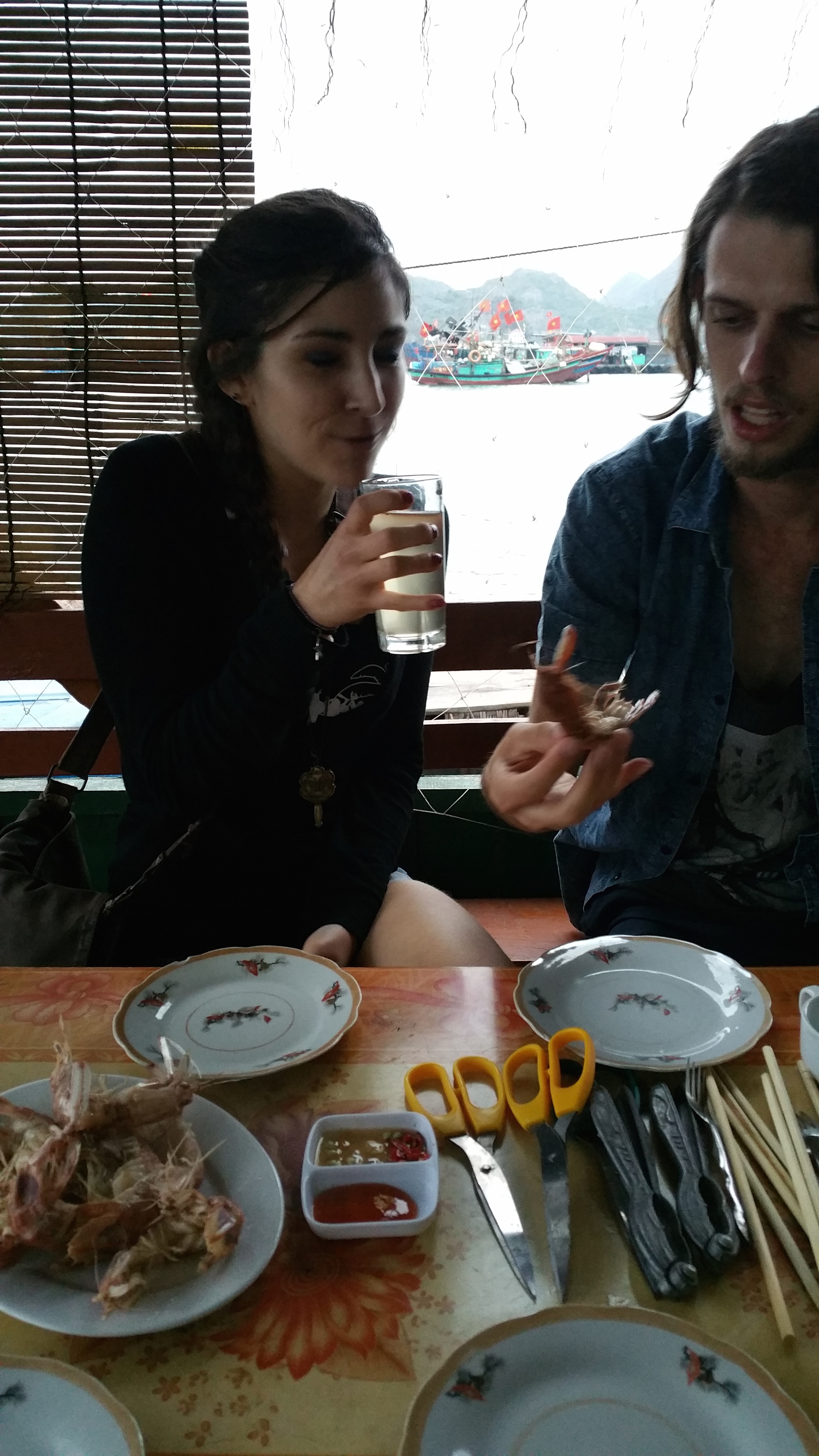
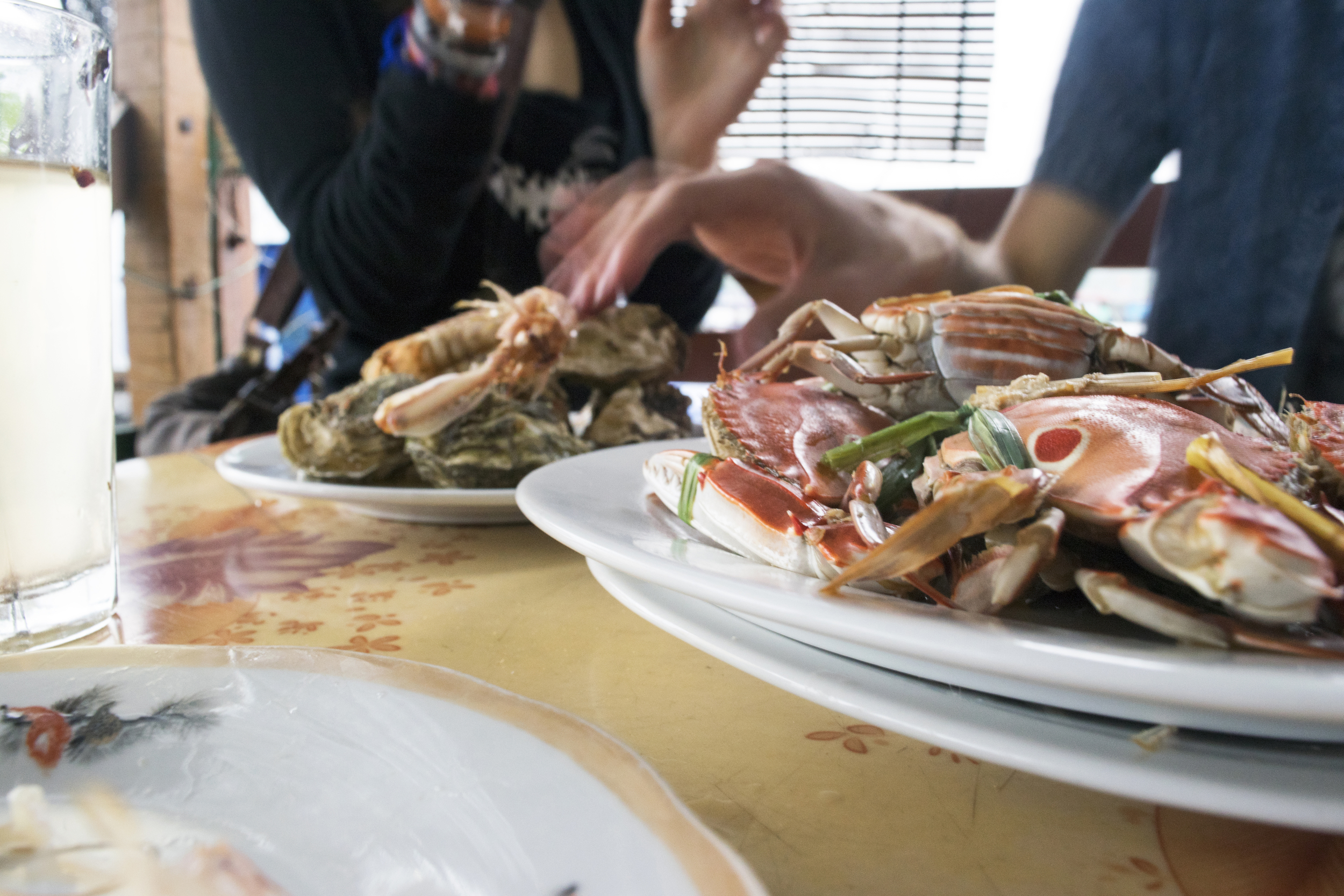
We chose a selection of yabbies (half-crawfish, half-lobster creatures), crab, and oysters from the nets to boil while the captain disappeared into the house. The woman in pink collected the seafood and brought it to a large, ash-stained pot sitting over a fire in the kitchen. While we waited, the elderly man saw we were drinking and offered us moonshine from his teacup. We all took a nauseating, stomach-churning, throat-burning gulp and a moment later he came back with a full glass of the stuff.

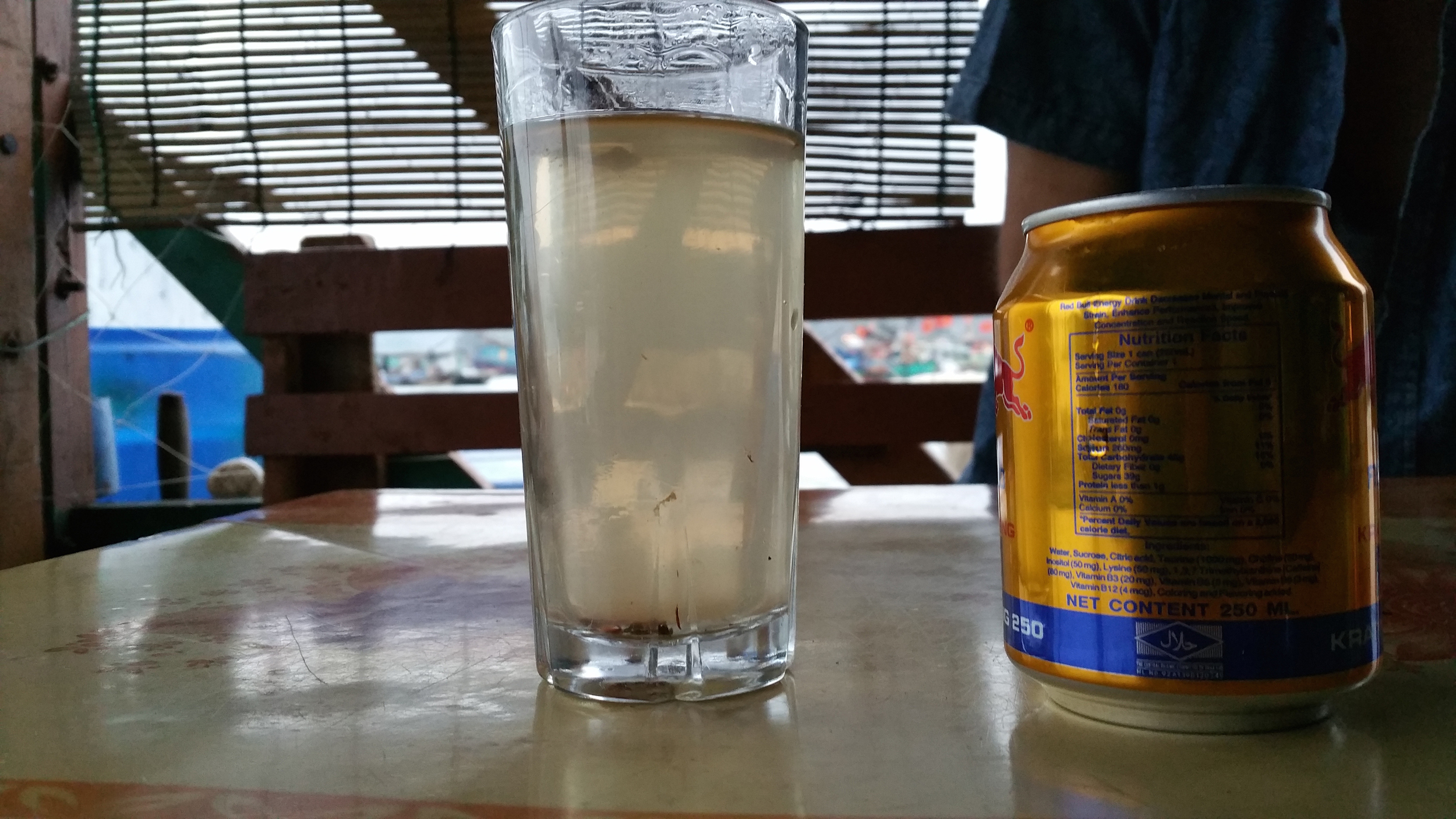
It wasn’t the first time that I’d tried Vietnamese moonshine, which was so cheap it couldn’t be avoided. But this was the first time I’d seen it in it’s full glory in daylight through a clear glass. For the first time I was really seeing what I’d been drinking: the liquid was translucent with a gray-brown tint and there were crumpled leaves, and hair-like pieces of god-knows-what floating in it, and gritty residue resting at the bottom. We took turns swigging from the glass, drowning it in M-150. And when we ran out of chaser, we continued, shaking our heads in disgust after each turn.

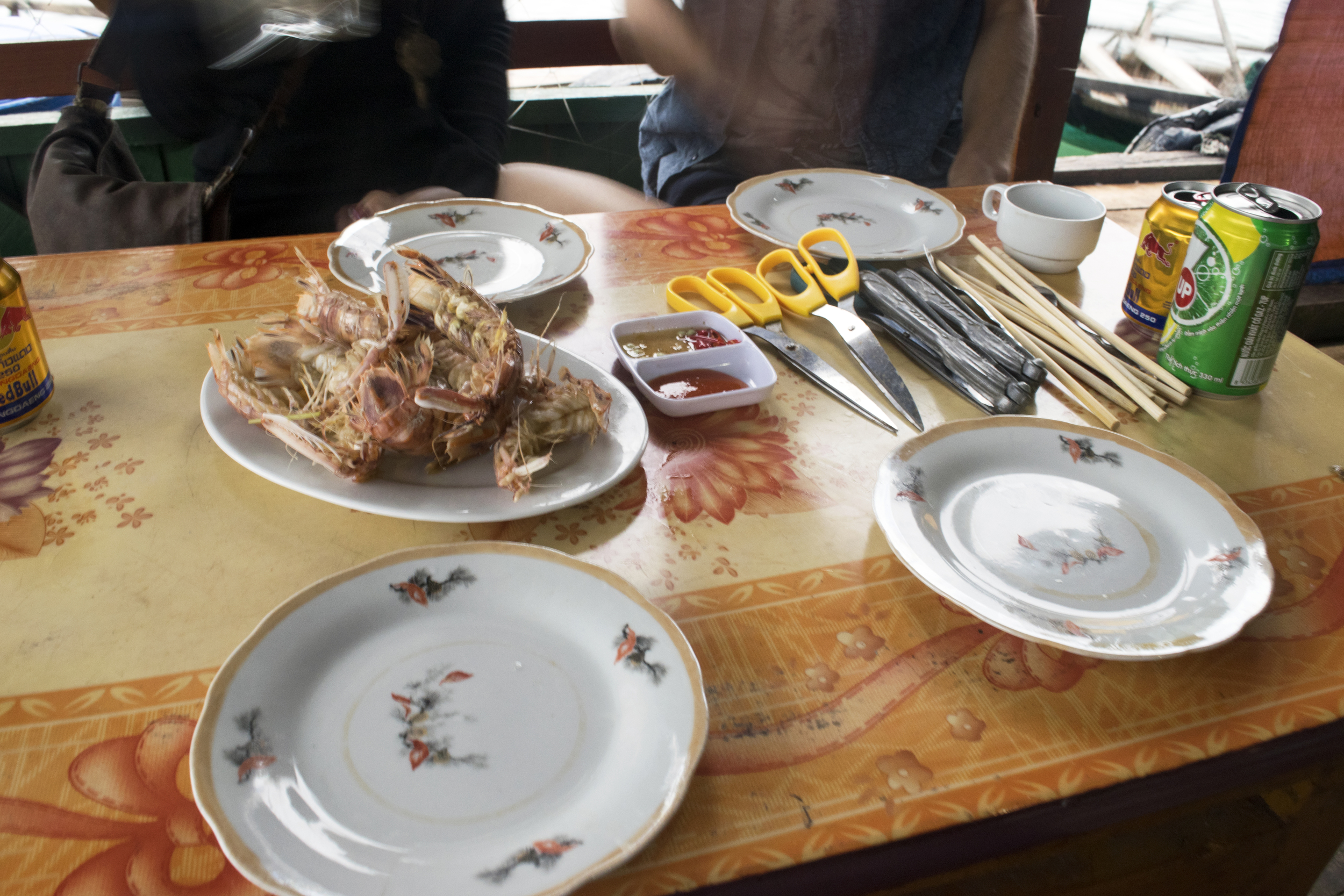
When the food was ready, the captain brought out chopsticks, claw crackers, and extra plates. The stacks of shellfish arrived almost too-hot-touch, shells pink from boiling. And everything was tender, fleshy, and held that innate saltiness exclusive to fresh-caught seafood. The most delectable part was definitely the oysters, which were the fattest, most meaty, least slimy ones I’d ever tasted. But it was all out-of-this-world.

After we ate, the fisherman dropped us back off at the shore more-than-satisfied, belly-aching-full, and exhausted.

Expenses:

  • Chartered fishing vessel, equipment, and bait: $5 per person

  • Surprise seafood restaurant dining experience: $5 per person

  • Tall glass of moonshine: $2

Travel Tips:
  • Unplanned adventures are the best if you are looking for a different-than-the-usual-tourist  experience. I wouldn’t have met the fisherman or his family if I’d just taken a tour. Never be afraid to branch out on your own if you want to do a specific activity, and keep an open mind!

  • If you are in a coastal place, eat all the seafood you can. It’s incredible.

I'd Like to Dedicate This Blog to Megamalls Everywhere

Location: Hanoi, Vietnam

It was another sweltering afternoon in Hanoi. (Read: the heat here gets trapped in the asphalt and thick concrete walls of all the buildings and radiates out of them like an oven. I seriously wonder sometimes when I’m walking down the street if I’m being slowly cooked alive.) I was hiding in our air-conditioned room at Lamfingo Hotel, researching possible activities for Cody’s upcoming birthday, when I stumbled upon Vinpearl Water Park. Ooh, I thought, now that sounds refreshing. As I read more about it, I became intrigued; not only did it include multiple adult-appropriate slides, a full-sized swimming pool, and a wave pool, but it was actually located inside a mall. And not just any mall; it was one of several activities available in the seven story high monument to materialism known as Royal City, a name I found quite fitting. The enormous structure was  financed by a billionaire and also boasted a bowling alley, skating rink, high-rise apartment complex, art gallery, piano, 4D movie theatre, gym, plenty of fancy restaurants, and a convenience store. It sounded like the ultimate play place for several inebriated adults celebrating a twenty-fourth birthday.

That was a few days ago. Today, I report to you as a happy customer of Vinpearl Water Park. You know those television ads in which they interview fake customers about their satisfaction with a product or service? If those were real (spoiler alert, they’re not), I would volunteer to represent Vinpearl and all its chlorinated, fun park goodness in a heartbeat.

It was a Friday night and we waited until evening so we could get a discount. I highly recommend this; it’s much cheaper and who can last more than a few hours at a waterpark without suffering from over-pruned fingers and toes, anyway? I think the best part, even more glorious than the five-story high slides and nonexistent lines was the nearly-total lack of supervision. There were only a handful of workers visible in the entire park and I wasn’t warned once  not to run on the slippery floors. Did I fall several times? Did I end up bruising my hip and both knees when I went down a slide the wrong way? YES BUT WHO CARES BECAUSE FREEDOM.  

There’s one slide in particular I have to mention because of it’s pure, unadulterated epicness (and I know that word is overused and so 2009 but sometimes it’s just required). Now, it’s not for anyone who is claustrophobic, nyctophobic, basiphobic, or acrophobic. Seriously. You climb up about five stories and the ride operator points you to a mysterious, human-sized test-tube. You stand in the tube on a circular platform, cross your arms over your chest and cross your legs. Then the operator presses a big green button. A plastic case snaps across the front, closing you off completely from the world. An ominous beeping sounds three times. Then the floor just drops out from under you and your body is whisked away down a tight, completely black, nearly vertical tube half-filled with water. You can barely breathe, you can’t see, you don’t have time to think. It’s fast, exhilarating, and absolutely freaky, especially when mid-beeping you begin to wonder what kind of amusement park safety regulations Vietnam has anyway...

We’d ridden everything a few times and were beginning to wear down when we figured out that the kiddie area had a pump gun that you twisted to build pressure and then shoot water. Cody was taking a turn on it when, underestimating his The-Rock-like strength and the overestimating the engineering of the kid’s toy piping, he tugged the pump too hard. There was a snap and a crack appeared in the metal. And then water began to burst through that crack with a sudden violence that caused Cody to scramble backward and shout at me to get out of the otherwise empty kiddie area.

As we bolted, I saw the water spurting into the air with a force that could rival Old Faithful. How long could that metal pipe hold before it snapped entirely? We met up with everyone at the lockers and as we gathered our things to leave, I noticed workers shouting and running toward the broken pipe. It was time to split.

Expenses:
  • Entrance fee, after discount: <$10
  • Beer at Royal City’s convenience store: $1 per can