My Favorite Vietnamese Street Food: Banh Mi

Location: Hue, Vietnam

A Minor Disclosure: Yes, the images above are of a woman sitting on a sidewalk toasting baguettes on a dirty metal stove over a fire inside of a cardboard box lined with used newspaper. Yes, she is using her bare, unwashed hands to turn the bread. Yes, those are damp, stained towels dangling on the side of the box. No, the lack of hygiene and the total disregard for general fire safety does not bother me. Why? Well, a couple immune-system-boosting months in Southeast Asia can really change your perspective on food preparation. 

A few minutes after I took these photographs, I ate one of those baguettes.

The woman, whose fingertips are pictured so delicately cradling my future-food, sliced it open with a serrated knife and generously slathered both the top and bottom with mayo and hot sauce. She then stuffed it with thinly sliced pork, fresh cilantro, a gravy-like layer of pate, strips of pickled carrots and radishes, and chopped cucumbers. Lastly, she wrapped it all up in a section of newspaper and placed it inside a plastic bag and held it out to me. 

I handed her a 10,000 dong note, the equivalent of about $0.45. I then plopped myself down on one of the plastic footstools beside her street kitchen and feasted. 

This delectable creation is the classic banh mi. "Banh mi" translates to "bread" in English. It's one of the most common meals you can find in Vietnamese cities; both alley carts and upscale cafes sell the traditional sandwiches. They're best hot, which is why I prefer this kind of sidewalk snacking, which allows the least amount of time between the toasting and the food entering my mouth. And I kid you not, I could live off these salty-sweet-crunchy-crispy-chewy-spicy-meaty-vinegary goodies. 

This particular sandwich was not only the cheapest one I'd had so far in Vietnam, but also the tastiest. If dirty utensils and potential fire hazards is what it takes to perfectly flavor my banh mi, then screw proper food preparation, I'm down.


What Happened Along the River

Location: Phong Nha-Ke Bang National Park, Vietnam

There are some moments of culture shock that stay with you forever,  instants that are so genuinely confusing and different that they can’t be reconciled with your personal experiences and take time to even begin to understand. I’ve had a few of these moments: when I stood over an unconscious man  in Laos that had been in a traffic collision and none of the locals would touch him; when a nine-year-old street urchin in Cambodia looked me in the eyes and told me to go fuck myself after I wouldn’t buy a bracelet from him; when a Vietnamese woman seriously proposed to an American friend of mine that he stay in her village and  marry her eleven-year-old granddaughter; when a Christian pastor in Ghana walked me through an burned out, abandoned village and smiled and told me that it was just “God’s will.”

The most frightening thing about these moments is that they come so unexpectedly. When they hit you it’s entirely raw. You can’t prepare and you can’t do anything afterwards except take a breath and remind yourself that the world is bigger and more complicated than you know.

Right now, that’s what I’m doing. Just breathing and mulling over yesterday’s events.

I was riding a rented push bike on a dirt road along the river opposite Phong Nha. To my right lay corn fields and mountains, villagers herding cows. To my left stood rows of half-built, house skeletons. Only the foundation had been put down; it was all bare concrete and open wiring. I wondered why all this waterfront property been abandoned. Had the project become too expensive for the building company? It didn’t look like anyone had attempted to continue construction or demolish any of the structures for at least a few years.

As I passed the front of one, I noticed a man sitting in a fold-out chair on the dusty gray steps, spooning something from a bowl into his mouth. He was shirtless and a dog lay on the ground beside him. He nodded at me. I looked through the open doorway, one where a door had never been installed, and saw belongings scattered about. A line of laundry hung against the back wall. In the next building I saw a plastic washing tub for dishes and a table. The one after had a couple of kids’ push bikes scattered in the front and a moped parked by the side. Were these squatters?

As I continued to ride, taking breaks to photograph the homes,  a man came out of one of the houses and waved at me. His wife, a smiley, short woman in a striped top, emerged from the doorway, followed by two young boys. The man said something to them in Vietnamese and they all waved at me. I thought maybe he wanted to see my photos, so I brought over my camera to him, began to click through the images.

He pointed at the house; I could take photos of it. I bowed my head in thanks. What I really wanted was to go inside; were these homes furnished? Did the families live in them permanently? Did they have electricity? Running water?

I pointed inside and the man nodded, beckoning that I follow him and his family through the doorway and down a dark, undecorated hallway. The back was nearly completely open. Light streamed in and the river beside the house reflected the gold of the afternoon sun. The man showed me the corn plants beside the house; they were his.

The unfinished concrete left everything in the home dusty, and the electrical wires on the walls wove thin and black along the edges. There was a 1970’s style squat gray television in one corner, underneath a shelf filled with different tokens. The man offered me a seat on a bed frame covered by a woven mat. His wife brought me a plastic cup of water that I doubted was  filtered. I drank it anyway, out of politeness. The older son sat beside me on the bed while the younger boy held onto his mother’s leg.

The two children watched silently as the parents began to ask questions. The father pointed at a small statue of the Virgin Mary on a shelf; was I Christian? I just smiled, hoping they’d take that as a ‘yes’ and let it go. They did. He asked where I was from and when I answered ‘America,’ he nodded in approval. He showed me a clean, glass topped table he’d filled with images of Jesus, Mary, and other religious figures. It also held multiple certificates, but everything was in Vietnamese and I couldn’t figure out what they were for.

It was hard to get past the language barrier; the man kept saying things to me in Vietnamese, repeating himself. He pointed at me.

“USA.”

I nodded, smiled.

He spoke some more, but I couldn’t catch anything, even if some of it was English. It seemed like he was pointing out the concrete walls of the house. I noticed the children were beginning to shift around and the older son, who I’d found out had just turned twelve, was holding his palms clenched tightly together in his lap. The man was pointing at the son and then at me. The boy stared at me with bright, wary eyes.

Maybe he’s shy or something? I wondered.

I waved at him and smiled softly. His throat muscles rose and fell as he gulped. His father motioned that he should stand up and then the family clumped together in the middle of the room. The father nodded at my camera. I grinned, happy that someone wanted me to take a photo of them.

Click, click.

I’d finished my water and everyone seemed to be standing around somewhat awkwardly. I decided it was time to leave and said “thank you” in Vietnamese, bowing. I picked up my bag off the bed. But the man was motioning to his son. I must have looked confused, because the mother took the boy’s limp arm and held it out to me, gesturing that I should take him with me.

“USA.” She said.

My stomach dropped. I could feel the heat rising to my cheeks. They wanted me to take their son to America. It all came together in my head: pointing at the barren walls, the nearly-empty house, ensuring that I was Christian, the father’s approval that I was from the USA. The boy stood to my right, facing me. His hands were so tightly wound together they had paled from blood loss. Everyone was staring at me. The mother’s eyes sparkled with hope, the father was quiet. Nobody moved, they barely breathed.

“I, I can’t…” I mustered, even though I knew they wouldn’t understand. I pursed my eyebrows in sympathy, shaking my head slowly and holding my hands out.

The mother’s eyes immediately darkened with sadness, but the father still looked hopefully from his son to me. The son stared at the ground. I just stood there, helpless.

Finally, the father gave me a small, understanding smile, and moved aside so I could go back out through the front door. I left quietly, quickly, trying to make myself as small as possible.

When I made it back to my bike, I turned to them. The parents all waved as if I hadn’t just turned down their offer to adopt their oldest son. I returned the gesture, repeating “thank you” in Vietnamese. I took one last look at the 12-year-old, who wasn’t waving, just watching me. I couldn’t read his expression, whether it was of relief or disappointment or both.

A Comprehensive Review of the Dark Cave Tour

Location: Phong Nha-Ke Bang National Park, Vietnam

Today I checked out Phong Nha’s caving system, the one that so many travelers rave about. And you know what? It lives up to all the hype.

The entrance to the cave that we wanted to visit, The Dark Cave,  is about a twenty minute motorbike ride away from Phong Nha. Between myself and four others, we had two bikes (one was in the autoshop, something to be expected often when traveling via a used Honda Win). We rented a third bike and followed the dusty signs through the countryside, over the river, into the mountains, and to the caving adventure center. Once there, we paid and signed all the legal forms necessary for a combination kayaking, ziplining, and caving excursion. There was a minor setback where we all had to redo our safety regulation forms because apparently the proper answer to “Health Status?” does not include the following: “fit as fuck,” “ready to rock and roll,” or any version of “healthier than Superman/Pop Eye/UFC Champions.”

But once we’d passed that minor inconvenience and were given lockers, we stripped down to our bathing suits, and suited up in full gear: a life jacket and a helmet with a headlight, which we were warned repeatedly not to lose or break lest we want to pay the $50 fee.

The ziplining and kayaking were pretty standard; of course, adventure activities involving gear are always a little more thrilling in Southeast Asia because you’re just not sure what the safety regulations are. But all went  smoothly and I found myself dumping my life jacket into a pile with the rest of the group, and following the tour guide into a huge, totally dark, muddy cavern. As we explored further into the cave, the mud under my toes became deeper, soon engulfing my bare feet. As I followed the six people in front of me, I thought it incredible that nobody had been stabbed by something yet on this trek, a discarded earring or fallen pin. I hoped I wouldn’t be the one to break the trend.

Soon my ankles were completely coated in  mud the color, texture, and consistency of a half-melted Hershey’s Kiss. Strangely, though, it didn’t smell of anything but cold, damp air. The path narrowed, and soon it was like I was exploring a thin passageway that had been dug out. Everything was mud: the ceiling dripped thick globs of it, the round rock walls I balanced against as I slipped and stumbled onward were coated in a chunky layer of it, and every step landed me deeper into the muck. Soon it was up to my knees, then past them. And then I was just trudging through a chilly, waist-high mud pool quite similar to the fudge river flowing through Willy Wonka’s Chocolate Factory.

The guide told us all to lay down in the mud. When I submerged my body up to my neck, I floated back to the surface. The mud was so thick my legs kept flipping back up from under me and I would on top of the mud again on my back. It was slimy and gross and absolutely delightful. I felt like a kid again, reliving all the triumphant joy of a six-year-old splashing around in puddles in the rain and running to her horrified parents covered in dirt. I was definitely wearing that same grin on my face.

Then the guide asked us all to turn off our headlamps. Everyone lay in the dark, engulfed in the stillness, deep within the anals of the Earth. After a minute, I heard a light splash and the rough slap of someone or something climbing. Then my friend Baby’s voice in the darkness, coming from the center of us all.

“Somebody, turn on your light!” Another friend of mine obliged and to the horror of everyone, there was Baby hunched over on a muddy rock above the rest of us, snarling and clawing at the air. A girl screamed. The headlight was snapped off then back on and now Baby was on all fours like a dog and he howled into the room. This time, everyone laughed and Baby continued his charade, mimicking Golem.

Next, we squelched back to the main area of the cave, where the guide ordered everyone into the icy, black underground lake water. I dragged my feet across the rough pebbles, submerging myself to wash off all the mud (which, by the way, was totally unsuccessful). We then put our life jackets on and swam to the end of the completely-dark lake. I didn’t even want to think of what might be in the water as I doggy-paddled in my vest. I couldn’t touch the ground, but every once in a while I’d feel something slimy brush against me, like seaweed (I hoped). Here again the guide asked everyone to turn off their lights. And we floated in the dark, listening to our own breathing and the slow drip of water hitting water.

Overall, it was awesome and I don’t know if there could be an excursion like it in a Western country. I imagine the health risks involved in that kind of environment, with the mud and the darkness and the tripping over myself through the rocky passages, just wouldn’t fly. So if you’re in Vietnam, definitely don’t miss it! It’s a once in a lifetime chance to get a hands-on experience with Willy Wonka’s fudge river (you know, minus the whole getting sucked up into a factory tube thing).

Expenses:

  • Rented Motorbike: $4 per day

  • Dark Cave Tour: $20

  • Gasoline: $1

Travel Tips:

  • Don’t wear any valuables or a super cute bathing suit. Whatever you wear will be forever mud-stained.

  • Go with the flow, even if you’re getting all dirty and it’s a little frightening. The thrill is worth the general grossness.

A Lady and Her Land

Location: Phong Nha-Ke Bang National Park, Vietnam

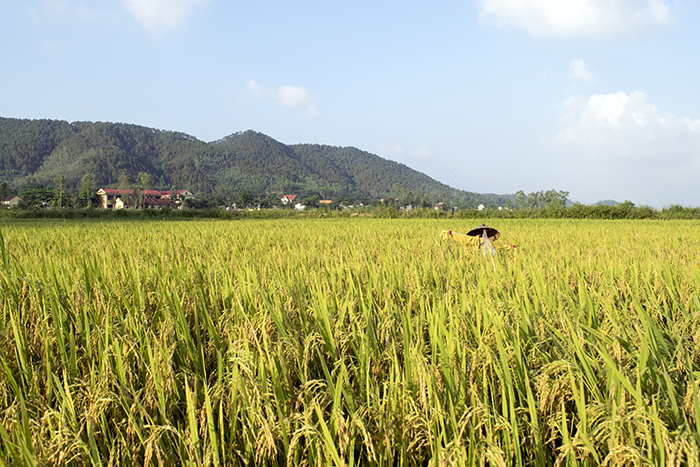
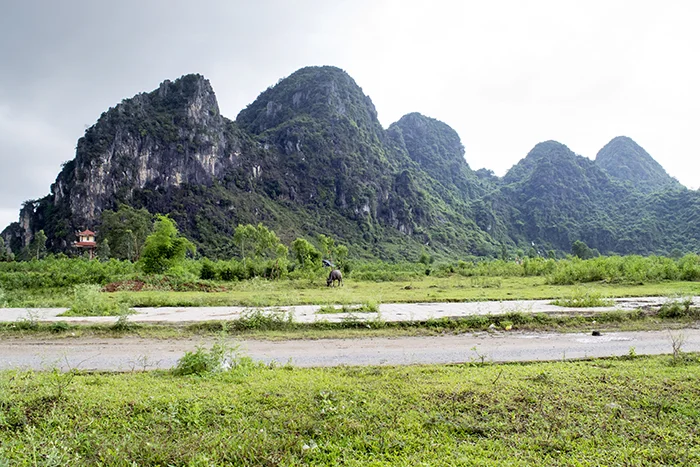
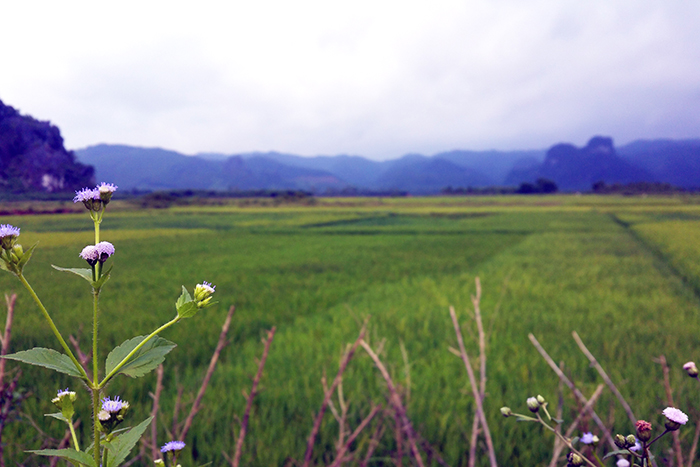
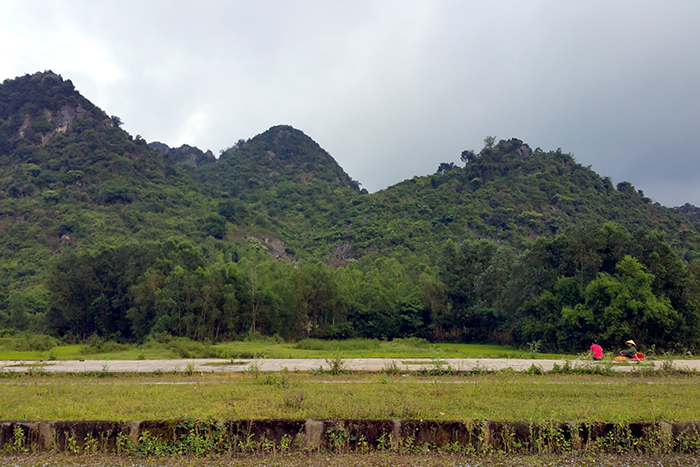
Today I found a deserted-looking highway that stretched from the middle of Phong Nha’s main street through the rice fields and into the mountains. I followed it until the afternoon grew late, taking in the grassy quilted farmlands, the grazing water buffalo (many tied by ropes to simple weighted pulley systems), and curious farmers who openly stared at me and my shiny red DSLR.

I wandered down the orange mud paths that separated the wet rice paddy valleys from each other and met several women working on the land. They were amused by my interest in their curved hand-scythes and tied bundles of harvested rice. The engineering of the rice fields was incredible; generations of farmers had hand dug trenches for miles around and set up a damming system constructed only of baseball-sized rocks, mud, and sheets of wood. The deeper I went, the thinner the paths became and soon I had to carefully cross a bridge that was just a tree trunk no thicker than my arm propped up on sticks. Another thin branch had been tied together with ribbons so the crosser could balance themselves, but it couldn’t support any weight.

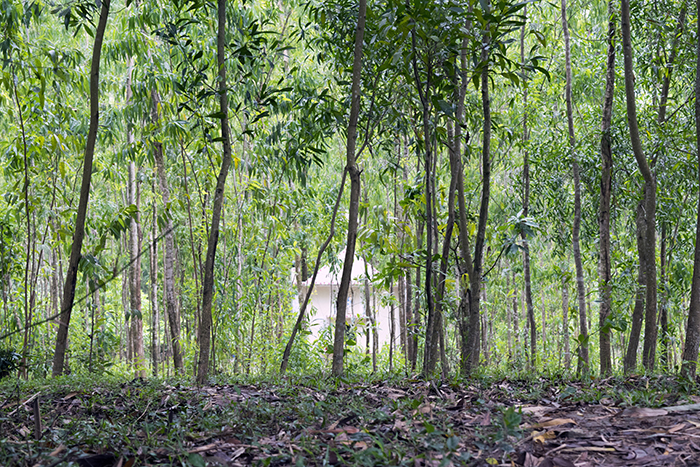
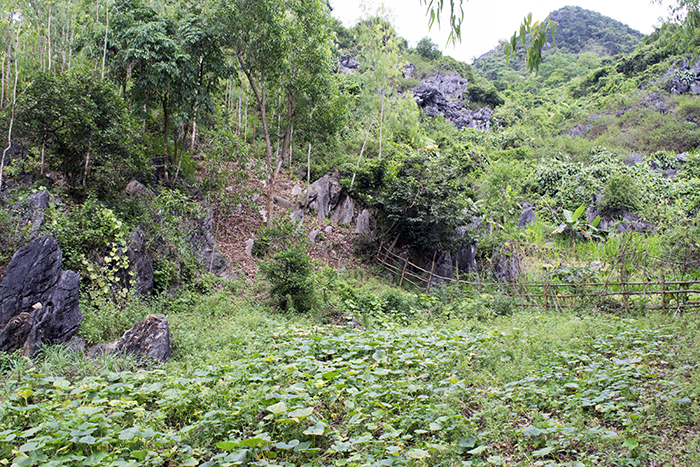
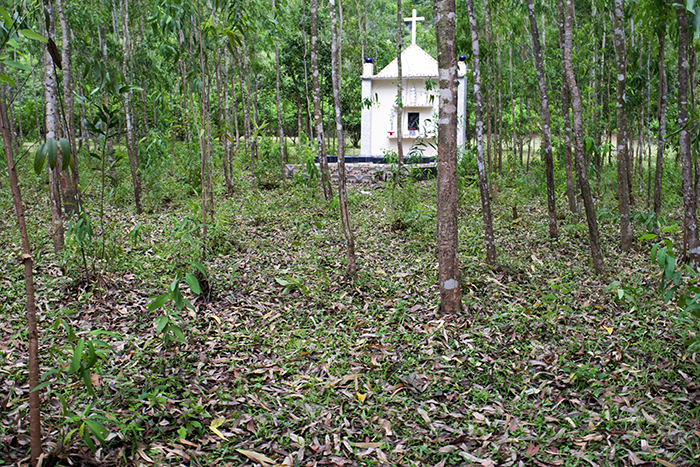
It was after I crossed this bridge that I came upon a gate (several heavy tree trunks stacked across each other) and a stick fence surrounding a forest of thin, beige planted trees that stuck out from the yellowy-greens and dark bush colors of the rest of the lands. Between the lined trees, I could just make out a bright white building. In the front was an ivory-colored statue of a Christian figure- either Jesus or Mary. There seemed to be small box-shaped memorials in the front as well, like the ones I’d seen placed over gravesites. It was all eerie; the spotlessness of the building and the neon color of the trees felt abnormal. I peered over the gate, craning my neck to get a better view of it and was about ready to start climbing it when I heard the soft suck of rubber soles on mud.

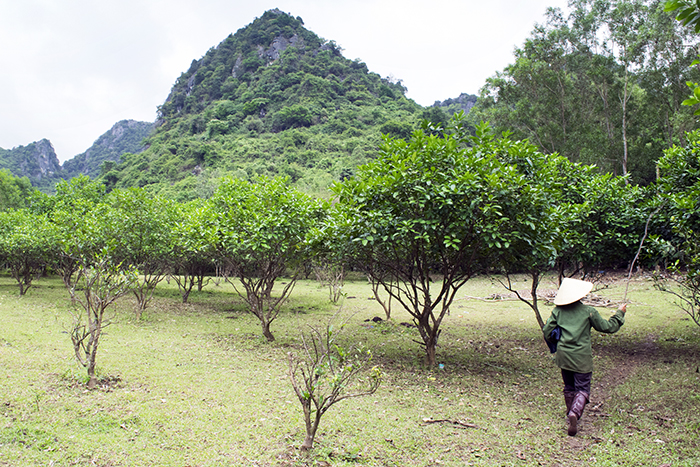
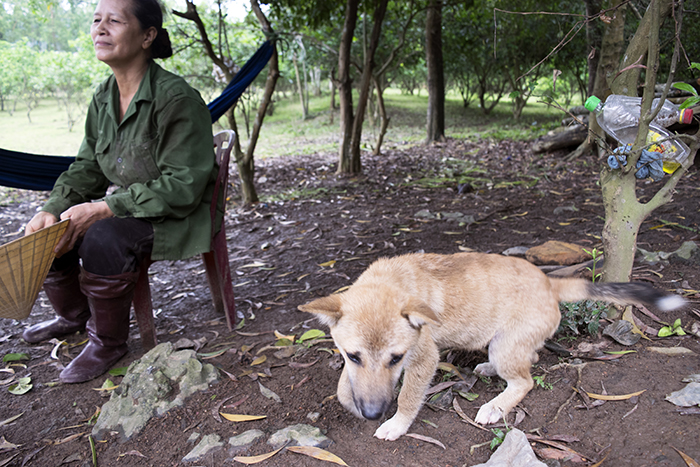
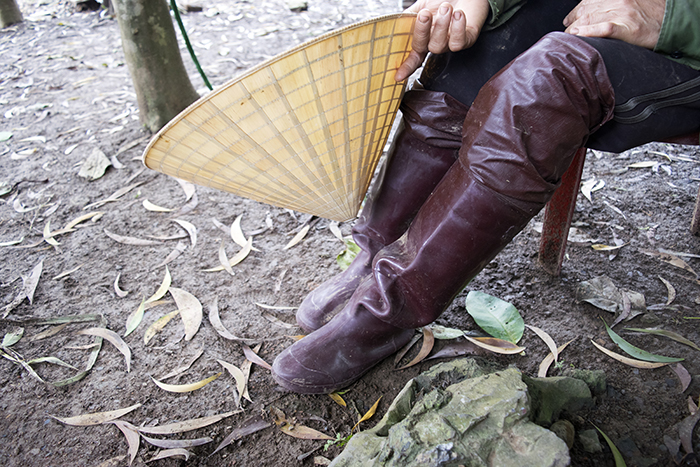
In a gut reaction from my hoodlum-esque childhood, I bolted back over the bridge and down the nearest path. I was almost into the paddies when I finally looked over my shoulder. There was a woman standing on the other side of the gate. She wore the working clothes of a farmer: a plain green jacket and pants, burgundy, thigh-high rain boots, and a pointed, traditional straw Vietnamese hat. She was smiling. When she saw me turn, she waved, beckoning me to come back.

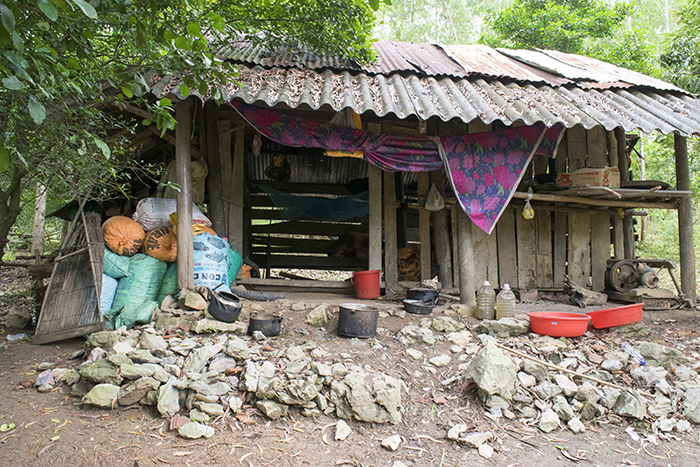
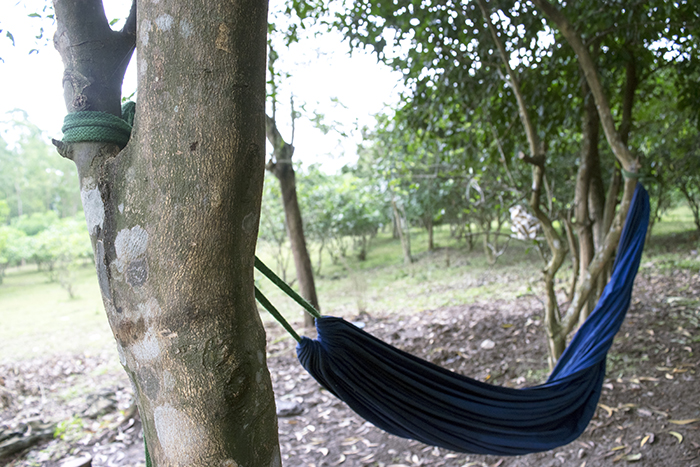
I waved and hesitated. That church was creepy, almost cult-like. And I was in the middle of nowhere. But then the adventurer told hold of me again. The woman opened the gate for me and clasped my hand between her rough fingers. When we shared the greeting and she smiled, the faint traces of crow’s feet around her dark eyes crinkled. I had no idea what age she was; her skin was smooth but her hands were old, cracked and dry from hard labor. She had tied her curly black hair up into a bun but stray waves dangled down, framing her round face.  She motioned for me to follow her. We walked past the church-grave-memorial-thing, through another area in the woods, past a clearing where a water buffalo family grazed, up a hill through an orchard where we were greeted by the barks and growls of four little dogs that she fended off with a long stick, and into a clearing with a small, open hut, two plastic chairs, a hammock hanging between two trees, and a shed.


The woman pointed at the hut, the orchards, the buffalo, the dogs, and the shed, then at herself. This is her land, her crops that she plants and cares for and harvests. She spoke in Vietnamese to me but I only shook my head. She smiled anyway, and led me down a dirt path behind her home, through an opening between two large boulders and into another gated plot of land; this one held straight rows of sprouting crops, all kinds of vegetables. And climbing up the mountain was a plot of banana trees. She pointed at herself again and I nodded.

I sat with her on the plastic chairs for a little while, watching the dogs wrestle. As she surveyed her land, I could see the pride sparkling in her eyes. Does she have a husband or a family? Or does she take care of all of this by herself? I determined she couldn’t if this was where she lived; the hut was built for only one person. It was tiny and the bed frame was small. There was no door, no windows, just openings. The bed was protected by only a thin, torn mosquito net. As we sat in companionable silence, she let me take photographs, but was embarrassed when I turned the camera to her.

Finally, I noticed it was beginning to get late in the day. I had quite a trek back into town ahead of me.  I stood up and she walked me out, opening and then closing the gate behind me. As I made my way back through the rice paddies, I looked back occasionally. She still stood at the gate, smiling and watching me go. Has she ever had foreign visitors? I couldn’t imagine it; I had strayed quite a bit off path to find my way to her. It made me warm inside just knowing how happy it had made her to share her life with me.

The Outskirts of Phong Nha: An Exploration of the Usually Overlooked